Key takeaways
- Mounting height: Measure from the top of the dock to the lowest usable step at the waterline, allowing for seasonal changes in water level and dock movement.
- Step design: Wide, slip-resistant steps are easier on bare feet and provide more confidence when climbing out with wet hands or gear.
- Lift-up clearance: A flip-up model should store securely above the water, where it is less exposed to waves, floating debris, algae, and winter ice.
- Construction: Aluminum keeps weight manageable and resists outdoor corrosion, but examine welds, hardware, finish, and the manufacturer’s guidance for saltwater use.
- Capacity and support: Choose a ladder with ample weight capacity and sturdy handholds, especially for family docks, guests, or anyone who needs extra stability.
What's inside
A dock ladder has one job: make getting out of the water feel controlled instead of awkward. Yet many buyers discover that a ladder that looks suitable in a product photo may be too narrow for wet feet, too short for a high-sided dock, difficult to lift clear of ice and debris, or poorly matched to their mounting surface. Saltwater exposure, changing water levels, and frequent use make the choice even more consequential.
This guide compares leading flip-up dock ladders from an outdoor-living perspective, focusing on boarding comfort, storage, corrosion resistance, installation practicality, and weight capacity. Whether you are outfitting a residential swim platform, pontoon dock, or lakeside retreat, use the specifications below as a starting point and confirm measurements against your dock before ordering.
As an Amazon Associate we earn from qualifying purchases.


How to Choose a Flip-Up Dock Ladder (2026)
- Mounting height: Measure from the top of the dock to the lowest usable step at the waterline, allowing for seasonal changes in water level and dock movement.
- Step design: Wide, slip-resistant steps are easier on bare feet and provide more confidence when climbing out with wet hands or gear.
- Lift-up clearance: A flip-up model should store securely above the water, where it is less exposed to waves, floating debris, algae, and winter ice.
- Construction: Aluminum keeps weight manageable and resists outdoor corrosion, but examine welds, hardware, finish, and the manufacturer’s guidance for saltwater use.
- Capacity and support: Choose a ladder with ample weight capacity and sturdy handholds, especially for family docks, guests, or anyone who needs extra stability.
The Best Flip-Up Dock Ladders (2026) Reviewed
Extreme Max 4-Step Slanted Ladder
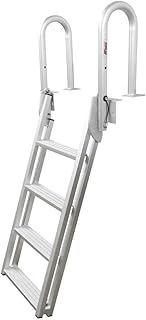
The Extreme Max 3005.4227 is a practical choice for standard residential docks where a slanted climbing angle feels more natural than a straight drop. Its round-tube aluminum frame, four steps, and 300-pound capacity suit everyday recreational use, while the flip-up design helps keep the ladder out of the water when the dock is closed for the season.
VEVOR 4-Step Flip-Up Ladder
VEVOR’s four-step aluminum alloy ladder is aimed at buyers who want broad footing and a little extra assistance during boarding. Non-slip wide steps and a pull rope can be useful on a pontoon or swimming platform, particularly when the ladder is positioned where reaching down to lift it would be inconvenient.
RecPro 4-Step Marine Ladder
The RecPro Marine four-step model stands out for its combination of flip-up and stationary functionality, giving dock owners more flexibility in how the ladder is used and stored. Its 20-inch width offers a comfortable entry point for frequent swimmers, though shoppers should carefully compare the mounting layout with their existing dock framing before installation.
JIF Marine Hinged Flip-Up Ladder
JIF Marine’s hinged four-step ladder is built around a generously rated 750-pound capacity and extra-wide four-inch steps. The quick-release safety pin is a useful feature for securing the ladder in its operating or raised position, making this a strong candidate for busy family docks and heavier-duty waterfront access.
Dockmate Wide 5-Step Ladder
The Dockmate Wide five-step ladder adds an extra rung for docks that sit higher above the water or for users who prefer shorter, more manageable climbing intervals. Its aluminum construction, handrails, four-inch steps, corrosion-resistant positioning, and 750-pound capacity make it especially appealing for saltwater settings, provided the mounting hardware is appropriate for the environment.
Frequently Asked Questions
Why choose a flip-up dock ladder?
A flip-up ladder can be raised above the water when the dock is unattended, during rough weather, or before winter storage. This helps reduce exposure to floating debris, aquatic growth, wave action, and ice while preserving dock clearance.
How many steps should a dock ladder have?
Four steps work well for many residential docks, while five or more steps may be preferable when the dock is tall or the waterline varies significantly. The lowest step should remain comfortably reachable without forcing users to stretch or drop into deep water.
Are aluminum dock ladders suitable for saltwater?
Aluminum is commonly selected for marine applications because it is lightweight and naturally corrosion resistant. In saltwater, rinse the ladder with fresh water, inspect fasteners regularly, and follow the manufacturer’s recommendations for compatible hardware and maintenance.
What should I check before installing one?
Confirm the ladder’s mounting width, bracket pattern, operating clearance, step depth, and required dock structure. The frame should attach to solid material rather than only thin decking, and all fasteners should be tightened and checked periodically.
Final Thoughts
For a straightforward slanted design, the Extreme Max is a sensible everyday option. The VEVOR adds wide steps and pull-rope convenience, while the JIF Marine and Dockmate Wide are compelling choices for higher-capacity family docks. Select the model that matches your dock height, water conditions, and users—not simply the ladder with the most steps.