Key takeaways
- For outdoor dining: Start with a 10 × 10 ft footprint for a compact table, and check chair pullback space on every side. Choose a zippered enclosure with an entrance that does not open directly into a chair.
- For a sofa or sectional: Compare the furniture’s full dimensions with a 10 × 12 ft or larger interior, leaving a clear path to the opening. Do not assume the nominal footprint is all usable floor space.
- For easy seasonal setup: Choose a pop-up style, but plan for storage and prompt take-down in poor weather. Its convenience is not a substitute for anchoring.
- For frequent use: Favor a frame with clearly specified materials, replaceable canopy and net panels, and accessible replacement parts. A vented roof can make enclosed seating more comfortable on warm days.
Best gazebos with mosquito netting: choose by footprint and use
The best gazebo with mosquito netting is a properly anchored, well-ventilated structure that leaves enough room to move around your furniture: choose a 10 × 10 ft model for a compact dining set or conversation area, and a 10 × 12 ft or larger model when you want separate dining and lounge zones. For long-term use, prioritize a powder-coated steel or aluminum frame and replaceable net panels; for occasional events, a lighter pop-up design is easier to transport but less suited to staying outdoors.
There is no single best size or frame for every yard. Measure the furniture footprint, add walking clearance, then compare how each model handles insects, wind, rain, and seasonal storage—not just its advertised dimensions.

Aoxun 12'x10' Outdoor Gazebo with Curtain & Mosquito Netting, Beige
Included for 'Best Gazebos With Mosquito Netting for Comfortable Outdoor Living' because the listing specifies Beige, details this guide uses to compare options.
View on Amazon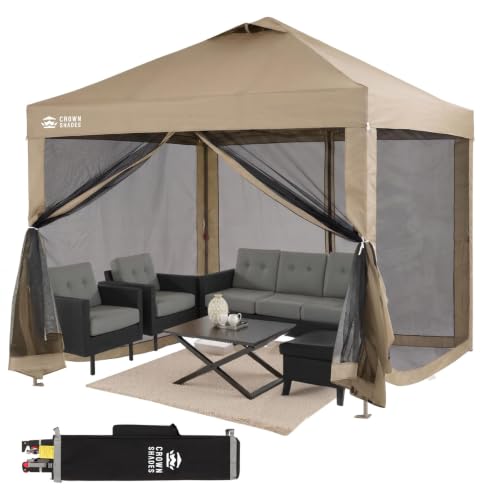
CROWN SHADES Gazebo 10x10 Pop Up Canopy with Mosquito Netting, Beige
Included for 'Best Gazebos With Mosquito Netting for Comfortable Outdoor Living' because the listing specifies Beige, details this guide uses to compare options.
View on AmazonMatch the gazebo to your setup
| Gazebo footprint | Practical usable area | Good fit | Clearance to plan for |
|---|---|---|---|
| 8 × 8 ft | About 64 sq ft before posts and furniture | Two chairs and a small side table; compact patios | Keep roughly 24–30 in around chairs so people can get in and out |
| 10 × 10 ft | About 100 sq ft before posts and furniture | A 4–6-person dining set or a small lounge grouping | Allow about 30–36 in behind pulled-out dining chairs |
| 10 × 12 ft | About 120 sq ft before posts and furniture | A longer dining table or a compact dining-and-lounge arrangement | Keep a 36 in route to the entrance and avoid blocking net panels with chairs |
| 12 × 12 ft | About 144 sq ft before posts and furniture | A larger dining set or a sectional with a coffee table | Check that the yard has space for anchoring and access around the exterior |
These are planning figures, not guarantees of interior clearance. Posts, roof supports, and fabric walls can reduce the usable area. A typical dining table is about 28–30 in high; measure chair depth and the distance needed to pull chairs back before choosing a footprint. For lounge seating, sketch the full arrangement—including ottomans and the route to the opening—rather than measuring only the sofa.
Which design works for your situation?
| Your situation | Best starting point | Why | Watch for |
|---|---|---|---|
| Small patio or occasional gatherings | 8 × 8 or 10 × 10 ft pop-up gazebo | Smaller footprint and quicker setup make it easier to store between uses | Pop-up frames often need more careful anchoring and may not be intended for permanent exposure |
| Family meals, kids, or pets | 10 × 10 ft or larger with zippered, closable net panels | A continuous enclosure helps limit gaps when people enter and leave | Check that the net can be secured open and that pets cannot push under the edges |
| Longer seasonal use | Fixed-leg aluminum or steel frame with replaceable netting | A sturdier structure and serviceable panels are more practical than replacing the whole unit | Confirm the maker’s guidance for wind, rain, and winter storage |
| Rental home or frequent moves | Portable model with a carry bag and removable panels | It can be taken down without permanent ground hardware | On a hard surface, use only compatible weighted anchors; do not assume stakes are an option |
| Dining and lounging together | 10 × 12 ft or 12 × 12 ft, depending on furniture | More room helps separate chairs, tables, and the walking route | Measure the complete furniture plan and netting entrance before buying |
Compare netting, frame, and roof before you buy
| Feature | What to look for | Trade-off |
|---|---|---|
| Netting design | Fine mesh, panels that meet fully, easy-to-operate zippers, and tiebacks | Finer mesh can improve insect screening but may reduce airflow; overlapping panels can be awkward to close |
| Frame material | Powder-coated steel for a substantial frame; aluminum for easier handling and corrosion resistance | Steel can be heavier and may rust if its coating is damaged. Aluminum is lighter but can bend under misuse or severe weather. |
| Roof ventilation | A vented double-tier canopy or roof opening designed to shed water | Venting can help warm air escape, but the canopy still needs secure installation and the maker’s weather limits must be followed |
| Canopy fabric | UV-resistant, water-resistant fabric with clear care and replacement guidance | Water-resistant does not mean storm-proof; fabric can fade, mildew, or wear at seams if left wet or exposed continuously |
| Anchoring | Hardware suited to the surface: stakes for appropriate soil, or compatible weights for hardscape | Anchors reduce movement but do not make a lightweight gazebo safe in strong wind |
For mosquito control, the enclosure is only as effective as its openings. Look for net panels that close without large corner gaps, and make sure the bottom edge sits close to the ground or can be secured as directed. A single central zipper is convenient, while multiple entry points can make access easier around a larger dining layout—but each opening is another place to check for a gap.
Assembly and anchoring: the practical trade-offs
Pop-up gazebos are generally the quickest option: two adults can often raise the frame and attach the canopy and netting in roughly 30–60 minutes, depending on the design and site. A more permanent, multi-piece structure may take several hours and involve more bolts, roof sections, and ladder work. Treat these as planning estimates; follow the specific product manual and do not assemble a large structure alone.
Before ordering, check the packed dimensions and the heaviest box—not just the assembled footprint. A long roof rail or bulky carton may not fit through a narrow doorway, and a heavy package may require two people to move safely. Clear the site, sort hardware, and assemble on level ground. Tighten connections in the sequence specified by the manufacturer; forcing misaligned joints can damage the frame.
Anchor every leg using hardware approved for the surface and gazebo. Soil stakes are not suitable for a paved patio, and improvised weights may not secure a frame safely. Take down or protect the canopy and netting as the instructions specify, especially before high winds or heavy snow. Wind can turn a canopy into a sail, while pooled water strains roof fabric and frame joints.
Choose based on how you will use it
- For outdoor dining: Start with a 10 × 10 ft footprint for a compact table, and check chair pullback space on every side. Choose a zippered enclosure with an entrance that does not open directly into a chair.
- For a sofa or sectional: Compare the furniture’s full dimensions with a 10 × 12 ft or larger interior, leaving a clear path to the opening. Do not assume the nominal footprint is all usable floor space.
- For easy seasonal setup: Choose a pop-up style, but plan for storage and prompt take-down in poor weather. Its convenience is not a substitute for anchoring.
- For frequent use: Favor a frame with clearly specified materials, replaceable canopy and net panels, and accessible replacement parts. A vented roof can make enclosed seating more comfortable on warm days.
Bottom line
For most households, a 10 × 10 ft netted gazebo is the balanced choice for one main activity, such as dining or lounging. Move up to 10 × 12 ft or 12 × 12 ft when you need comfortable chair clearance or want two uses under one roof. Prioritize fully closing net panels, a suitable frame, roof ventilation, and surface-appropriate anchoring; those details matter more to day-to-day comfort than choosing the largest footprint alone.