Key takeaways
- Roof construction: Look for galvanized steel or another durable metal roof with a pitched or double-roof design that helps shed snow rather than allowing a broad, flat surface to collect it.
- Frame strength: Aluminum resists corrosion and keeps weight manageable, while steel and substantial wood posts can offer a more grounded feel. Inspect post dimensions, connectors, and the quality of the roof supports.
- Snow-load rating: Treat the manufacturer’s published capacity as a starting point, not a universal guarantee. Local snow type, wind exposure, roof pitch, installation quality, and drifting can all change the real-world load.
- Anchoring: A strong gazebo still needs a secure foundation. Use the recommended hardware for your deck, concrete, or masonry, and avoid relying on lightweight surface anchors in exposed locations.
- Maintenance access: Choose a design that permits safe snow removal, clears leaves from gutters or drainage channels, and allows curtains or netting to be removed before severe winter weather.
What's inside
Snow can turn an attractive backyard shelter into a costly liability. A gazebo that feels rigid in summer may struggle under wet, accumulating snow if its roof, posts, anchors, or drainage design are not suited to winter conditions. The right choice depends on more than roof material and overall size.
This guide compares hardtop and heavy-duty gazebo options for snowy climates, focusing on roof construction, frame materials, drainage, footprint, anchoring, and everyday outdoor comfort. Product specifications and local snow-load requirements should always be checked before purchase, especially in areas with heavy or drifting snowfall.
As an Amazon Associate we earn from qualifying purchases at no extra cost to you. Product prices and availability are accurate as of the date shown and are subject to change.




🛒 Best Price Today on Amazon
Prime members get fast, free shipping on everything above, plus member-only deals. New members get a 30-day free trial — cancel anytime.
How to Choose a Hardtop Gazebo For Snow Load (2026)
- Roof construction: Look for galvanized steel or another durable metal roof with a pitched or double-roof design that helps shed snow rather than allowing a broad, flat surface to collect it.
- Frame strength: Aluminum resists corrosion and keeps weight manageable, while steel and substantial wood posts can offer a more grounded feel. Inspect post dimensions, connectors, and the quality of the roof supports.
- Snow-load rating: Treat the manufacturer’s published capacity as a starting point, not a universal guarantee. Local snow type, wind exposure, roof pitch, installation quality, and drifting can all change the real-world load.
- Anchoring: A strong gazebo still needs a secure foundation. Use the recommended hardware for your deck, concrete, or masonry, and avoid relying on lightweight surface anchors in exposed locations.
- Maintenance access: Choose a design that permits safe snow removal, clears leaves from gutters or drainage channels, and allows curtains or netting to be removed before severe winter weather.
The Best Hardtop Gazebo For Snow Load (2026)s Reviewed
Domi 10′ x 10′ Lean-to Gazebo
The Domi lean-to is a practical choice where a freestanding structure is not ideal, such as a deck or porch beside the house. Its galvanized steel roof and built-in drainage system are useful winter features, but installation must be matched carefully to the wall structure and the shelter should not be treated as a substitute for a fully engineered snow-rated addition.
10×12 Cedar Wood Gazebo
This cedar gazebo brings a warmer, more architectural look than an all-metal shelter, while its galvanized steel peak roof gives snow a better route away from the roof plane. It is appealing for gardens and patios where appearance matters, though wood requires more inspection and maintenance around joints, finish, moisture, and post anchoring.
Aoxun 12′ x 16′ Hardtop Gazebo
The larger Aoxun combines an aluminum frame with a galvanized steel double roof, drainage, netting, and a generous 12-by-16-foot footprint. It offers a strong balance of weather protection and usable outdoor living space, but its size increases wind exposure, so careful anchoring and a level foundation are particularly important.
Grill Gazebo 6′ x 12′
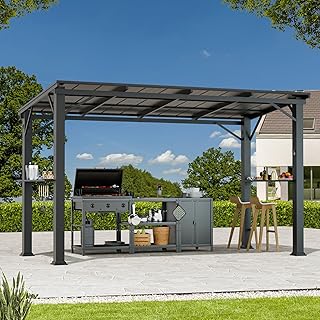
Designed around outdoor cooking, this compact shelter adds a side shelf, hooks, and a bottle opener while using a rust-resistant hardtop structure. Its smaller footprint can be easier to position and anchor than a full-size pavilion, but grilling shelters still need clearance from combustibles and should be cleared of significant snow before use.
Patio Gazebo 11′ x 13′ with LED Lights
This soft-top model focuses on comfort, with LED lighting, a Bluetooth speaker, netting, curtains, and a metal frame with double roofs. It can work well for three-season entertaining, but buyers in heavy-snow regions should regard it as a lighter-duty option and remove or protect the fabric components before winter storms.
Frequently Asked Questions
Are hardtop gazebos safe in heavy snow?
They can be, provided the structure has an appropriate snow-load rating, a sound foundation, and proper anchoring. Heavy, wet snow and wind-driven drifts can exceed published conditions, so prompt removal may still be necessary.
Is a galvanized steel roof better than an aluminum roof?
Galvanized steel is typically stiffer and more resistant to denting, while aluminum is lighter and naturally corrosion resistant. The complete roof system, including pitch, supports, seams, and fasteners, matters more than the sheet material alone.
Should gazebo curtains and netting stay up during winter?
Usually not. Fabric panels can trap snow, collect ice, and increase wind resistance. Remove and store them when severe weather is expected unless the manufacturer specifically approves winter use.
Can I install a snow-rated gazebo on a deck?
Only after confirming that the deck, framing, and attachment points can handle the gazebo’s weight and winter loads. A contractor or structural professional can help evaluate older decks, elevated platforms, and installations in high-snow regions.
Final Thoughts
For a compact wall-side setup, the Domi lean-to is a sensible starting point; the cedar 10×12 model suits buyers who want a more natural, permanent-looking shelter. For maximum covered living space, the Aoxun 12′ x 16′ hardtop is the strongest all-around candidate, provided it is anchored on a properly prepared foundation and maintained through the seasons.