Key takeaways
- Blade size and cut depth: A 10-inch blade clears roughly 3-1/8″ at 90°, enough to cut a 4×4 post in two passes. An 8-1/4″ saw handles 2x stock comfortably but struggles with anything thicker. Mini saws top out under an inch and are for small parts only.
- Rip capacity: This is the number that decides whether you can rip a 12″ wide bench top or a sheet of plywood down to shelf width. Look for 24″ minimum, 32″ if you plan to break down panels for storage benches or deck boxes.
- Fence quality: Everything about accuracy comes back to the fence. Rack-and-pinion designs stay parallel through their travel; stamped fences that flex under hand pressure will cost you every glue joint.
- Stand and portability: A rolling stand matters more than most buyers expect, especially if the saw shares space with a car. Folding stands set up in seconds and let you work near the project instead of hauling lumber across the driveway.
- Safety hardware: Riving knife, blade guard, anti-kickback pawls, and an accessible paddle switch should all be present. Outdoor stock is often wet or slightly bowed, which raises kickback risk considerably.
What's inside
Building for the outdoors punishes a weak saw. Cedar and redwood come off the rack damp, composite decking gums up a blade, and a 2×4 planter rail asks more of a benchtop machine than any indoor project will. Most hobbyists discover this the hard way: the saw bogs halfway through a rip, the fence drifts a sixteenth, and a mitered corner on a potting bench ends up with a gap you can see from the lawn. Add the fact that a garage bay usually has to double as parking, and the shopping problem gets narrow fast. You need real cutting power that folds out of the way by Sunday evening.
This guide sorts hobbyist table saws by what they actually do well for patio furniture, garden structures, and small-scale shop work. Full-size 15-amp machines handle deck boards, bench slats, and long rips; compact jobsite saws trade a little capacity for a lighter carry; and precision mini saws exist for the inlay, model, and small-parts work that a 10-inch blade would obliterate. Below are the picks, followed by the specs worth checking before you commit and answers to the questions that come up most.
As an Amazon Associate we earn from qualifying purchases.




How to Choose a Hobbyist Table Saw (2026)
- Blade size and cut depth: A 10-inch blade clears roughly 3-1/8″ at 90°, enough to cut a 4×4 post in two passes. An 8-1/4″ saw handles 2x stock comfortably but struggles with anything thicker. Mini saws top out under an inch and are for small parts only.
- Rip capacity: This is the number that decides whether you can rip a 12″ wide bench top or a sheet of plywood down to shelf width. Look for 24″ minimum, 32″ if you plan to break down panels for storage benches or deck boxes.
- Fence quality: Everything about accuracy comes back to the fence. Rack-and-pinion designs stay parallel through their travel; stamped fences that flex under hand pressure will cost you every glue joint.
- Stand and portability: A rolling stand matters more than most buyers expect, especially if the saw shares space with a car. Folding stands set up in seconds and let you work near the project instead of hauling lumber across the driveway.
- Safety hardware: Riving knife, blade guard, anti-kickback pawls, and an accessible paddle switch should all be present. Outdoor stock is often wet or slightly bowed, which raises kickback risk considerably.
The Best Hobbyist Table Saws of 2026, Reviewed
DEWALT DWE7491RS 10″ Table Saw with Rolling Stand
The 32-1/2″ rip capacity and rack-and-pinion fence make this the most capable pick here for deck furniture, wide bench tops, and plywood breakdown. The rolling stand is the quiet hero: it rolls out, locks solid, and folds back against a wall when the project is done.
SKIL TS6307-00 10″ Jobsite Table Saw
SKIL undercuts the DEWALT on price without giving up the 10-inch blade or the folding stand, and the integrated foot-pedal stand release is genuinely clever when your hands are full of lumber. A strong choice for someone building a pergola or a run of planters, not a production shop.
DEWALT DWE7485 8-1/4″ Compact Table Saw
At roughly 54 pounds this is the one you can actually carry to the back patio and set on a workbench. It rips 24-1/2″, which covers most outdoor furniture parts, and it holds DEWALT’s fence quality in a smaller footprint.
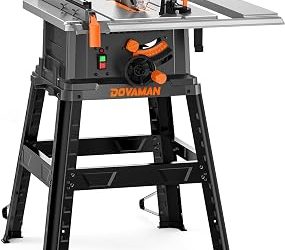
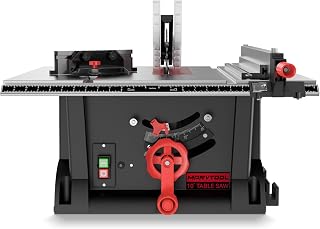
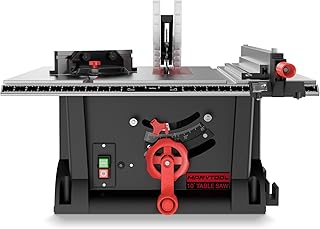
15-Amp 10″ Portable Benchtop Table Saw
A budget entry point with a 36T blade, 4,600 RPM motor, and 0-45° bevel that will get an Adirondack chair or a raised bed built without much fuss. Plan on upgrading the blade early and checking fence parallelism before each session.
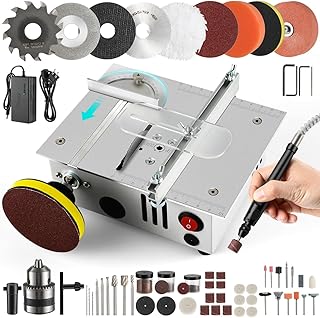
MXBAOHENG Mini Precision Table Saw
Different tool, different job: 96W, seven speeds, and a 1/2″ cut depth for lattice details, trellis slats, small joinery, and plastic or PCB work. Pair it with a full-size saw rather than treating it as one.
Frequently Asked Questions
Is an 8-1/4″ saw enough for outdoor furniture?
For 2x lumber, decking, and slat work, yes. If you regularly cut 4×4 posts or thick beams, the extra depth on a 10-inch saw saves you flipping and re-registering stock.
Can these saws cut composite decking?
They can, with a fine-tooth carbide blade and a moderate feed rate. Composite melts if you push too slowly, so keep the cut moving and clear the dust port often.
Do I really need the rolling stand?
If your saw lives in a shared garage, it pays for itself immediately. If you have a dedicated bench and a fixed spot, a compact saw without a stand saves money and space.
What blade should I use for cedar and redwood?
A 40-tooth general-purpose or 60-tooth fine-finish carbide blade leaves clean edges on softwood without burning. Softwoods load blades with resin, so clean the teeth regularly.
Final Thoughts
For most people building outdoor furniture, the DEWALT DWE7491RS is the safest investment: the fence and rip capacity handle nearly anything a patio project asks, and the stand solves the storage problem. The SKIL TS6307-00 delivers most of that at a friendlier price, and the MXBAOHENG mini saw is a worthwhile companion for detail work no 10-inch blade can do.