Key takeaways
- Non-detergent formula: Pump oil is deliberately detergent-free. Detergents in automotive oil hold contaminants in suspension, which is great for a filtered engine and bad for a pump with no filter at all. You want particles settling out, not circulating.
- Correct viscosity: Most triplex pumps call for SAE 30 non-detergent or a listed 15W-40 equivalent. Axial pumps are often factory-filled and sealed. Check the pump tag or manual before you pour, not the machine’s model number.
- Pump brand compatibility: General, CAT, AR, and Comet all publish their own specs. An oil marketed for one usually meets the others, but confirm the spec sheet rather than assuming a universal fit.
- Bottle size versus your service interval: Crankcases hold roughly 10 to 21 ounces. A quart covers two or three changes for a homeowner; a gallon only makes sense if you run multiple machines or a rental fleet.
- Anti-wear and corrosion additives: Look for oil that mentions rust protection. Pumps sit idle through winter with residual moisture inside, and that dormant stretch does more damage than the hours you actually spend spraying.
What's inside
Anyone who owns a pressure washer eventually learns the hard way that the pump is the expensive part. The engine or motor gets all the attention, but the triplex or axial pump doing the actual work runs on a small sump of oil that most owners never think about until they hear a knock, spot a milky drip on the patio, or watch pressure fade halfway through a driveway. Add to that the confusion at the parts counter: motor oil, hydraulic fluid, vacuum pump oil, unlabeled bottles from the shed. Using the wrong one is one of the fastest ways to shorten the life of a pump that costs more than the machine it came on.
This guide sorts out what actually belongs in a pressure washer crankcase. We cover the difference between non-detergent pump oil and the multigrade stuff in your car, why viscosity matters more than brand loyalty, and how to match oil to a General, CAT, AR, or generic axial pump. Below are five oils worth keeping on the shelf, along with a straightforward buying checklist and answers to the questions we hear most from homeowners and seasonal crews.
As an Amazon Associate we earn from qualifying purchases.

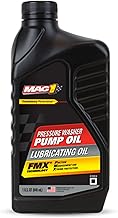
How to Choose a/an Oil For Pressure Washer Pump (2026)
- Non-detergent formula: Pump oil is deliberately detergent-free. Detergents in automotive oil hold contaminants in suspension, which is great for a filtered engine and bad for a pump with no filter at all. You want particles settling out, not circulating.
- Correct viscosity: Most triplex pumps call for SAE 30 non-detergent or a listed 15W-40 equivalent. Axial pumps are often factory-filled and sealed. Check the pump tag or manual before you pour, not the machine’s model number.
- Pump brand compatibility: General, CAT, AR, and Comet all publish their own specs. An oil marketed for one usually meets the others, but confirm the spec sheet rather than assuming a universal fit.
- Bottle size versus your service interval: Crankcases hold roughly 10 to 21 ounces. A quart covers two or three changes for a homeowner; a gallon only makes sense if you run multiple machines or a rental fleet.
- Anti-wear and corrosion additives: Look for oil that mentions rust protection. Pumps sit idle through winter with residual moisture inside, and that dormant stretch does more damage than the hours you actually spend spraying.
The Best Oil For Pressure Washer Pump (2026)s Reviewed
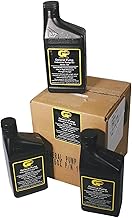
Stens Pressure Washer Pump Oil for General Pump 100214
This is the safe default for anyone running a General triplex, since it’s built to match the OEM 100214 spec rather than approximate it. The bottle size lines up neatly with a single crankcase fill, which means less guesswork and no half-used container going stale in the garage.
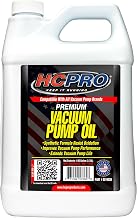
HCPRO HCVPO128 Super Premium Vacuum Pump Oil, 1 Gallon
A synthetic, non-misting oil that shines in high-cycle applications where thermal stability matters, and the gallon jug is genuinely economical if you’re servicing several machines. Worth noting it’s engineered as a vacuum and refrigeration oil, so confirm your pump manufacturer permits a synthetic of this grade before committing a full crankcase to it.
Valley Industries Premium Pump Oil, 1 Liter
Solid, no-drama pump oil in a 1-liter bottle that hits the sweet spot between a single-use container and an oversized jug. The narrow neck makes topping off a cramped crankcase easier than it sounds, which matters when the fill port sits behind a frame rail.
Pressure Washer Pump Oil, 21 Oz. (CAT Compatible)
Sized almost exactly to a full CAT pump change, so you drain, refill, and you’re done without measuring. The corrosion and wear package is the real selling point for machines that get used in bursts and then sit for weeks between jobs.
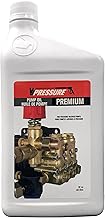
60694 Pressure Washer Pump Oil, 1 Quart
A dependable quart that covers two changes for most homeowner triplex pumps, making it the value pick for annual maintenance. Straightforward non-detergent formulation with nothing exotic going on, which is exactly what a pump crankcase wants.
Frequently Asked Questions
Can I use regular motor oil in my pressure washer pump?
Not as a long-term solution. Motor oil’s detergent additives keep debris suspended in an unfiltered crankcase, accelerating wear on bearings and plungers. In a true pinch, non-detergent SAE 30 is the closest substitute, but drain it and refill with proper pump oil promptly.
How often should I change pump oil?
Break in the pump with a change at roughly 50 hours, then every 200 to 300 hours or annually, whichever arrives first. Seasonal users should change before storage rather than after, so the pump overwinters on clean oil.
Why does my pump oil look milky?
Milky or coffee-colored oil means water has crossed the seals. Change the oil, then plan on a seal or plunger inspection, because a fresh fill won’t fix the leak path that let water in.
My pump is sealed and has no dipstick. What now?
Many entry-level axial pumps ship permanently sealed with a lifetime fill and no service port. If there’s no drain plug or sight glass, the manufacturer doesn’t intend for you to change it, and drilling one in is a fast route to a scrapped pump.
Final Thoughts
For most homeowners, the Stens Pump Oil for General 100214 is the easiest correct answer if you’re running a General triplex, while the 60694 1-Quart covers general-purpose annual maintenance at a sensible price per change. If you’re maintaining several machines or a small pressure washing operation, the gallon HCPRO HCVPO128 brings the cost per fill way down, provided you’ve confirmed your pump manufacturer signs off on a synthetic of that grade. Match the spec, change it on schedule, and the pump will outlast the machine wrapped around it.