Our Top Picks
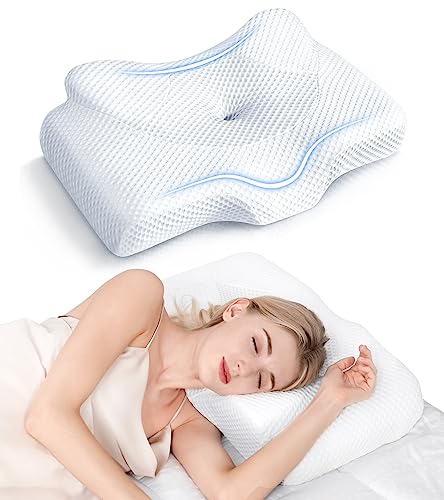 Osteo Cervical Pillow for Neck Pain ReliefQueen(25.5*16.5*5.2/4.1 inches)25.5 x 16.5 x 5.2 inches4 PoundsCheck on Amazon
The best pillow for neck pain is the one whose compressed loft matches the gap between your mattress surface and the outer edge of your shoulder — for most side sleepers that means 4–6 inches of compressed height, for back sleepers 2–4 inches, and for stomach sleepers 1–2 inches or nothing at all. Fill material, contouring, cooling gel and price are all secondary variables: they only start to matter once the height and firmness are matched to your body and your sleep position. Get the height wrong and no amount of premium foam will help; get it right and a $45 pillow can outperform a $200 one.
What “neck support” actually means in a pillow
A pillow has three jobs, and they are often confused with one another.
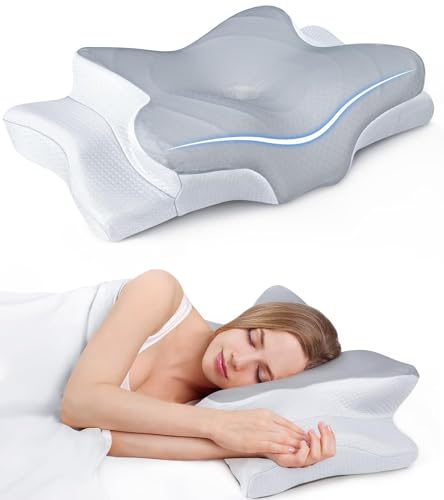
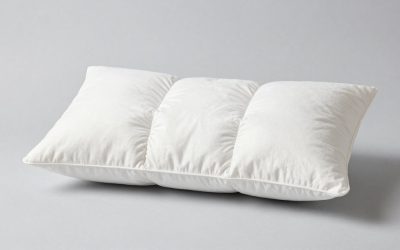
Ultra Pain Relief Cooling Pillow for Neck Support, Adjustable Cervical Pillow Cozy Sleeping, Odorless Ergonomic Contour Memory Foam Pillows, Orthopedic Bed Pillow for Side Back Stomach Sleeper
Chosen because it specifies Adjustable Cervical Pillow Cozy Sleeping and Odorless Ergonomic Contour Memory Foam Pillows.
View on Amazon
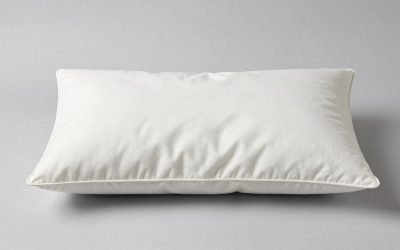
Memory Foam Pillows Neck Pillow Bed Pillow for Sleeping, Ergonomic Cervical Pillow for Neck and Shoulder Pain Relief,Orthopedic Contour Pillow for Side Back Stomach Sleeper(Blue&Grey)
Chosen because it specifies Ergonomic Cervical Pillow for Neck and Shoulder Pain Relief.
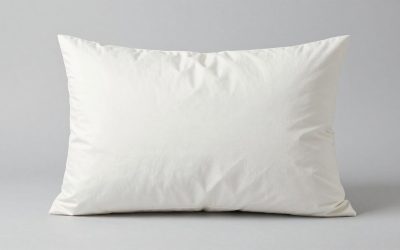
View on AmazonOsteo Cervical Pillow for Neck Pain Relief, Hollow Design Odorless Memory Foam Pillows with Cooling Case, Adjustable Orthopedic Bed Pillow for Sleeping, Support for Side Back Sleepers
Chosen because it specifies Hollow Design Odorless Memory Foam Pillows with Cooling Case and Adjustable Orthopedic Bed Pillow for Sleeping.
View on AmazonThe first is gap filling. When you lie on your side, your head is suspended above the mattress by the width of your shoulder. The pillow’s job is to fill that gap so your cervical spine stays in line with your thoracic spine. Too thin and your head drops toward the mattress, bending your neck down and away from the shoulder you’re lying on. Too thick and your head is pushed up, bending the neck in the opposite direction. Both positions load the same joints and muscles for seven or eight hours a night.
The second is contour support. The cervical spine has a natural inward curve. A pillow that is uniformly flat supports the back of the skull but leaves the neck itself unsupported, so the muscles at the base of the skull work all night to hold the head up. A pillow with a raised front edge, a roll, or a recessed center fills that curve.
The third is pressure distribution. This is where fill material and firmness come in. A very firm pillow can hold the spine in a good line while creating pressure points at the skull, jaw and ear. A very soft pillow feels comfortable for ten minutes and collapses by hour two.
The practical consequence: shop height first, firmness second, material third, and cooling or washability last.
Match loft to sleep position and shoulder width
Pillow manufacturers list a “loft” — the height of the pillow as it sits on a shelf. That number is almost useless. What matters is the height under load, which is typically 1–1.5 inches less than the listed loft for memory foam, 0.5–1 inch less for latex, and 2 inches or more less for down and polyester fiber.
Use this table as a starting point. Measure your shoulder width from the base of your neck to the outer edge of your shoulder, standing relaxed.
| Sleep position | Shoulder width / body type | Target compressed loft | Pillow type that usually hits it |
|---|---|---|---|
| Side | Narrow, under 16 in | 3.5–4.5 in | Low-loft latex, thin shredded foam, adjustable fill with 20–30% removed |
| Side | Average, 16–18 in | 4–5.5 in | Medium shredded memory foam, 5 in cube pillow, medium latex |
| Side | Broad, over 18 in | 5.5–7 in | 6 in cube pillow, high-loft latex, two thin pillows stacked |
| Back | Average adult | 2.5–4 in | Contour pillow with cervical roll, low-loft solid foam |
| Back | On a soft mattress that sinks 2–3 in | 3.5–4.5 in | Medium contour foam, shredded foam with fill added back |
| Stomach | Any | 1–2 in, or none | Flat down-alternative, very thin latex, folded towel in a case |
| Combination (side + back) | Any | 4–5 in | Adjustable shredded fill — you can re-shape it between positions |
Two adjustments matter more than people expect. First, mattress sink: on a soft memory foam or pillow-top mattress your shoulder may sink 2–3 inches, which reduces the gap your pillow needs to fill by roughly the same amount. If you switch from a firm innerspring to a soft foam mattress and your pillow suddenly feels too tall, that is why. Second, body weight: a 240 lb sleeper compresses a shredded foam pillow roughly 30–40% more than a 130 lb sleeper does, so the same pillow can be right for one person and too thin for another.
Measure your own ideal loft in three steps
Step 1: Find your shoulder gap
Lie on your side on your own mattress, in your normal sleeping position, with no pillow. Have someone measure the vertical distance from the mattress surface to the middle of your ear canal. That distance, in inches, is your target compressed loft. Most side sleepers land between 4 and 6 inches. Write it down — this is the single most useful number in this article.
Step 2: Check the mattress variable
Measure the same gap on the other side of the bed if your partner has a different body type. If you share a bed and your partner is significantly broader or narrower in the shoulders, you genuinely need two different pillows, not a compromise. A 5-inch pillow that is perfect for a 17-inch shoulder width will be 1–2 inches too short for a 20-inch shoulder width.
Step 3: Apply the “ear over shoulder” test in-store or at home
With the candidate pillow in place, your ear should sit roughly above the midpoint of your shoulder, your chin should be parallel to the floor, and your nose should point straight ahead rather than up or down. If your chin tilts toward your chest, the pillow is too low. If your chin lifts and your throat feels stretched, it is too high. Ten minutes in the position is the minimum useful trial; two minutes tells you almost nothing, because the fill has not fully compressed yet.
Firmness: the numbers that matter
Foam firmness is measured as ILD (indentation load deflection) — the force in pounds required to indent a 50-square-inch plate 25% into a 4-inch-thick sample. The bands are broadly:
- Soft: ILD 10–16 — sinks easily, good for stomach sleepers and very light sleepers
- Medium: ILD 17–24 — the most common range for back and combination sleepers
- Medium-firm: ILD 25–30 — the sweet spot for most side sleepers
- Firm: ILD 31–35+ — needed for broad-shouldered side sleepers and heavier sleepers
Foam density is a separate number and is the better predictor of lifespan. Budget pillows use 2–2.5 lb/ft³ foam, mid-range uses 3–4 lb/ft³, and premium memory foam runs 5 lb/ft³ and up. Foam below 3 lb/ft³ typically loses its rebound within 12–18 months under nightly head weight. Latex is measured differently — most pillows sit between 65 and 95 kg/m³ (roughly 4–6 lb/ft³) — and latex holds its shape considerably longer than memory foam at comparable density because the cell structure is more resilient.
Fill material trade-offs
This is the table to consult after you know your target loft. Prices are general market ranges for a queen-size pillow in 2026.
| Fill | Feel | Adjustable loft? | Breathability | Typical lifespan | Machine washable | Typical price range |
|---|---|---|---|---|---|---|
| Solid memory foam | Medium-firm, slow recovery, “sinking” feel | No | Low — traps heat | 2–3 years | No — spot clean only | $60–$200 |
| Shredded memory foam | Medium, moldable, slightly lumpy if underfilled | Yes — remove or add fill | Medium — air moves between shreds | 18 months–3 years, top up fill as it compacts | Cover yes, fill in a pillowcase on gentle | $50–$120 |
| Latex (Talalay or Dunlop) | Firm, bouncy, springs back instantly | Shredded latex: yes; solid: no | High — open cell structure | 3–5 years | No — spot clean, keep out of direct sun | $90–$250 |
| Polyester fiber | Soft, packs down fast | Somewhat — you can re-fluff | Medium | 6–12 months | Yes | $20–$60 |
| Down | Soft, low support, luxurious | No, but loft is easily re-fluffed | Medium; 550–800 fill power | 1–3 years before a refill is needed | Yes, with care | $100–$400 |
| Down alternative | Soft to medium, allergen-friendly | No | Medium | 1–2 years | Yes | $40–$120 |
| Buckwheat hulls | Very firm, moldable, rustles | Yes — remove hulls | High | 2–3 years, then replace hulls | Cover only; sun-dry hulls | $60–$130 |
| Kapok | Medium, down-like but springier | Somewhat | High | 2–4 years | No — clumps when wet | $80–$160 |
| Water bladder + fiber | Firm, self-leveling, heavy | Yes — add or drain water | Low to medium | 2–3 years for the bladder | Cover only | $40–$90 |
| Gel-infused or graphite memory foam | Medium, slightly cooler than plain foam | No | Medium | 2–3 years | No | $70–$180 |
The practical read: if you are unsure of your loft, buy something adjustable. Shredded memory foam, shredded latex, buckwheat and water pillows all let you tune the height after purchase, which is worth more than any single spec on the label. If you know your number exactly, a solid latex or solid memory foam pillow will hold that height more consistently night to night.
Contouring: the shapes and what each one does
Contour pillows are not a gimmick, but they are position-specific and easy to buy wrong.
- Cervical roll / two-lobe contour: a raised edge at the front and a dip in the middle. Back sleepers use the roll under the neck and the dip under the skull. Side sleepers use the higher of the two lobes under the neck. Common in foam, and usually available in small, medium and large sizes that map to body height rather than mattress size.
- Butterfly / center-recessed: a depression in the middle with raised sides. Best for back sleepers who roll slightly to one side, and for people who wake with ear or jaw pressure.
- Shoulder cutout: a notch or crescent removed from the bottom edge so the pillow wraps around the shoulder instead of pushing against it. This is the single most useful contour feature for side sleepers with shoulder pain, because it lets the pillow sit lower at the shoulder while keeping the head supported.
- Cube / block: a flat-sided block, typically 5 or 6 inches tall, sized to the shoulder gap. It has no taper, so the height is consistent across the whole sleeping surface. Very good for broad-shouldered side sleepers, poor for anyone who moves onto their back during the night.
- Water chamber: a bladder inside a fiber shell. The water displaces to match head shape, giving even pressure and a firm, stable base. Heavier than any other type — expect 5–10 lb once filled.
The picks, by situation
The sections below describe pillow types and specific models that are on the market in 2026, matched to the problem each one solves. Where a model’s exact specification varies by size or year, the general range is given.
1. Best overall adjustable pillow: shredded memory foam, e.g. Coop Home Goods Eden
Shredded memory foam in a zippered case is the most forgiving category for neck pain, because it is the only type that lets you correct your own mistake. You unzip it, pull out handfuls of fill, and re-test. Most queen pillows in this category arrive with 3–5 lb of shred and a case that fits a 20 × 30 in insert. Removing 20–30% of the fill typically drops the compressed loft by about an inch, which is often exactly the difference between “too tall” and “right.”
The trade-off is lifespan and consistency. Shredded fill compacts toward the head end over 12–24 months, so you gradually lose loft in the spot where you need it most; plan to top up the fill or replace the pillow within about two years. It is also slightly lumpier than solid foam, which some sleepers notice and others never feel. Look for a case with a separate inner liner so the shred does not migrate into the outer cover, and a washable outer cover — this is the one category where you can machine wash the cover regularly without destroying the fill.
2. Best contouring memory foam: Tempur-Pedic TEMPUR-Neck
This is the classic two-lobe cervical contour pillow: a smaller lobe at the front for back sleeping and a larger one at the back for side sleeping, in a dense slow-recovery foam. It comes in small, medium and large, sized to body height rather than mattress, and the difference between sizes is roughly a half-inch of lobe height per step. That half inch matters — buying the wrong size is the most common reason people give up on contour pillows.
It suits back sleepers and side sleepers who stay in one position. It does not suit restless combination sleepers, because rotating the pillow to change position defeats the point of the contour. The foam is dense and holds its shape well, typically two to three years of nightly use before the rebound noticeably slows. Expect the firmest feel of anything on this list, and expect it to sleep warm.
3. Best latex pillow: Saatva Latex Pillow and similar shredded-latex designs
Latex is the answer for anyone who runs hot, wants a firm but responsive feel, and dislikes the “sinking” sensation of memory foam. Talalay latex is generally softer and more uniform; Dunlop is denser and firmer. Shredded latex in an adjustable case combines latex’s breathability with the ability to tune loft, and it holds its height better than shredded memory foam because the latex pieces do not crush down as quickly.
Look for a pillow with a solid latex core and a shredded latex outer layer if you want the height to stay stable in the middle while the surface stays moldable. Latex pillows typically run $90–$250 in queen. They should not go in a washing machine, and prolonged direct sunlight degrades the rubber, so air them in shade.
4. Best for broad-shouldered side sleepers: cube pillows, e.g. Pillow Cube
If your shoulder measurement is over 18 inches, most standard pillows are simply too short. A cube pillow is a flat-sided block — commonly sold in 5-inch and 6-inch heights — that holds its height across the entire surface instead of tapering at the edges. Side sleepers with broad shoulders often find the 6-inch version keeps the ear-shoulder line level for the first time.
The limitation is obvious once you notice it: a cube is a cube. Roll onto your back and the pillow is now several inches too tall, pushing your chin toward your chest. It also tends to be warm, because there is no airflow through a solid block. If you are a committed side sleeper and nothing else has worked, this is a reasonable, inexpensive experiment; if you switch positions, skip it.
5. Best side-sleeper contour with a shoulder cutout: Eli & Elm and similar crescent designs
A crescent or U-shaped cutout along the bottom edge lets the pillow sit lower at the shoulder while keeping the head and neck at full height. For side sleepers with shoulder impingement or rotator cuff irritation, this is often the difference between waking up sore and not. These pillows usually combine a solid foam or latex core with a shredded fill layer on top, and most are adjustable by removing fill.
Check the cutout depth against your own shoulder width. A cutout that is too shallow still presses on the shoulder; one that is too deep leaves the neck unsupported. Many manufacturers publish the cutout dimensions — treat those numbers the same way you treat the shoulder-gap measurement above.
6. Best cervical roll for back sleepers: Core Products Tri-Core and similar
The Tri-Core is a foam cervical pillow with a firm center and two lobes of different heights, designed so that a back sleeper can use the higher lobe under the neck and the recessed center under the skull. It also has side-sleeping panels. It is one of the few designs that gives a back sleeper genuine neck support rather than just head support, and it is widely available in a range of sizes and firmness options (typically a “gentle” and a “firm” version).
These pillows have a break-in period of a week or two. If you are switching from a flat pillow, expect the first few nights to feel strange — that is the neck being supported in its natural curve for the first time, not the pillow being wrong. If the sensation is painful rather than merely unfamiliar after two weeks, the size or the lobe height is wrong.
7. Best water pillow: Mediflow and similar water-base designs
A water pillow has a fiber layer on top of a water bladder. Adding or draining water changes the firmness and the height in a way that is finer-grained than removing foam shred — a few ounces of water makes a noticeable difference. The water displaces to follow head shape, so pressure is distributed evenly, and the base is firm and stable.
The drawbacks are weight and temperature. A filled pillow weighs roughly 5–10 lb, which makes it awkward to move and impossible to pack. The water also takes on room temperature, which some sleepers find pleasantly cool and others find cold. The bladder is the wear point — plan on two to three years, and check the seams periodically.
8. Best buckwheat pillow: Hullo and similar hull-filled designs
Buckwheat hulls are the most adjustable fill available. You can sculpt a hollow for the back of the skull and a ridge under the neck, and the hulls hold that shape because they interlock rather than spring back. They also breathe extremely well, which makes them a strong choice for hot sleepers, and they are naturally resistant to dust mites.
The costs: a filled pillow weighs 7–10 lb; the hulls rustle audibly when you move; and the feel is genuinely firm, closer to a sandbag than a pillow. Hulls also crush into dust over two to three years and need replacing. If you want a pillow that stays exactly where you put it, this is the category; if you want something soft to sink into, it is not.
9. Best grid or polymer pillow: Purple Harmony and similar
These use a hyper-elastic polymer grid over a latex or foam core. The grid is a lattice of hollow columns that collapse under the head and push back, which distributes pressure without trapping heat the way solid foam does. The Harmony sits at roughly 6.5 inches of loft, which suits average-to-broad side sleepers, and the grid surface is noticeably cooler than memory foam.
It is a poor fit for back sleepers at that loft, and the polymer grid is not adjustable, so you are committing to a fixed height. The grid also has a distinctive feel that some sleepers love and others find springy in an unpleasant way. Treat it as a side-sleeper pillow first.
10. Best washable down-alternative pillow: Brooklinen, Parachute and similar
If allergies, dust sensitivity or a household of pets make washability the priority, a down-alternative pillow with a tightly woven cotton shell is the practical pick. It can go in a front-loading machine on a gentle cycle and a low tumble dry, and it comes out clean rather than degraded. Fill weights typically run 20–30 oz for a queen, and the pillow will feel soft to medium with limited support.
Down alternative is a back-sleeper and stomach-sleeper material far more than a side-sleeper one. If you sleep on your side and want this category, look for a firmer “support” or “firm” fill weight and accept that you will likely need to replace it within one to two years as the fiber packs down.
11. Best budget option: IKEA Skogsfräken, Gulkavlen and similar
IKEA’s pillow range covers the basics well: memory foam, ergonomic contour and fiber options, generally in the $15–$50 range, with standard sizing and washable covers. The Skogsfräken is a memory foam pillow; the ergonomic line offers contoured shapes with a raised edge. The foam density is not in premium territory, so expect one to two years of useful life rather than three.
The value proposition is real if you are unsure what height you need and want to test a shape cheaply before committing to a $150 pillow. Buy the inexpensive version first, learn your number, then spend once on the material you actually want.
12. Best for combination sleepers: Nest Bedding Easy Breather and similar shredded-foam designs
Combination sleepers need a pillow that can be re-shaped with a hand at 3 a.m. Shredded memory foam is the only fill that allows this — you push fill to one side to lower the loft when you roll onto your back, then pull it back when you return to your side. The Easy Breather is the well-known example: a shredded memory foam pillow with a zippered inner case that holds the fill in place and an adjustable outer cover.
Buy one with an inner liner, not just an outer cover, or the fill will migrate to the corners. And expect to add fill after a year or so.
13. Best body pillow for full-spine alignment
A body pillow is not a neck pillow, but it is often the missing half of the solution for side sleepers. Placing a pillow between the knees keeps the hips level, which keeps the pelvis neutral, which keeps the lower and mid back from rotating — and a rotated torso drags the neck out of line even when the head pillow is correct. Standard body pillows run 20 × 54 in; longer versions exist for taller sleepers.
The practical pairing: a correctly sized neck pillow plus a body pillow. If you have tried five neck pillows and none worked, the problem may be the hip and torso rotation, not the head support.
14. Best travel pillow for neck support
Most U-shaped travel pillows are too soft to do anything. A better approach for flights and car travel is a compact adjustable pillow or a small inflatable with a firm fill, sized to fill the gap between your head and the seat’s headrest when you are upright. Memory foam travel pillows that compress to a third of their size pack easily but lose their shape after a year or two of irregular use.
Look for a pillow with a strap or clip that holds it against the headrest rather than your neck — a pillow that slides forward as you nod off is worse than nothing.
15. Best cooling pillow for hot sleepers
Heat is the most common reason people abandon a pillow that fits well. The materials that genuinely breathe are latex, buckwheat hulls and polymer grids; the ones that trap heat are solid memory foam, gel-infused memory foam (marginally better than plain foam, not dramatically so) and water pillows, which take on room temperature. A phase-change cover or a breathable cotton or linen pillowcase can help, but the fill is the bigger variable.
If you sleep hot and need memory foam’s contour, a shredded memory foam pillow with an airy cover is a reasonable compromise — the spaces between shreds allow some airflow that a solid block does not.
16. Best for stomach sleepers
Stomach sleepers should use the thinnest pillow they can tolerate, or none at all. A pillow under the head in this position pushes the neck into extension, and the more loft, the worse it is. A flat down-alternative pillow, a very low-loft latex pillow, or a folded towel inside a pillowcase are the practical options. If you cannot sleep without head support, consider training yourself onto your side with a body pillow, which is a bigger win for your neck than any stomach-sleeping pillow.
Decision matrix: match your situation to a pillow
| Your situation | What to choose | Why it fits |
|---|---|---|
| Side sleeper, average shoulders, no idea of your loft | Adjustable shredded memory foam, queen | You can correct the height after purchase; cheapest way to find your number |
| Side sleeper, shoulders over 18 in | 6 in cube or high-loft latex, or two thin pillows stacked | Standard 5 in pillows compress below your shoulder gap |
| Back sleeper waking with a stiff neck | Two-lobe cervical contour in the correct size | Supports the cervical curve instead of only the skull |
| Combination sleeper who flips all night | Shredded fill with an inner liner | Re-shapeable by hand without waking fully |
| Stomach sleeper | Flat down alternative, 1–2 in compressed, or none | Anything taller forces the neck into extension |
| Hot sleeper | Latex, buckwheat, or polymer grid | Open structures move air; solid foam does not |
| Allergies or dust sensitivity | Washable down alternative or latex with a washable cover | Both can be cleaned thoroughly; foam cannot be washed |
| Small apartment, one pillow only | Adjustable shredded fill, one pillow plus a body pillow | Covers side and back positions without storing three pillows |
| Renter who cannot replace a soft mattress | Go one step thinner than your measurement suggests | A 2–3 in mattress sink reduces the gap the pillow must fill |
| Shoulder pain on the sleeping side | Crescent pillow with a shoulder cutout | Removes pressure from the shoulder without dropping the head |
| Sharing a bed with a much larger or smaller partner | Two different pillows, sized separately | A compromise height is wrong for both people |
| Budget-limited, first attempt | Inexpensive memory foam or contour pillow | Learn your shape and height before spending on material |
Two-pillow and add-on setups worth knowing
The single-pillow model is a simplification. Three add-ons do real work:
- A knee pillow. A 20 × 54 in body pillow or a smaller contoured knee pillow between the knees keeps the pelvis square. For side sleepers with lower back pain, this often does more than changing the head pillow.
- A thin pillow under the lower back or knees. Back sleepers sometimes do better with a small rolled towel under the lumbar curve and a modest pillow under the knees, which flattens the lower back against the mattress.
- A folded towel as a shim. If your pillow is half an inch too low, folding a bath towel inside the pillowcase is a faster, cheaper fix than buying a new pillow — and it tells you exactly how much height you are missing.
Sizing, cases and fit numbers
| Size | Dimensions | Notes |
|---|---|---|
| Standard | 20 × 26 in | Common in the US; smaller than most people expect |
| Queen | 20 × 30 in | The default for adult beds; the most widely stocked size |
| King | 20 × 36 in | Useful for restless sleepers; adds surface area, not height |
| Body pillow | 20 × 54 in (also 20 × 60 in) | Pair with a standard neck pillow, not instead of one |
| Travel / compact | 12 × 16 in typical | Check compressed packed size if you fly carry-on only |
Contour and cube pillows frequently do not fit standard cases. Measure the pillow’s widest point and its depth before ordering a case, and prefer a case with a zipper and a bit of stretch over a plain envelope closure. A case that is too tight compresses the fill and changes the loft you carefully chose.
Durability: what wears out first, and when
Pillows fail in different ways depending on the fill, and the failure usually shows up as returning neck pain rather than a visible defect.
- Solid memory foam: loses rebound first, usually at the center where the head sits. Expect 2–3 years. A pillow that no longer springs back when you press it is done, even if it looks fine.
- Shredded memory foam: compacts at the head end and loses roughly 20–30% of its loft over 18 months. You can extend it by adding a bag of replacement fill, which costs far less than a new pillow.
- Latex: the most durable category. Watch for surface cracking and a loss of bounce after 3–5 years; latex rarely collapses the way foam does.
- Polyester fiber: the fastest to fail. Fiber clumps and packs down in 6–12 months. This is the category to buy cheaply and replace often.
- Down: loses loft rather than shape. Washing with dryer balls can restore it for a year or two; after that you need a refill or a new pillow.
- Buckwheat hulls: the hulls themselves crush to dust in 2–3 years. The cover usually outlasts the fill.
- Water pillows: the bladder seams are the failure point at 2–3 years. Check for dampness at the corners periodically.
The general rule: a pillow that is more than two years old and no longer holds the height you measured is a candidate for replacement, regardless of how it looks. If you want a single benchmark, replace fiber pillows yearly, shredded foam every 18–24 months, solid foam and water every 2–3 years, and latex every 3–5 years.
Care and cleaning by fill type
- Memory foam (solid): never machine wash or dry — heat destroys the cell structure. Spot clean with a damp cloth and mild detergent, and air it out monthly. A washable outer cover does most of the hygiene work.
- Shredded foam: wash the cover regularly. The fill can go in a pillowcase on a gentle cycle if it is in a sealed liner, but repeated washing shortens its life; airing it out is usually enough.
- Latex: spot clean only, and keep it out of direct sunlight, which degrades the rubber. A breathable cotton case reduces how often you need to clean it.
- Down and down alternative: front-loading machine, gentle cycle, low heat with two or three dryer balls to break up clumps. Never wash down in a top loader with an agitator.
- Buckwheat: empty the hulls into a breathable bag, wash the cover, and sun-dry the hulls. Do not get the hulls wet and leave them damp.
- Water: drain before cleaning the cover. Do not store a filled water pillow in freezing conditions.
How to test a pillow before you commit
Two tests do most of the work. The first is the alignment check described earlier: lie on your side for a full ten minutes and have someone confirm that your ear sits over your shoulder and your chin is parallel to the floor. The second is the morning check: if you wake with a stiff neck that eases within an hour of moving around, the pillow is probably a half inch to an inch off in one direction. If the stiffness lasts all day, the problem is more likely the mattress, your position, or something a pillow cannot fix.
When buying, prioritize sellers with a return window of at least 30 nights. A pillow that feels right in a store feels different after three nights of real sleep, and the compressed loft changes as the fill settles. Adjustable pillows largely solve this problem by letting you tune the height at home, which is why they dominate the recommendations for anyone who is not certain of their measurements.
When a pillow is not the answer
A pillow can correct alignment and reduce pressure, but it cannot treat a structural problem. If you have persistent numbness, tingling or weakness in the arm or hand, pain that wakes you and does not ease with position changes, or neck stiffness that lasts for weeks, a pillow is not the fix — that warrants a conversation with a clinician. The same goes for a sudden change in symptoms after an injury.
What a pillow can do is remove one nightly source of strain so that the rest of the picture is clearer. Fix the height first, then the firmness, then the material. That order is what separates a pillow that helps from one that just feels nice for ten minutes.
FAQ
Should I sleep with one pillow or two?
One correctly sized pillow beats two stacked ones in almost every case, because stacked pillows shift against each other and the top one slides out of position. The exception is a broad-shouldered side sleeper whose gap exceeds what a single pillow provides — then two thin pillows, or a pillow plus a folded towel, is a legitimate solution. If you are stacking two standard pillows and still not comfortable, the issue is that neither is the right height, not that you need a third.
How do I know if my pillow is too high?
The clearest sign is chin lift: your chin points upward and your throat feels stretched when you lie down. You may also wake with a sore neck at the front and sides rather than the back, and with a dry mouth from sleeping with your mouth open. High pillows push the neck into extension and are a common cause of morning headaches in back sleepers.
Is a firm pillow better for neck pain?
Not automatically. Firmness needs to match position and body weight. Side sleepers generally need firmer support than back sleepers because the pillow has to hold the head up against gravity across the shoulder gap; back sleepers need contour more than firmness; stomach sleepers need very little of either. A pillow that is too firm holds the spine in a good line but creates pressure at the skull and jaw, which is its own problem.
How often should I replace a pillow?
As a working schedule: polyester fiber every 6–12 months, down every 1–3 years, shredded memory foam every 18–24 months, solid memory foam and water pillows every 2–3 years, latex every 3–5 years. The more reliable test is whether the pillow still holds the compressed height you measured when it was new. If it has lost an inch, it is no longer doing the job it was bought for.
Can a pillow help with snoring?
Sometimes, indirectly. Snoring is often worse when the neck is flexed or the chin drops toward the chest, which a pillow that is too thick can encourage. A pillow that keeps the head in neutral alignment may reduce it. A pillow that raises the head slightly can help some people. It will not resolve snoring caused by nasal obstruction or sleep apnea, and persistent snoring with daytime fatigue is worth investigating separately.
Do I need a special pillowcase?
For contour, cube and crescent pillows, usually yes — standard cases will not fit the shape and will compress the fill. For standard rectangular pillows, a breathable cotton or linen case helps with heat, and a tightly woven case reduces dust mite exposure. Avoid waterproof or coated cases unless you need them for a specific reason; they trap heat and reduce the airflow that makes latex and buckwheat work.