Key takeaways
- Material: Choose a purpose-built compressed-air system, such as HDPE tubing paired with aluminum outlet blocks, rather than improvised plumbing materials. The pipe should be clearly rated for compressed air.
- Diameter and length: A 3/4-inch line is a practical choice for many home workshops because it balances airflow with manageable installation. Select enough tubing to create a clean main loop without stretching the system to its limit.
- Pressure rating: Check the system’s maximum working pressure against your compressor’s output. A 200 PSI rating provides useful headroom, but every component—including fittings and manifolds—must be compatible.
- Outlet arrangement: Tee fittings, elbows, manifolds, and pressure gauges determine how easily you can connect tools. Multiple outlets are especially useful when a compressor serves a hose reel, workbench, and outdoor cleaning station.
- Installation environment: Plan for shade, protection from impact, and sensible drainage. Outdoor or unheated runs should be shielded from direct sun and freezing conditions, with outlets positioned to limit condensation reaching tools.
What's inside
Choosing pipe for an air-compressor line is less straightforward than picking a longer hose. The wrong material can sag, leak, restrict airflow, or become a maintenance headache when routed around walls, benches, and outdoor work areas. For a garage, workshop, or covered utility space, the best system should deliver steady air while standing up to temperature changes, moisture, and everyday knocks.
This guide focuses on modular HDPE-and-aluminum air-line systems designed for home workshops and light commercial spaces. We compare capacity, outlet layout, installation practicality, and room to expand, with an outdoor-living perspective for buyers who may run lines through detached garages, sheds, or semi-enclosed work areas.
As an Amazon Associate we earn from qualifying purchases.




How to Choose a Pipe For Air Compressor Lines (2026)
- Material: Choose a purpose-built compressed-air system, such as HDPE tubing paired with aluminum outlet blocks, rather than improvised plumbing materials. The pipe should be clearly rated for compressed air.
- Diameter and length: A 3/4-inch line is a practical choice for many home workshops because it balances airflow with manageable installation. Select enough tubing to create a clean main loop without stretching the system to its limit.
- Pressure rating: Check the system’s maximum working pressure against your compressor’s output. A 200 PSI rating provides useful headroom, but every component—including fittings and manifolds—must be compatible.
- Outlet arrangement: Tee fittings, elbows, manifolds, and pressure gauges determine how easily you can connect tools. Multiple outlets are especially useful when a compressor serves a hose reel, workbench, and outdoor cleaning station.
- Installation environment: Plan for shade, protection from impact, and sensible drainage. Outdoor or unheated runs should be shielded from direct sun and freezing conditions, with outlets positioned to limit condensation reaching tools.
The Best Pipe For Air Compressor Lines (2026)s Reviewed
3/4-Inch x 200-Foot HDPE-Aluminum System
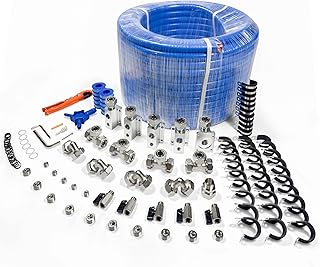
The Compressed Air Piping System with 3/4 Inch ID x 200 feet HDPE Tubing and Aluminum Outlet Blocks is a strong all-around option for a larger garage or detached workshop. Its 53-piece layout gives buyers useful flexibility for branching a line around several work areas, while the stated 200 PSI rating offers a substantial operating margin.
3/4-Inch x 100-Foot Pressure Gauge Kit
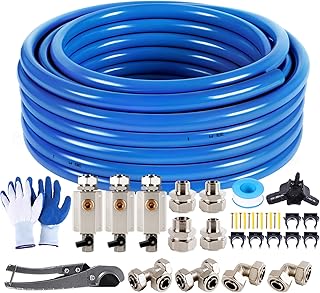
The 3/4" × 100FT Pressure Gauge Shop Air Line Kit is well suited to a compact workshop where pressure monitoring at the outlet matters. Its HDPE-aluminum construction, tee and elbow fittings, and leak-focused design make it a sensible choice for a tidy wall-mounted installation with one or two tool zones.
3/4-Inch x 100-Foot, 37-Piece System
The Compressed Air Piping System with 3/4 inch x 100 feet HDPE Tubing and Aluminum Outlet Blocks keeps the layout simple for homeowners who want a permanent line without buying an oversized kit. It is a practical fit for a single garage bay, especially when the compressor and main tool stations are relatively close together.
100-, 200-, or 300-Foot Rapid Air System
The Shop Air Line Kit 3/4"×100&200&300ft Compressed Air Piping System gives buyers more room to match the package to the building. Its selection of right-angle and tee fittings is helpful when routing around corners, rafters, or storage zones, and the modular format leaves room for a future outlet near a utility door or covered patio.
3/4-Inch x 300-Foot Five-Way Manifold System
The Compressed Air Piping System with 3/4 Inch ID x 300 feet and five-way multi-outlet aluminum manifolds is aimed at expansive workshops or multi-station layouts. Individual pressure gauges can make troubleshooting and tool setup easier, while the long tubing length suits a perimeter loop or several separated work areas.
Frequently Asked Questions
Is HDPE suitable for compressed-air lines?
Purpose-built HDPE compressed-air tubing can be suitable when it carries an appropriate pressure rating and is installed with the supplied compatible fittings. Do not substitute ordinary plastic pipe or use materials that are not specifically rated for compressed air.
Is 3/4-inch pipe large enough for a home workshop?
For many home garages, 3/4-inch tubing provides a useful balance between airflow, cost, and installation effort. A longer run, high-demand tool, or several tools operating at once may justify a larger system or a carefully planned loop to reduce pressure drop.
Can an air-compressor pipe system be installed outdoors?
It can be used in a protected outdoor or semi-outdoor setting only when the product instructions and local requirements allow it. Keep tubing out of direct sunlight, protect it from impact, and account for freezing temperatures and condensation before routing a line to a shed or exterior outlet.
Should an air line slope toward a drain?
A slight slope toward a drain point can help collected moisture move away from tools. Install a separator or drain where appropriate, and place hose outlets so water is less likely to travel directly into paint sprayers, nailers, or other sensitive equipment.
Final Thoughts
For broad garage coverage, the 3/4-inch x 200-foot HDPE-aluminum system is a well-rounded starting point. Choose the 100-foot pressure-gauge kit for a compact, closely monitored setup, or the 300-foot five-way manifold system when a larger workshop needs multiple clearly managed outlets.