Key takeaways
- Wattage: Add the running watts of your essential appliances, then account for the higher starting surge required by refrigerators, pumps, furnaces, and air conditioners. A larger unit is not automatically better if it is difficult to move or wastes fuel.
- Fuel flexibility: Dual-fuel generators can run on gasoline or propane, giving you more options during a prolonged outage. Gasoline generally offers strong output, while propane stores well when kept in an approved container.
- Connection: A transfer switch or approved interlock is the proper way to connect a generator to household circuits. Never backfeed a home through a wall outlet, and have permanent connections installed by a qualified electrician.
- Noise and placement: Inverter models are often more comfortable near living areas, but every fuel-burning generator must operate outdoors, far from doors, windows, and vents. Keep carbon-monoxide detectors working inside the home.
- Portability and maintenance: Wheels, handles, electric start, oil access, and storage size make a major difference after a storm. Follow the maintenance schedule, keep fresh fuel available, and test the generator before an emergency.
What's inside
When the power goes out, the right generator can keep refrigeration, lights, communications, and essential heating or cooling running—but choosing one is not as simple as comparing wattage on a box. Fuel type, startup demand, noise, portability, runtime, and safe connection to your home all matter, especially when bad weather makes every decision more difficult.
This guide compares five practical options for different backup-power needs, from a compact inverter generator for essential circuits to high-output dual-fuel models suitable for larger homes. The focus is on real outdoor-living considerations: moving and storing the unit, operating it responsibly, and matching capacity to the equipment you actually need to run.
As an Amazon Associate we earn from qualifying purchases.


How to Choose a Portable Generator For Home Backup Power (2026)
- Wattage: Add the running watts of your essential appliances, then account for the higher starting surge required by refrigerators, pumps, furnaces, and air conditioners. A larger unit is not automatically better if it is difficult to move or wastes fuel.
- Fuel flexibility: Dual-fuel generators can run on gasoline or propane, giving you more options during a prolonged outage. Gasoline generally offers strong output, while propane stores well when kept in an approved container.
- Connection: A transfer switch or approved interlock is the proper way to connect a generator to household circuits. Never backfeed a home through a wall outlet, and have permanent connections installed by a qualified electrician.
- Noise and placement: Inverter models are often more comfortable near living areas, but every fuel-burning generator must operate outdoors, far from doors, windows, and vents. Keep carbon-monoxide detectors working inside the home.
- Portability and maintenance: Wheels, handles, electric start, oil access, and storage size make a major difference after a storm. Follow the maintenance schedule, keep fresh fuel available, and test the generator before an emergency.
The Best Portable Generator For Home Backup Power (2026)s Reviewed
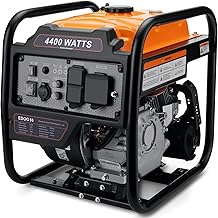
Oxseryn Power Equipment 4400-Watt Inverter Generator
This open-frame inverter generator is a sensible fit for essential backup loads, a workshop, or an RV setup where moderate output and cleaner power are more important than whole-home capacity. Its ECO mode and inverter design should help manage fuel use and noise, while the 30-amp RV-ready connection adds flexibility for mobile power.
Jackery HomePower 3600 Plus
The Jackery HomePower 3600 Plus takes a quieter, exhaust-free approach with a 3,584Wh LFP battery and 3,600-watt AC output. It is especially appealing for indoor-friendly emergency essentials, overnight use, apartments, and anyone who values simple operation; remember that its battery eventually needs recharging from the grid, a vehicle, or optional solar panels.
DuroMax XP13000EH Dual Fuel Generator
With 13,000 watts and gasoline-or-propane operation, the XP13000EH is built for substantial household demand, including multiple appliances and larger starting loads. Electric start, transfer-switch readiness, and RV compatibility make it a strong choice for homeowners preparing for extended outages, provided they have a safe outdoor location and a plan for fuel storage.
Westinghouse 12500-Watt Dual Fuel Generator
This Westinghouse model balances high output with convenient remote electric starting, which is useful when the generator is positioned away from the house in poor weather. Its dual-fuel capability and transfer-switch readiness suit serious home backup, though buyers should plan for the footprint, operating noise, and lifting demands of a generator in this class.
DuroStar DS13000MX Dual Fuel Generator
The DuroStar DS13000MX delivers 13,000 watts from a 500cc engine and is aimed at whole-home backup rather than lightweight camping duty. Remote electric start and dual-fuel operation make it practical for emergency readiness, while its large frame and fuel consumption mean it belongs in a deliberate, permanent storage and operating plan.
Frequently Asked Questions
What size generator is needed for basic home backup?
Many households can cover essentials with roughly 3,000 to 5,000 watts, depending on starting surges and whether a sump pump, furnace blower, or refrigerator is included. Larger homes or central air-conditioning systems may require a 10,000-watt-plus generator and professional load planning.
Is a battery power station safer than a gas generator?
A battery power station produces no exhaust during operation and is substantially quieter, making it convenient for indoor living spaces when used according to its manual. Its limitation is finite stored energy and recharge time, whereas a fuel generator can continue operating as long as it is safely refueled.
Can I run a portable generator in my garage?
No. Even with the garage door open, carbon monoxide can accumulate quickly and travel into the house. Operate fuel generators outdoors, well away from openings, and follow the manufacturer’s clearance guidance.
Do I need an electrician to connect a generator?
For powering household circuits, professional installation of a transfer switch or approved interlock is the safest route. It prevents dangerous backfeeding and allows the generator to supply selected circuits without improvised extension-cord arrangements.
Final Thoughts
For quiet, low-maintenance emergency power, the Jackery HomePower 3600 Plus is an attractive battery-based pick. The Oxseryn 4400-Watt inverter generator suits essential loads and RV-style flexibility, while the DuroMax XP13000EH stands out for homeowners who need high-output, dual-fuel backup for a broader range of household circuits.