Key takeaways
- Power output: Estimate the starting and running watts of your air conditioner, refrigerator, microwave, and other essentials. Allow extra capacity for motor-driven appliances.
- Fuel and charging: Gasoline generators offer sustained output, while solar power stations run quietly and produce no exhaust. Consider how easily you can refuel or recharge at your usual destinations.
- RV readiness: Look for a compatible 30-amp or 120-volt RV outlet if you want straightforward connection to your travel trailer or motorhome.
- Noise and safety: Inverter technology, ECO modes, CO alarms, and automatic shutdown systems improve comfort and reduce risk around camp.
- Weight and handling: A generator that stays in the truck is less useful than one you can safely move. Check the overall weight, frame design, wheels, and carrying handles.
What's inside
Choosing a portable RV generator is less about chasing the biggest wattage figure and more about matching dependable power to the way you camp. A unit that runs an air conditioner may be too heavy for occasional weekend use, while a compact solar power station may not handle a microwave or rooftop cooling system.
This guide compares five practical options for RV travel, emergency backup, and off-grid living. We look at usable output, portability, noise, fuel or charging needs, RV compatibility, and the safety features that matter when a generator is operating near your campsite or home.
As an Amazon Associate we earn from qualifying purchases.


How to Choose a/an Portable Rv Generator (2026)
- Power output: Estimate the starting and running watts of your air conditioner, refrigerator, microwave, and other essentials. Allow extra capacity for motor-driven appliances.
- Fuel and charging: Gasoline generators offer sustained output, while solar power stations run quietly and produce no exhaust. Consider how easily you can refuel or recharge at your usual destinations.
- RV readiness: Look for a compatible 30-amp or 120-volt RV outlet if you want straightforward connection to your travel trailer or motorhome.
- Noise and safety: Inverter technology, ECO modes, CO alarms, and automatic shutdown systems improve comfort and reduce risk around camp.
- Weight and handling: A generator that stays in the truck is less useful than one you can safely move. Check the overall weight, frame design, wheels, and carrying handles.
The Best Portable Rv Generator (2026)s Reviewed
Oxseryn 4400-Watt Inverter Generator
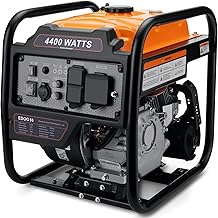
The Oxseryn Power Equipment 4400 Watts Inverter Generator is a strong choice for RV owners who need substantial gasoline-powered output without stepping up to a large conventional generator. Its open-frame design favors cooling and accessibility, while inverter operation and an ECO mode can help moderate fuel use and sound during lighter loads.
Champion 4000-Watt RV-Ready Inverter Generator
Champion’s 4000-Watt RV Ready Portable Inverter Generator strikes a sensible balance between camping capability and manageable size. Quiet Technology makes it better suited to shared campgrounds, and the included three-year warranty adds reassurance for buyers who want an established brand and straightforward RV compatibility.
maXpeedingrods MXR4000
The maXpeedingrods 4000 Watt Inverter Generator stands out for its Bluetooth app data monitoring, which is useful when the unit is positioned outside the RV or behind a campsite. Its remote data check, RV-ready design, and CO alarm make it a feature-rich option for campers who value visibility and safety as much as raw output.
Champion 4500-Watt RV-Ready Inverter Generator
For RVers who need a little more headroom, the Champion 4500-Watt RV Ready Portable Inverter Generator provides additional capacity for demanding appliances and startup surges. It remains a practical travel option thanks to inverter-based operation, Quiet Technology, and Champion’s three-year warranty.
BLAVOR 1600W Portable Power Station
The BLAVOR Portable Power Station 1600W is a fundamentally different solution: a quiet, exhaust-free power station built around a 1024Wh LiFePO4 battery. Its built-in solar panel, 100W USB-C charging, and 3200W peak output suit electronics, lighting, refrigeration, and modest RV loads, though its battery capacity is not a substitute for continuous air-conditioner operation.
Frequently Asked Questions
What size generator is best for an RV?
Many RV users find a 3000- to 4500-watt generator versatile enough for common appliances, but the right size depends on your air conditioner and other startup loads. Add the running watts of devices you expect to use together, then allow a safety margin.
Are inverter generators better for camping?
Usually, yes. Inverter generators generally deliver cleaner power for sensitive electronics and can run more quietly and efficiently at low demand. They are especially attractive in campgrounds where noise affects both your experience and nearby campers.
Can a solar generator run an RV air conditioner?
Small units such as the 300W Portable Solar Generator with a 40W Solar Panel are intended mainly for phones, lights, small electronics, and light-duty travel needs. A larger battery system may run an air conditioner briefly, but you should compare its continuous output, surge rating, and battery capacity with the appliance requirements.
Where should I operate a gas generator?
Run it outdoors, well away from doors, windows, vents, and awnings, with the exhaust directed away from people. Never use a gasoline generator inside an RV, garage, shed, or enclosed porch, and follow the manufacturer’s carbon-monoxide and grounding guidance.
Final Thoughts
The Champion 4000-Watt is a well-rounded campground pick, while the Champion 4500-Watt and Oxseryn 4400-Watt suit RVers who need more appliance headroom. For silent, low-maintenance power, the BLAVOR 1600W is the most appealing alternative when your loads are modest and battery capacity is sufficient.