Key takeaways
- Read the decibel figure skeptically: Anything at or under 38 dB is genuinely unobtrusive in a still outdoor room. Between 39 and 45 dB you’ll notice the cycle start. Above that, expect it to compete with evening ambient sound, and treat vague claims like “ultra quiet” with no number attached as unverified.
- Match the cooling technology to the setting: Compressor fridges cool deeper and hold temperature in warm rooms, but they cycle audibly. Thermoelectric units run near-silent with only a small fan, though they typically cool to about 30 degrees below ambient, which limits them in hot weather.
- Check the ambient temperature rating: Most compact fridges are rated for roughly 50–90°F. A sunroom that climbs past that will run the compressor constantly, which is both loud and hard on the unit. None of these are weather-rated appliances, so they belong in fully covered, enclosed spaces only.
- Give it breathing room and a proper circuit: Plan for two to three inches of clearance behind and above the cabinet, and never tuck one into a cabinet cavity. Outdoors-adjacent placements should use a GFCI outlet on a dedicated circuit, not an extension cord run under a rug.
- Decide whether you truly need a freezer: A separate freezer compartment adds insulation mass and a second thermal load, which usually means more running time. If you only chill drinks and snacks, a single-zone beverage cooler will be quieter and cheaper to run.
What's inside
Out on a screened porch at dusk, sound behaves differently than it does in a kitchen. There’s no dishwasher humming, no range hood, no traffic through the walls to bury a compressor kicking on. Which is exactly why so many people who set up a beverage fridge near their seating area end up regretting the purchase within a week. The unit itself is fine. The problem is that a 45-decibel drone that disappears into a busy kitchen becomes the loudest thing on a quiet patio, and every 20-minute cooling cycle pulls attention away from the conversation you built the space for.
This guide approaches quiet mini fridges from an outdoor-living perspective: covered patios, three-season rooms, she-sheds, poolside cabanas, and the bedrooms and home offices that sit right off them. We look at what noise ratings actually mean in practice, why compressor design matters more than cabinet size, and the ambient-temperature limits that decide whether a fridge survives a humid August in a sunroom. The picks below range from a full 4.5 cu. ft. two-door unit to a 4-liter cooler small enough to ride along to a campsite.
As an Amazon Associate we earn from qualifying purchases.


How to Choose a Quiet Mini Fridge (2026)
- Read the decibel figure skeptically: Anything at or under 38 dB is genuinely unobtrusive in a still outdoor room. Between 39 and 45 dB you’ll notice the cycle start. Above that, expect it to compete with evening ambient sound, and treat vague claims like “ultra quiet” with no number attached as unverified.
- Match the cooling technology to the setting: Compressor fridges cool deeper and hold temperature in warm rooms, but they cycle audibly. Thermoelectric units run near-silent with only a small fan, though they typically cool to about 30 degrees below ambient, which limits them in hot weather.
- Check the ambient temperature rating: Most compact fridges are rated for roughly 50–90°F. A sunroom that climbs past that will run the compressor constantly, which is both loud and hard on the unit. None of these are weather-rated appliances, so they belong in fully covered, enclosed spaces only.
- Give it breathing room and a proper circuit: Plan for two to three inches of clearance behind and above the cabinet, and never tuck one into a cabinet cavity. Outdoors-adjacent placements should use a GFCI outlet on a dedicated circuit, not an extension cord run under a rug.
- Decide whether you truly need a freezer: A separate freezer compartment adds insulation mass and a second thermal load, which usually means more running time. If you only chill drinks and snacks, a single-zone beverage cooler will be quieter and cheaper to run.
The Best Quiet Mini Fridges (2026) Reviewed
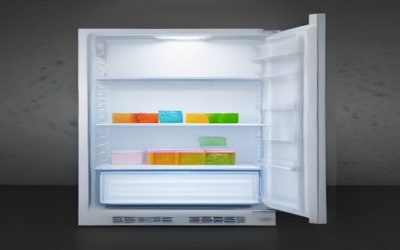
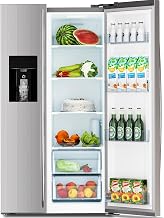
4.5 Cu. Ft. Two-Door Mini Fridge with Freezer (Satin Black)
This is the pick for a three-season room or guest suite where one appliance has to handle everything: the two-door layout keeps the freezer thermally separated so opening the fridge side doesn’t dump cold air, and the adjustable thermostat plus removable glass shelves let you reconfigure for tall bottles. The satin black finish also hides fingerprints better than the usual stainless-look laminate.
EUHOMY 18L Beverage Refrigerator (24 Cans)
A countertop beverage cooler is the smarter choice for a bar cart or outdoor kitchen counter, and this one’s digital control across 40–61°F means you can dial in cellar temperature for wine or true cold for cans. The compressor is well isolated for its size, and the LED interior light is bright enough to be useful after dark without washing out a patio’s lighting scheme.
Midea 1.6 Cu. Ft. Mini Fridge
Midea builds its own compressors, and it shows: this is the quietest full-size-adjacent unit here, with Energy Star certification that translates to shorter, less frequent run cycles. If it’s going in a bedroom that opens onto a deck, or anywhere you sleep within earshot, start with this one.
Antarctic Star 18L Beverage Cooler (24 Cans)
Very close in concept to the EUHOMY, with electronic temperature control over the same 40–61°F band and a freestanding footprint that suits a cabana or workshop counter. The glass door and interior lighting make it a reasonable display piece, though like all single-pane beverage coolers it will sweat in high humidity.
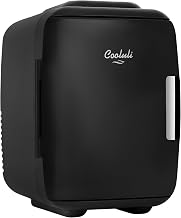
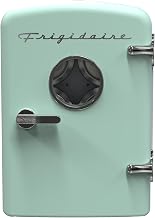
Cooluli 4L Portable Mini Fridge
Thermoelectric, so it’s effectively silent, and the 12V DC option means it moves from a desk to a truck to a campsite without any adapter juggling. Treat it as a six-can chiller or a skincare cooler rather than a food fridge, and don’t expect it to keep up in direct afternoon heat.
Frequently Asked Questions
What decibel level counts as quiet for a patio or sunroom?
Aim for 38 dB or lower. That’s roughly the level of a library, and in a space with crickets, a water feature, or a ceiling fan running, it effectively vanishes. Once you get into the mid-40s, the cycle becomes noticeable in any lull in conversation.
Can I leave a mini fridge on a covered patio year-round?
Not safely. These are indoor appliances: humidity corrodes the condenser, temperatures below the rated minimum can stop the thermostat from calling for cooling, and freezing damages the sealed system. A fully enclosed three-season room with supplemental heat is the practical limit.
Are thermoelectric coolers really silent?
Nearly. There’s no compressor, just a small fan you’ll hear only if you’re within a foot or two. The tradeoff is limited cooling depth, which is why they’re best for small volumes in climate-controlled spaces.
How can I make an existing mini fridge quieter?
Level it first, since a rocking cabinet amplifies vibration. Then set it on an anti-vibration mat, pull it away from walls and corners that act as sound reflectors, and confirm the rear vent has clear airflow. Those three fixes solve most complaints without buying anything new.
Final Thoughts
For a bedroom or a room you actually relax in, the Midea 1.6 cu. ft. is the most reliably quiet compressor unit on this list. If you need a freezer and real capacity for a three-season room or guest space, go with the 4.5 cu. ft. two-door satin black model. And for a bar cart, cabana counter, or outdoor kitchen where drinks are the whole job, the EUHOMY 18L beverage cooler delivers precise temperature control in a footprint that won’t dominate the space.