Key takeaways
- Diameter and arbor: Match the blade diameter and arbor hole to your saw exactly. A 10-inch blade with a 5/8-inch arbor is common, while compact saws may require an 8-1/4-inch blade and some 12-inch saws use a 1-inch arbor.
- Tooth count: Lower tooth counts remove material quickly during ripping, while higher counts produce smoother crosscuts and cleaner furniture-grade edges. More teeth are not automatically better for every task.
- Tooth design: Alternate top bevel, or ATB, teeth are a strong all-purpose choice for wood. Look for carbide-tipped teeth when you want longer service life and the ability to sharpen the blade later.
- Cutting material: Standard wood blades work well on lumber, plywood, and many panels. If your outdoor project includes plastic or composite boards, choose a blade specifically rated for those materials.
- Application and kerf: Use a ripping blade for long grain cuts, a fine-finish blade for visible surfaces, and a combination set when changing blades often is inconvenient. Check that the blade’s kerf suits your saw’s power and riving-knife setup.
What's inside
Choosing a table saw blade can feel like a small decision until a rough cut, burning wood, or chipped veneer turns a weekend project into a repair job. Tooth count, blade diameter, kerf, arbor size, and the material on your workbench all affect whether the cut feels controlled or frustrating.
This guide compares practical options for furniture makers, DIY renovators, and outdoor-living enthusiasts building benches, planters, decking features, or garden storage. The focus is on cut quality, versatility, and sensible blade selection for ripping, crosscutting, framing, and fine finish work.
As an Amazon Associate we earn from qualifying purchases.




How to Choose a/an Saw Blade For Table Saw (2026)
- Diameter and arbor: Match the blade diameter and arbor hole to your saw exactly. A 10-inch blade with a 5/8-inch arbor is common, while compact saws may require an 8-1/4-inch blade and some 12-inch saws use a 1-inch arbor.
- Tooth count: Lower tooth counts remove material quickly during ripping, while higher counts produce smoother crosscuts and cleaner furniture-grade edges. More teeth are not automatically better for every task.
- Tooth design: Alternate top bevel, or ATB, teeth are a strong all-purpose choice for wood. Look for carbide-tipped teeth when you want longer service life and the ability to sharpen the blade later.
- Cutting material: Standard wood blades work well on lumber, plywood, and many panels. If your outdoor project includes plastic or composite boards, choose a blade specifically rated for those materials.
- Application and kerf: Use a ripping blade for long grain cuts, a fine-finish blade for visible surfaces, and a combination set when changing blades often is inconvenient. Check that the blade’s kerf suits your saw’s power and riving-knife setup.
The Best Saw Blade For Table Saw (2026)s Reviewed
FOXBC 10-Inch 80-Tooth Ultra Finish Blade
This FOXBC blade is aimed at clean, presentation-ready cuts in hardwood, plywood, and trim stock. Its 80-tooth configuration favors smooth crosscuts and reduced splintering, making it a useful choice for furniture components, cabinet parts, and carefully finished outdoor details.
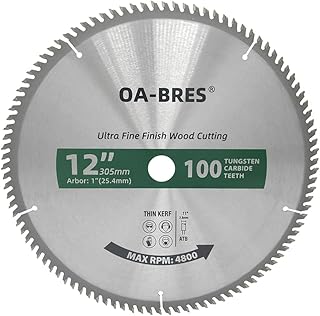
12-Inch 100-Tooth ATB Fine Finish Blade
With 100 ATB teeth, this 12-inch blade is built for an exceptionally refined finish when paired with a compatible saw. It suits large table saws and miter saws used for visible crosscuts, although its 1-inch arbor means buyers should verify compatibility before ordering.
FOXBC 8-1/4-Inch 60-Tooth Fine Finish Blade
Designed for compact table saws, this 60-tooth FOXBC blade offers a helpful middle ground between speed and surface quality. The diamond knockout and 5/8-inch arbor support compatibility with many portable saws, making it particularly practical for mobile workshops and on-site garden projects.
10-Inch 80T Carbide-Tipped Wood and Composite Blade
This 80-tooth option is notable for covering wood, plastic, and composite materials, which can be valuable when an outdoor build combines timber with manufactured decking or trim. Its carbide-tipped teeth and 5/8-inch arbor make it a versatile choice for a standard 10-inch saw, provided the manufacturer’s material limits are followed.
10-Inch Three-Pack: 32T, 60T, and 80T
This three-blade set gives a workshop a straightforward way to match the blade to the job: 32 teeth for faster framing cuts, 60 teeth for general fine work, and 80 teeth for ultra-fine results. It is a strong value-oriented setup for homeowners who move between rough construction, shelving, furniture, and outdoor projects.
Frequently Asked Questions
Is a higher tooth count always better?
No. High-tooth blades generally leave smoother edges but cut more slowly and may produce more heat during long rips. A lower-tooth blade is often the better tool for fast cuts through thick stock, while a fine blade is preferable for visible crosscuts.
Can I use a table saw blade on a miter saw?
Often, yes, when the blade diameter, arbor, speed rating, and intended material are compatible. Always check both saw and blade instructions, and never exceed the blade’s maximum rated revolutions per minute.
What blade is best for outdoor furniture?
For ordinary lumber, a 40- to 60-tooth carbide-tipped blade is a useful starting point. If the project includes composite decking, plastic trim, or other manufactured materials, choose a blade explicitly designed to handle them.
When should I replace a table saw blade?
Replace or professionally sharpen a blade when cuts become rough, the motor labors unusually hard, burning appears despite correct setup, or teeth are damaged. Cleaning pitch and resin from the teeth can restore performance before replacement is necessary.
Final Thoughts
For polished furniture work, the FOXBC 10-Inch 80-Tooth blade is a focused fine-finish pick, while the FOXBC 8-1/4-Inch 60-Tooth blade suits compact saw owners. For the broadest household coverage, the 10-Inch three-pack is the most flexible choice, giving you a practical blade for ripping, general cutting, and detailed finishing.