Key takeaways
- Cutting capacity: Look at rip width, maximum depth, and bevel range before choosing a saw. Wider capacity helps with cabinets and tabletops, while compact models suit trim, shelving, and smaller furniture parts.
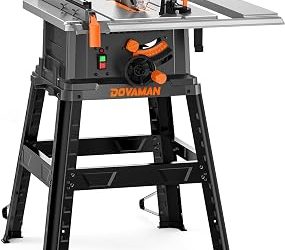
- Stand and portability: A folding or wheeled stand is valuable when your workshop doubles as a driveway, deck, or storage area. Check both setup convenience and how firmly the stand supports the saw during a cut.
- Fence quality: A straight, locking fence matters more than headline motor speed. Smooth adjustment and dependable locking help beginners make repeatable, square cuts.
- Dust and weather planning: Outdoor work creates extra cleanup and exposes tools to moisture. Choose a model with dust collection compatibility, and store any table saw indoors or under genuinely dry cover.
- Project fit: Match the saw to your material and workspace. Full-size 10-inch jobsite saws are versatile furniture tools, while an 8-1/4-inch compact model or miniature craft saw is easier to manage for light-duty work.
What's inside
Choosing a first table saw can feel like picking a trail vehicle: compact models are easier to store and transport, while larger saws offer more room, stability, and confidence when breaking down full sheets. For home furniture projects, the wrong compromise can mean awkward cuts, a frustrating setup, or a tool that quickly outgrows your workshop.
This guide focuses on practical starter-friendly choices for garages, sheds, patios, and mobile outdoor work areas. We weigh cutting capacity, stand design, portability, fence control, safety-minded features, and the kind of furniture or DIY work each saw suits best.
As an Amazon Associate we earn from qualifying purchases.



How to Choose a/an Starter Table Saw (2026)
- Cutting capacity: Look at rip width, maximum depth, and bevel range before choosing a saw. Wider capacity helps with cabinets and tabletops, while compact models suit trim, shelving, and smaller furniture parts.
- Stand and portability: A folding or wheeled stand is valuable when your workshop doubles as a driveway, deck, or storage area. Check both setup convenience and how firmly the stand supports the saw during a cut.
- Fence quality: A straight, locking fence matters more than headline motor speed. Smooth adjustment and dependable locking help beginners make repeatable, square cuts.
- Dust and weather planning: Outdoor work creates extra cleanup and exposes tools to moisture. Choose a model with dust collection compatibility, and store any table saw indoors or under genuinely dry cover.
- Project fit: Match the saw to your material and workspace. Full-size 10-inch jobsite saws are versatile furniture tools, while an 8-1/4-inch compact model or miniature craft saw is easier to manage for light-duty work.
The Best Starter Table Saw (2026)s Reviewed
DEWALT DWE7491RS
The DEWALT 10-inch table saw with rolling stand is the strongest all-around choice for a beginner who expects to build furniture, shelving, planters, or outdoor benches. Its generous 32-1/2-inch rip capacity and wheeled setup make large panels more manageable, although its larger footprint needs a dedicated storage spot.
SKIL TS6307-00
The SKIL 15 Amp 10-inch portable table saw with folding stand offers a particularly approachable balance of price, capability, and setup speed. Its folding stand is useful for a shared garage or outdoor workspace, and the 10-inch blade gives new woodworkers room to grow beyond basic trim cuts.
Evolution R10TBLX
The Evolution R10TBLX stands out for its wheeled stand, precision fence, zero-clearance throat plate, and included dado plate. With a 26-inch rip capacity and 0-to-45-degree bevel range, it is a versatile option for furniture joinery and angled outdoor projects, provided the buyer confirms blade and accessory compatibility for intended materials.
DEWALT DWE7485
The DEWALT 8-1/4-inch compact portable jobsite table saw is ideal when storage space and carrying weight matter more than maximum panel capacity. It is a sensible starter for apartment garages, small workshops, and mobile repair work, though its smaller blade limits the depth available for thicker stock.
Prostormer 10-Inch Table Saw
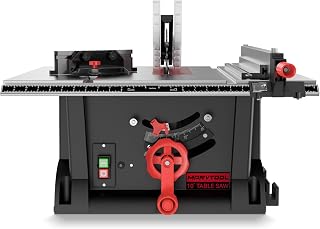
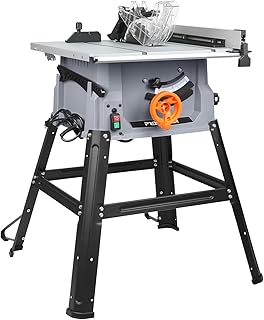
The Prostormer 10-inch table saw with stand gives DIY users a full-size blade and portable format at an accessible level. It can suit decking, trim, and general woodworking, but beginners should inspect the fence alignment, stand rigidity, and adjustment smoothness carefully during setup before relying on it for precision furniture work.
Frequently Asked Questions
Is a 10-inch table saw best for beginners?
Usually, yes. A 10-inch saw offers a useful combination of cutting depth, common blade availability, and versatility for furniture projects. It is larger than necessary for small trim work but gives a beginner more room to develop skills without immediately needing an upgrade.
Can I use a table saw outdoors?
Yes, if the surface is firm, level, and dry. Keep cords away from damp ground, avoid operating in rain or heavy condensation, and bring the saw inside after use. Outdoor work also makes eye protection, hearing protection, and dust control especially important.
What safety features should a starter saw have?
Look for a riving knife or splitter, blade guard, reliable fence lock, stable support, and an accessible power switch. Use push sticks or push blocks for narrow cuts, keep both hands out of the blade path, and never remove safety equipment to make a cut easier.
Is the Mini Table Saw suitable for furniture making?
The 96W Mini Table Saw is better suited to craft-scale work involving thin wood, acrylic, plastic, or PCB materials. Its adjustable speed and compact format can be handy for model making, but it is not a substitute for a full-size table saw when cutting furniture components or substantial lumber.
Final Thoughts
For the broadest furniture-making potential, the DEWALT DWE7491RS is the leading starter pick, while the SKIL TS6307-00 is a practical choice for buyers who want a capable folding setup. Choose the compact DEWALT DWE7485 when storage and portability come first; whichever model you select, prioritize a stable work surface, careful setup, and disciplined safety habits.