Key takeaways
- Fence quality above all else: A rip fence that stays parallel to the blade is the single biggest determinant of whether your joints close up. Rack-and-pinion fences hold alignment far better than single-lock designs, and that difference shows up immediately when you’re ripping 6-foot deck boards.
- Rip capacity for real materials: Anything under about 24 inches means you cannot break down a sheet of plywood on-center. If you plan to build storage benches, planter boxes, or outdoor cabinetry, look for 28 inches or more to the right of the blade.
- Motor and RPM under load: All 15 amp saws sound similar on paper, but wet pressure-treated lumber and 2x cedar will expose a weak one. Higher no-load RPM helps, though sustained torque and a sharp thin-kerf blade matter more.
- Stand and mobility: A folding or rolling stand is not a luxury if your shop is a garage bay you have to reclaim by Sunday night. Rolling stands are easier on your back; folding scissor stands set up faster in tight spaces.
- Safety hardware that comes in the box: Riving knife, blade guard, anti-kickback pawls, and a push stick. Beginners have the highest kickback risk, and a saw with a proper riving knife rather than a basic splitter is worth paying up for.
What's inside
Buying your first table saw is where most new woodworkers stall out. The specs read like a foreign language, the price range spans a factor of ten, and the honest truth is that a lot of beginners are cutting cedar for planters and building deck benches, not milling hardwood in a climate-controlled shop. That mismatch matters. A saw that lives half its life on a patio, gets wheeled out for a weekend pergola build, and then goes back in the garage has different priorities than a stationary cabinet saw: portability, a fence you can trust after being bumped around, and enough motor to push through pressure-treated stock without bogging.
This guide is written from years of building outdoor furniture, planters, and shade structures, where the material is wet, dimensionally inconsistent, and unforgiving of a wandering rip cut. Below are the portable and jobsite saws worth your money in 2026, along with the handful of features that actually change your results as a beginner and the ones you can safely ignore until your third or fourth project.
As an Amazon Associate we earn from qualifying purchases.




How to Choose a Table Saw For Beginner Woodworker (2026)
- Fence quality above all else: A rip fence that stays parallel to the blade is the single biggest determinant of whether your joints close up. Rack-and-pinion fences hold alignment far better than single-lock designs, and that difference shows up immediately when you’re ripping 6-foot deck boards.
- Rip capacity for real materials: Anything under about 24 inches means you cannot break down a sheet of plywood on-center. If you plan to build storage benches, planter boxes, or outdoor cabinetry, look for 28 inches or more to the right of the blade.
- Motor and RPM under load: All 15 amp saws sound similar on paper, but wet pressure-treated lumber and 2x cedar will expose a weak one. Higher no-load RPM helps, though sustained torque and a sharp thin-kerf blade matter more.
- Stand and mobility: A folding or rolling stand is not a luxury if your shop is a garage bay you have to reclaim by Sunday night. Rolling stands are easier on your back; folding scissor stands set up faster in tight spaces.
- Safety hardware that comes in the box: Riving knife, blade guard, anti-kickback pawls, and a push stick. Beginners have the highest kickback risk, and a saw with a proper riving knife rather than a basic splitter is worth paying up for.
The Best Table Saw For Beginner Woodworker (2026)s Reviewed
DEWALT DWE7491RS 10-Inch Jobsite Saw
This is the saw most experienced builders point beginners toward, and the reason is the rack-and-pinion fence paired with 32-1/2 inches of rip capacity, which together let you break down plywood and rip long deck boards without shimming or second-guessing. The rolling stand handles gravel driveways and thresholds better than any scissor stand, and the 4800 RPM motor holds its speed in damp construction lumber.
SKIL TS6307-00 15 Amp Portable Jobsite Saw
The best value entry point for someone building outdoor furniture on weekends: it includes a rack-and-pinion fence at a notably lower price than the DEWALT, plus a genuinely quick-folding stand and a smart dust port that keeps cedar fluff off your patio. Rip capacity is more modest, so plan on a track saw or circular saw guide for full sheet goods.
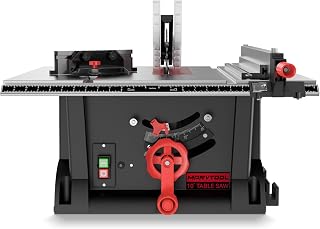
15 Amp Compact Benchtop Saw with 36T Blade
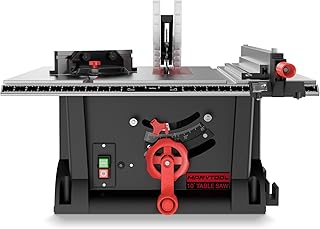
At 4600 RPM with a 36-tooth blade out of the box, this compact benchtop saw is a sensible pick if your projects top out at planter boxes, side tables, and trellis work. Bevels run 0 to 45 degrees with 90-degree crosscut support, though you’ll want to verify fence alignment before your first real cut.
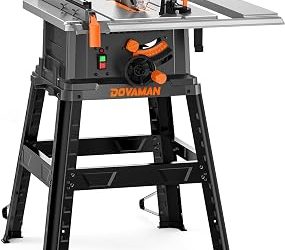
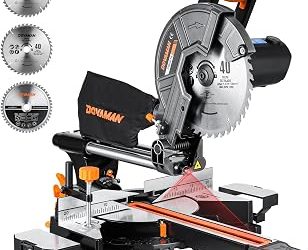
10-Inch 15A Multifunctional Saw with Stand and Push Stick
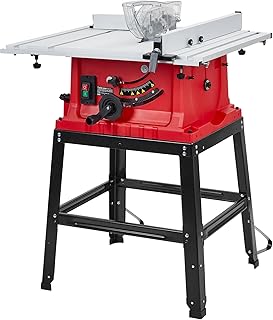
A straightforward 5000 RPM saw that ships with a stand and push stick, making it a complete starting setup rather than a saw plus a shopping list. Adjustable blade height and full bevel range cover the joinery beginners actually use, and the included push stick signals the right habits from day one.
10-Inch 15 Amp Saw with 36 x 25 Inch Tabletop
The larger 36 by 25 inch work surface is the standout here, giving you meaningful support when crosscutting wider boards for bench seats and tabletops. It also handles plastics and light metals, which is useful if you build with composite decking or trim.
Frequently Asked Questions
Do I need a table saw if I already own a circular saw?
For repeatable rips, yes. A circular saw with a guide can break down sheets, but a table saw is what gives you twenty identical slats for a bench back without measuring each one.
Can I use a table saw outdoors?
Yes, and it’s often preferable for dust control, but keep it out of rain, run it on a GFCI-protected circuit, and set up on level ground so the stand doesn’t rock mid-cut.
Should I upgrade the included blade?
Almost always. A quality 40-tooth thin-kerf combination blade is the cheapest meaningful upgrade you can make and will improve cut quality more than spending another hundred on the saw itself.
Is a jobsite saw good enough long term?
For outdoor furniture, planters, and deck projects, a good jobsite saw will serve you for years. You’d move to a hybrid or cabinet saw mainly for fine hardwood furniture and heavy daily use.
Final Thoughts
If you want one saw that will still be right in five years, the DEWALT DWE7491RS earns its price through fence accuracy and rip capacity. The SKIL TS6307-00 is the smarter buy for most beginners working on outdoor projects, delivering the same style of rack-and-pinion fence for meaningfully less, and the 36 x 25 inch tabletop model is worth a look if wide crosscut support matters more to you than portability.