Key takeaways
- Rip capacity: This is the distance between the blade and the fence at full extension, and it decides whether you can break down a sheet of plywood for a deck box. Anything under 24 inches means you’ll be doing awkward workarounds; 30 inches or more handles the majority of outdoor furniture layouts.
- Fence quality: A fence that flexes or drifts out of parallel will ruin joints before you ever pick up a screw. Look for a rack-and-pinion system — it moves both ends of the fence together and stays square, which matters enormously when you’re cutting twenty identical bench slats.
- Portability and storage: Most beginners work in a garage that also holds a car. A folding rolling stand lets you wheel the saw out, work, and tuck it against a wall. Compact benchtop models are lighter but need a solid surface, so factor that in.
- Dust collection: Cedar and pressure-treated dust is unpleasant at best and genuinely worth avoiding at worst. A shrouded blade with a proper dust port that fits a shop vac keeps your workspace usable and your lungs happier.
- Cut depth and bevel: Outdoor projects lean on thicker stock than indoor cabinetry. You want at least 3 inches of cut depth at 90 degrees so a 4×4 post can be cut in two passes, plus a smooth 0–45 degree bevel for drainage angles and mitered frames.
What's inside
Most people don’t buy their first table saw because they want to be woodworkers. They buy one because a cedar planter costs $180 at the garden center, a slatted patio bench costs $400, and both are basically straight cuts and screws. The gap between wanting to build outdoor furniture and actually building it is almost always the same thing: no reliable way to rip a board straight. Circular saws wander. Miter saws can’t rip. And so the lumber sits in the garage until it warps.
This guide is written for that person — someone who wants to turn 2x4s and cedar fence pickets into things that live on a deck. I’ve spent years building outdoor pieces that have to survive weather, sun, and people sitting on them wrong, and the saw does more to determine the outcome than any other tool in the shop. Below, I’ve broken down what actually matters in a beginner table saw for 2026, then reviewed the five models I’d recommend to someone starting from zero.
As an Amazon Associate we earn from qualifying purchases.



How to Choose a/an Table Saw For Beginner Woodworking (2026)
- Rip capacity: This is the distance between the blade and the fence at full extension, and it decides whether you can break down a sheet of plywood for a deck box. Anything under 24 inches means you’ll be doing awkward workarounds; 30 inches or more handles the majority of outdoor furniture layouts.
- Fence quality: A fence that flexes or drifts out of parallel will ruin joints before you ever pick up a screw. Look for a rack-and-pinion system — it moves both ends of the fence together and stays square, which matters enormously when you’re cutting twenty identical bench slats.
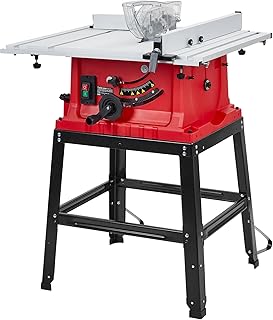
- Portability and storage: Most beginners work in a garage that also holds a car. A folding rolling stand lets you wheel the saw out, work, and tuck it against a wall. Compact benchtop models are lighter but need a solid surface, so factor that in.
- Dust collection: Cedar and pressure-treated dust is unpleasant at best and genuinely worth avoiding at worst. A shrouded blade with a proper dust port that fits a shop vac keeps your workspace usable and your lungs happier.
- Cut depth and bevel: Outdoor projects lean on thicker stock than indoor cabinetry. You want at least 3 inches of cut depth at 90 degrees so a 4×4 post can be cut in two passes, plus a smooth 0–45 degree bevel for drainage angles and mitered frames.
The Best Table Saw For Beginner Woodworking (2026)s Reviewed
DEWALT DWE7491RS 10-Inch with Rolling Stand
This is the saw I recommend when someone tells me they’re serious about building outdoor furniture and want to buy once. The 32-1/2-inch rip capacity swallows plywood for storage benches, and the rack-and-pinion fence holds true through long production runs of slats and pickets.
SKIL TS6307-00 15 Amp Portable Jobsite Saw
The best-balanced entry point in the lineup — you get a rack-and-pinion fence and a folding stand for meaningfully less money than the DEWALT. Its onboard water-cooled belt drive runs quieter than the direct-drive competition, which your neighbors will appreciate on a Saturday.
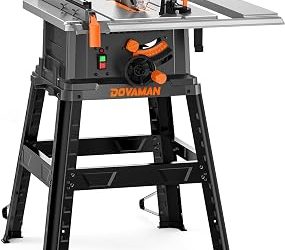
DOVAMAN DTS10A 10-Inch with Stand
A sensible budget choice with a copper motor and a single-side extension that gives you breathing room on wider cuts. The 3.35-inch cut depth at 90 degrees handles 4×4 post work, though the fence benefits from a careful setup check before your first real project.
DEWALT DWE7485 8-1/4 in. Compact Jobsite Saw
Smaller blade, smaller footprint, same DEWALT build discipline — ideal if your shop is a corner of the garage and you’ll be lifting the saw onto a workbench. Rip capacity is tighter than its big brother, so it suits planters, side tables, and trellis work better than full-sheet plywood.
10-Inch 15 Amp 5000 RPM Table Saw with Stand and Cover
The generous 36 x 25-inch tabletop is genuinely useful for supporting long deck boards without an outfeed setup, and the included cover is a nice touch for garage storage. Adjustable depth and a 0–45 degree bevel cover everything a first-year outdoor build list demands.
Frequently Asked Questions
Can I cut pressure-treated lumber on these saws?
Yes, all of them handle it fine. Wear a respirator rather than a dust mask, run your dust collection, and clean resin buildup off the blade afterward since treated wood is wet and gummy.
Do I need a 10-inch blade, or is 8-1/4 enough?
For most outdoor furniture, 8-1/4 inches is workable but limiting. A 10-inch blade gives you the depth to cut 4×4 posts in a single flip and a much wider selection of specialty blades.
What blade should I start with?
Swap the stock blade for a 40-tooth general-purpose carbide blade. It rips cedar and pine cleanly enough for exposed outdoor joinery and crosscuts without excessive tearout.
Is a jobsite saw accurate enough for furniture?
Absolutely, provided you verify the fence is parallel to the blade and the blade is square to the table before you start. Ten minutes of setup outweighs any spec sheet difference between these models.
Final Thoughts
If your project list includes deck boxes, dining benches, and anything involving plywood, the DEWALT DWE7491RS is the saw that won’t limit you as your skills grow. The SKIL TS6307-00 is the value pick I’d hand most beginners, delivering the fence quality that actually determines cut accuracy at a friendlier price, while the compact DEWALT DWE7485 makes the most sense for tight garages and smaller planter-and-trellis work.