Key takeaways
- Rip capacity: Anything under 24 inches to the right of the blade means ripping plywood becomes a two-person job. For sheet goods and wide tabletop glue-ups, prioritize models with a rack-and-pinion or extendable table that clears 24 inches.
- Fence rigidity: This is the single biggest quality gap in budget saws. Lock the fence, then push hard against the far end. Any flex there shows up as a tapered rip. Rack-and-pinion systems stay parallel far more reliably than single-point clamps.
- Motor and blade speed: A 15-amp universal motor is standard at this price. Higher RPM helps in softwoods and composites, while copper-wound motors tend to hold speed better through dense oak or wet treated pine without stalling.
- Dust management: Outdoor projects mean cutting resinous cedar and redwood, which produces fine, clingy dust. A shrouded blade with a 2.5-inch port connected to a shop vac keeps the deck and your lungs cleaner than an open-bottom cabinet ever will.
- Portability and setup: Rolling stands are worth the extra weight if you work on a driveway or patio. Folding-leg designs suit tight garages. Either way, check that the saw locks flat and level, because an unstable base makes accurate work impossible.
What's inside
Anyone who has tried to rip cedar for a planter box or trim decking boards with a circular saw and a chalk line knows where that ends: wandering cuts, burned edges, and joints that never quite close. A table saw fixes that problem, but the pricing gets discouraging fast. Cabinet saws live in a different universe, and plenty of buyers assume anything affordable will wobble, bog down in wet pressure-treated stock, or arrive with a fence that can’t hold square. That reputation was earned a decade ago. It no longer holds.
The sub-$500 portable segment has quietly become the sweet spot for people building outdoor furniture, pergolas, garden benches, and patio storage. These saws break down 4/4 hardwood, cross-cut framing lumber, and bevel picket tops without dominating a garage bay. This guide covers what actually matters at this budget: rip capacity, fence repeatability, dust control, and whether the stand is worth carrying to the far end of the yard. Below are the models earning shop time in 2026, plus the specs I’d check before committing.
As an Amazon Associate we earn from qualifying purchases.




How to Choose a Table Saw Under 500 Dollars (2026)
- Rip capacity: Anything under 24 inches to the right of the blade means ripping plywood becomes a two-person job. For sheet goods and wide tabletop glue-ups, prioritize models with a rack-and-pinion or extendable table that clears 24 inches.
- Fence rigidity: This is the single biggest quality gap in budget saws. Lock the fence, then push hard against the far end. Any flex there shows up as a tapered rip. Rack-and-pinion systems stay parallel far more reliably than single-point clamps.
- Motor and blade speed: A 15-amp universal motor is standard at this price. Higher RPM helps in softwoods and composites, while copper-wound motors tend to hold speed better through dense oak or wet treated pine without stalling.
- Dust management: Outdoor projects mean cutting resinous cedar and redwood, which produces fine, clingy dust. A shrouded blade with a 2.5-inch port connected to a shop vac keeps the deck and your lungs cleaner than an open-bottom cabinet ever will.
- Portability and setup: Rolling stands are worth the extra weight if you work on a driveway or patio. Folding-leg designs suit tight garages. Either way, check that the saw locks flat and level, because an unstable base makes accurate work impossible.
The Best Table Saw Under 500 Dollars (2026)s Reviewed
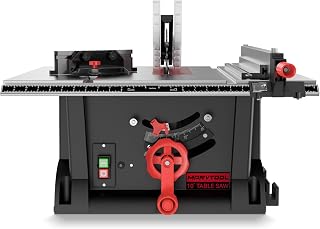
SKIL 15 Amp 10″ Jobsite Table Saw (TS6307-00)
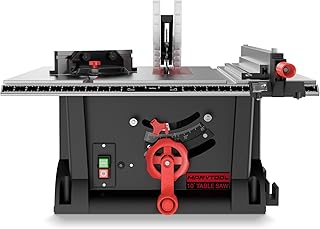
The best all-around pick for outdoor builds: a genuine 10-inch blade, a rack-and-pinion fence that returns to the same spot cut after cut, and a folding stand that sets up in seconds. It handles 2x framing stock and hardwood rails without complaint, which makes it my default recommendation for pergola and bench work.
DEWALT 15 Amp 8-1/4″ Compact Jobsite Saw (DWE7485)
Smaller blade, better engineering. The fence and depth adjustments feel a class above the rest of this list, and the 24.5-inch rip capacity handles plywood for cabinet-style planters. The tradeoff is cut height, so thick slab or 4×4 work needs a second pass.
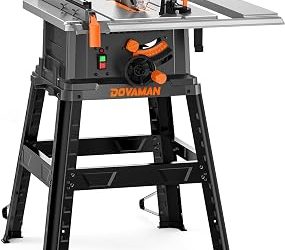
DOVAMAN 10″ 15A Table Saw (DTS10A)
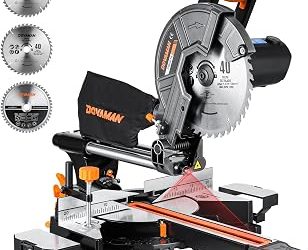
A strong value play with a copper motor that holds torque through dense stock and a table that extends on one side for wider rips. The 3.35-inch cut at 90 degrees clears standard 2x lumber, which most compact saws can’t manage.
Table Saw with 98% Dust Collection System
Dust control is the headline here, and for anyone working in an attached garage or a covered patio, it’s a real quality-of-life upgrade. Cut depth tops out lower than the 10-inch competition, so plan it for trim, slats, and picket work rather than heavy framing.
10″ 15 Amp Table Saw with Stand and Protective Cover
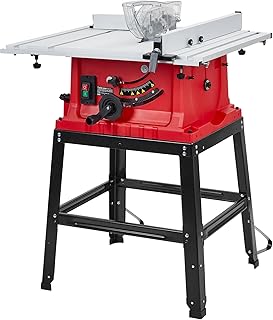
The generous 36 x 25-inch tabletop supports long deck boards better than most saws at this price, and the included cover matters if the saw lives outdoors under an eave. Adjustable depth plus 0-45 degree bevels cover nearly every outdoor furniture joint you’ll need.
Frequently Asked Questions
Can a portable table saw cut pressure-treated lumber?
Yes, though damp treated stock is hard on blades and leaves corrosive residue. Use a thin-kerf carbide blade, let boards dry when you can, and wipe the cast surface down with paste wax after each session.
Is an 8-1/4 inch blade a dealbreaker?
Not for most outdoor furniture. It cuts nominal 2x material in one pass and handles all sheet goods. You’ll only miss the extra height on 4×4 posts and thick slabs.
Do I need to upgrade the stock blade?
Almost always. Factory blades are typically 24 to 40 tooth general-purpose units. A 40-tooth combination blade dramatically improves edge quality on cedar and hardwood.
How much space does one of these really need?
Plan for roughly eight feet of clearance in front and behind for infeed and outfeed on long boards. The saw’s footprint is small; the working envelope is not.
Final Thoughts
For most people building outdoor furniture on a budget, the SKIL TS6307-00 delivers the best balance of true 10-inch capacity, fence accuracy, and fast setup. The DEWALT DWE7485 is the pick if precision and portability outrank raw cut depth, and the DOVAMAN DTS10A earns a look when you want maximum motor and capacity per dollar. Any of the three will outperform a circular saw and a hopeful eye by a wide margin.