Key takeaways
- Moisture rating: Damp rated is the minimum for any enclosed bathroom or three-season space. If the fixture lives on a screened porch, near a pool bath, or under an open soffit where humidity condenses, insist on wet rated instead.
- Color temperature: 2700K–3000K reads warm and residential, ideal for evening use and guest baths. 4000K sits neutral and honest. 5000K is task lighting: excellent for makeup, shaving, and detail work, less relaxing for a soak.
- CRI: Anything below CRI 80 will muddy skin tones and cosmetics. CRI 85+ is the practical sweet spot for mirror work, and the difference is obvious the moment you compare two bulbs side by side.
- Dimmable or not: Pairing a non-dimmable bulb with a dimmer switch causes flicker, hum, and shortened life. Confirm which you have before ordering, and buy dimmable if you ever plan to add a dimmer.
- Lumens over wattage: Ignore “60W equivalent” marketing and read the lumen figure. A three- or four-bulb vanity bar wants roughly 1,200–1,800 total lumens; more than that turns a small bathroom into a dental office.
What's inside
Bathroom vanity lighting sits in an odd spot: it has to be flattering enough for close-up grooming, bright enough to be useful at 6 a.m., and tough enough to shrug off steam, temperature swings, and the occasional splash. Most buyers grab whatever globe bulb fits the socket, then discover their skin reads gray in the mirror, the dimmer buzzes, or two bulbs in the row have quietly shifted color after a year. The fixture gets blamed. Usually it’s the bulb.
I spend most of my time speccing lighting for porches, poolhouse baths, cabana changing rooms, and covered outdoor kitchens, which means I judge a vanity bulb by a harsher standard than the average indoor buyer does. Damp air, cold nights, and exposed sockets separate the durable from the disposable fast. Below are the vanity bulbs I keep coming back to for 2026, plus the specs that actually matter when you’re choosing between them.
As an Amazon Associate we earn from qualifying purchases.

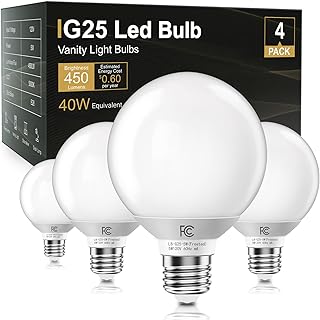


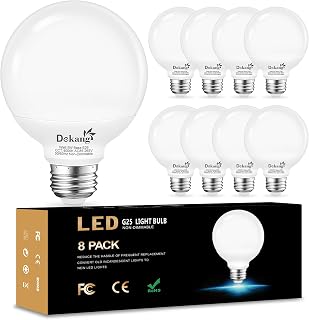
How to Choose a Vanity Light Bulbs (2026)
- Moisture rating: Damp rated is the minimum for any enclosed bathroom or three-season space. If the fixture lives on a screened porch, near a pool bath, or under an open soffit where humidity condenses, insist on wet rated instead.
- Color temperature: 2700K–3000K reads warm and residential, ideal for evening use and guest baths. 4000K sits neutral and honest. 5000K is task lighting: excellent for makeup, shaving, and detail work, less relaxing for a soak.
- CRI: Anything below CRI 80 will muddy skin tones and cosmetics. CRI 85+ is the practical sweet spot for mirror work, and the difference is obvious the moment you compare two bulbs side by side.
- Dimmable or not: Pairing a non-dimmable bulb with a dimmer switch causes flicker, hum, and shortened life. Confirm which you have before ordering, and buy dimmable if you ever plan to add a dimmer.
- Lumens over wattage: Ignore “60W equivalent” marketing and read the lumen figure. A three- or four-bulb vanity bar wants roughly 1,200–1,800 total lumens; more than that turns a small bathroom into a dental office.
The Best Vanity Light Bulbs (2026)s Reviewed
Sunco 10 Pack G25 LED Globe, 3000K Warm White
Wet rated and dimmable with a vintage filament look, this is the one I spec for covered porch fixtures and cabana baths where the socket sees real humidity. The 3000K output flatters wood, stone, and tile without the yellow cast older warm bulbs had, and CRI80 is honest enough for daily grooming.
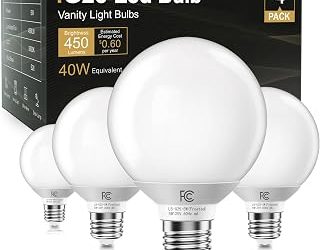
TJOY G25 Vanity Bulb, 5000K Daylight, 4 Pack
CRI85+ at 5000K makes this the sharpest color-accuracy option here, which is why it belongs above a makeup mirror rather than in a soaking-tub alcove. It’s non-dimmable, so verify you’re on a standard switch before installing.
DAYBETTER BR30 LED Flood, 5000K, 12 Pack
Not a globe bulb, and that’s the point: when a bathroom or outdoor changing room relies on recessed cans instead of a vanity bar, these 800-lumen dimmable floods deliver even, shadow-free wash across the counter. Buying twelve at once is the sensible move if you’re relamping a whole level.
Sunco 50 Pack G25 Vanity Globe, 2700K Soft White
The frosted lens diffuses beautifully and the 2700K tone is the warmest, most forgiving light in this lineup, well suited to guest baths and evening-use spaces. At fifty bulbs it’s a contractor or whole-property buy; damp rated, dimmable, and cheap enough per bulb to keep spares on the shelf.
8 Pack LED Vanity Bulbs, 4000K Natural Daylight
4000K with CRI 85+ is the compromise I recommend most often, since it renders color accurately without the clinical edge of 5000K. The 8-pack covers two typical vanity bars, though the non-dimmable design rules out dimmer circuits.
Frequently Asked Questions
What color temperature is best for a bathroom vanity?
For general use, 3000K–4000K balances comfort and accuracy. Choose 5000K only if precision grooming is the priority, and keep every bulb in the fixture at the same Kelvin rating to avoid a patchwork effect.
Can I use these bulbs in an outdoor or porch fixture?
Only if the rating allows it. Wet rated bulbs, like the Sunco 3000K globes, handle direct exposure to moisture. Damp rated bulbs suit covered, ventilated areas but shouldn’t take rain or spray.
Why do my LED bulbs flicker or hum?
The usual cause is a non-dimmable bulb on a dimmer circuit, or an older dimmer that isn’t LED-compatible. Swap to dimmable bulbs, or replace the dimmer with a modern LED-rated model.
How many lumens does a vanity need?
Plan on 1,200–1,800 lumens total for a standard bathroom. Three 450-lumen globes land near the low end, which is comfortable; add a fourth bulb or a recessed can if you need more punch.
Final Thoughts
For humid, covered, or semi-exposed spaces, the wet rated Sunco 10 Pack G25 in 3000K is the most versatile pick on this list. If mirror accuracy matters most, the TJOY G25 in 5000K delivers the cleanest color rendering, and anyone relamping an entire property will get the best value from the 50-pack Sunco 2700K globes.