Key takeaways
- Capacity: Match the saw’s throat and cutting height to your usual material, not an occasional oversized project. Five-inch machines suit tubing and smaller brackets, while larger models make heavier stock less restrictive.
- Speed control: Variable speed is valuable when switching between mild steel, aluminum, and nonmetal materials. Slower settings generally help manage heat and preserve blade life on steel.
- Table and orientation: A tilting or liftable worktable improves control over angled cuts and awkward shapes. Horizontal/vertical designs add flexibility when you need to support long stock or follow a layout line by hand.
- Stability: A rigid frame, dependable guides, and a solid stand matter as much as motor power. This is especially important in a garage, shed, or semi-outdoor workspace where uneven floors can amplify vibration.
- Power and setup: Check voltage, footprint, and whether the saw requires a dedicated circuit. Portable models are convenient for on-site furniture work, but full-size machines are usually easier to use for repeated production cuts.
What's inside
Choosing a vertical band saw for metal cutting is harder than it looks. A compact machine may fit neatly in a garage workshop, yet struggle with thick stock, vibration, or long sessions outdoors under a covered work area. Larger saws offer steadier cuts and more capacity, but they demand more floor space, electrical planning, and budget.
This guide compares the strongest options for furniture builders, DIY fabricators, and outdoor-living enthusiasts who cut tubing, brackets, bar stock, and reclaimed metal for tables, benches, railings, and garden structures. We focus on cutting capacity, speed control, portability, table design, and the practical details that affect clean, repeatable work.
As an Amazon Associate we earn from qualifying purchases.


How to Choose a Vertical Band Saw For Metal Cutting (2026)
- Capacity: Match the saw’s throat and cutting height to your usual material, not an occasional oversized project. Five-inch machines suit tubing and smaller brackets, while larger models make heavier stock less restrictive.
- Speed control: Variable speed is valuable when switching between mild steel, aluminum, and nonmetal materials. Slower settings generally help manage heat and preserve blade life on steel.
- Table and orientation: A tilting or liftable worktable improves control over angled cuts and awkward shapes. Horizontal/vertical designs add flexibility when you need to support long stock or follow a layout line by hand.
- Stability: A rigid frame, dependable guides, and a solid stand matter as much as motor power. This is especially important in a garage, shed, or semi-outdoor workspace where uneven floors can amplify vibration.
- Power and setup: Check voltage, footprint, and whether the saw requires a dedicated circuit. Portable models are convenient for on-site furniture work, but full-size machines are usually easier to use for repeated production cuts.
The Best Vertical Band Saw For Metal Cutting (2026)s Reviewed
Best Overall: JET HVBS-712D Deluxe
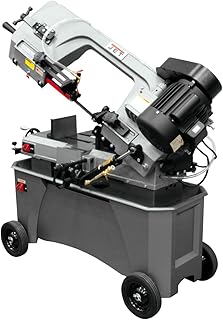
The JET 7″ x 12″ Deluxe Metal Cutting Horizontal/Vertical Band Saw, HVBS-712D, is a strong choice for serious home workshops. Its larger capacity and 3/4 HP motor give it the composure needed for furniture frames, thick-wall tubing, and repeated cuts, while the horizontal/vertical configuration adapts well to both supported stock and hands-on shaping.
Best Compact Stationary Saw: JET HVBS-56
The JET 5″ x 6″ Metal Cutting Horizontal/Vertical Band Saw, HVBS-56, occupies a useful middle ground for makers who want JET build quality without a large industrial footprint. It is well suited to small furniture hardware, steel tube, and repair work where a stable bench machine is more useful than maximum capacity.
Best Value with Stand: WEN BA4664
The WEN Metal Band Saw with Stand, BA4664, is appealing for a garage workshop that needs a ready-to-use setup rather than a bare benchtop tool. Its included stand can make material handling more comfortable, making it a practical fit for DIY tables, plant stands, and outdoor projects built from modest-size metal stock.
Best Industrial Upgrade: KAKA INDUSTRIAL VS-2313
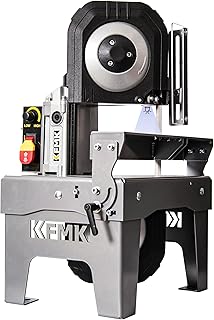
The KAKA INDUSTRIAL Vertical Band Saw VS-2313 is aimed at demanding users who need a rigid, large-format machine. Its 23-inch class design, variable speed, blade welder, carbide guides, and tilting table provide substantially more capability for advanced fabrication, although the 220V requirement and larger footprint make it better suited to a dedicated shop than a casual patio workspace.
Best for Portable Jobs: VEVOR Portable Band Saw
The VEVOR Portable Band Saw combines a removable alloy-steel base with a 5-inch cutting capacity and variable speed. That arrangement is useful when cutting long tubing outdoors, at a renovation site, or beside a partially assembled furniture frame; its portability is the main advantage over a permanently mounted saw.
Frequently Asked Questions
Can a vertical band saw cut steel?
Yes. With a suitable metal-cutting blade and an appropriate speed, these saws can cut mild steel, tubing, aluminum, and similar materials. Let the blade do the work, keep the stock supported, and avoid forcing the cut.
Is a horizontal/vertical saw better than a vertical-only model?
Not automatically. Horizontal mode is convenient for supported, repeatable cuts through longer stock, while vertical mode gives better visibility and control for notches and irregular shapes. Choose based on the work you do most often.
What blade should I use for metal furniture projects?
A bi-metal blade is a versatile starting point for general steel and mixed workshop use. Tooth pitch should suit the material thickness: fine teeth help with thinner wall tubing, while coarser teeth are more appropriate for thicker stock.
Can these saws be used outside?
They can be used in a dry, covered area, but they should not be left exposed to rain, condensation, or blowing dust. Place the saw on a level surface, protect the motor and controls, and move portable models indoors after use.
Final Thoughts
For the broadest home-fabrication capability, the JET HVBS-712D is the standout pick. The JET HVBS-56 is a smarter fit for compact workshops, while the WEN BA4664 offers an approachable stand-mounted setup. Choose the KAKA VS-2313 for industrial ambitions and the VEVOR portable model when mobility matters more than maximum rigidity.