Key takeaways
- Test any cleaner on a hidden section near the foot of the mattress and wait for it to dry fully before committing to a visible area.
- Blot spills immediately with a dry towel and body weight; the liquid you remove in the first minute is the liquid you never have to chase.
- Skip baking soda if you do not have a strong vacuum, as fine powder settles into the cover knit and becomes difficult to remove.
- Rotate memory foam head to foot every few months instead of flipping it, since most models are single-sided by design.
What's inside
Memory foam behaves less like a mattress and more like a dense sponge that happens to be shaped like a bed. Spend enough seasons caring for outdoor cushions, hammock pads, and screened-porch daybeds and you learn the hard lesson early: open-cell foam drinks liquid, holds it in the middle where air never reaches, and repays you weeks later with a musty smell that no amount of fabric spray can cover. The same physics applies to the viscoelastic slab in your bedroom, which is why the cleaning method that works on a cotton-ticking innerspring can quietly ruin a foam one.
This guide walks through the approach that actually respects the material: dry extraction first, targeted moisture second, and aggressive airflow to finish. You will learn how to pull out the dust, dander, and skin cells that make up most mattress grime, how to treat sweat rings and pet accidents without saturating the core, how to dry foam properly using cross-ventilation instead of sun, and how to set a maintenance rhythm so deep cleans stay rare. A few pieces of gear make the whole process faster, and our picks below cover the ones worth owning.
Our Recommended Picks
As an Amazon Associate we earn from qualifying purchases.




Why Memory Foam Needs a Dry-First Approach
Conventional carpet extractors and steam cleaners force water deep into porous material, then pull most of it back out. Memory foam does not cooperate. Its cell structure traps moisture in the interior, where evaporation is measured in days, not hours, and that window is more than enough for mildew to establish itself. Heat is the second hazard: sustained high temperatures soften and permanently compress the foam’s structure, so hot steam wands and clothes-dryer logic are both off the table. Everything that follows assumes moisture is a scalpel, not a hose.
Step One: Strip, Then Extract Thoroughly
Pull off every layer, including the protector, and wash bedding on the hottest cycle the labels allow. Then work the bare surface with a purpose-built mattress vacuum rather than an upright with a beater bar. Handheld units like the Teant MV-Blue or the CFBF 500W double-cup model combine roughly 16 kPa of suction with high-frequency tapping that shakes embedded debris up out of the fibers so it can be captured, and a sealed HEPA filter keeps the fine stuff from going straight back into the room. The FEPPO handheld covers the same ground and moves easily between the bed, a sofa, and porch furniture. Work in overlapping passes, slowly, and give seams and the perimeter tape extra attention.
Step Two: Spot-Treat Stains Without Soaking
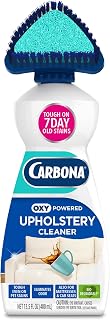
Treat stains individually and always blot rather than scrub, since agitation drives residue deeper and can fuzz the cover knit. For biological stains such as sweat, urine, or vomit, an enzyme product is the only thing that genuinely breaks down the odor-causing compounds instead of masking them. GEODE’s enzyme cleaner and deodorizer handles that job on a wide range of fabrics and comes in a large bottle, which matters if you are treating more than one surface. For general dinginess with minimal liquid, a no-rinse dry-cleaning foam is the safer tool: it lifts yellowing and old rings and evaporates instead of soaking in. For stubborn tannin or grease marks, the Carbona Oxy upholstery cleaner ships with its own brush and sponge head and is formulated to leave no residue behind.
Step Three: Dry With Airflow, Not Sunlight
This is where outdoor-living instincts pay off. Air movement dries foam; radiant heat degrades it. Prop the mattress on its edge so both faces are exposed, then put a box fan or two on it at an angle, low and steady, for several hours. A shaded porch or covered patio on a dry, breezy day is close to ideal because you get real air exchange without baking the material. Avoid direct sun, which yellows covers and stresses the foam, and skip humid or rainy days entirely, since you will only trade one moisture source for another. Press a clean white towel firmly into the treated area before you re-dress the bed; if any dampness transfers, keep the fans running.
Step Four: Protect So You Rarely Repeat This
A breathable, waterproof protector is the single highest-value purchase in mattress care. It intercepts sweat and spills at the surface, where they are washable, instead of letting them reach the foam. Pair that with a light vacuum pass whenever you change sheets and you turn deep cleaning into a twice-yearly task rather than an emergency response.
Tips
- Test any cleaner on a hidden section near the foot of the mattress and wait for it to dry fully before committing to a visible area.
- Blot spills immediately with a dry towel and body weight; the liquid you remove in the first minute is the liquid you never have to chase.
- Skip baking soda if you do not have a strong vacuum, as fine powder settles into the cover knit and becomes difficult to remove.
- Rotate memory foam head to foot every few months instead of flipping it, since most models are single-sided by design.
Frequently Asked Questions
Can I steam clean a memory foam mattress?
No. Steam combines the two things foam handles worst, saturating moisture and sustained heat, and it can compromise both the core and any adhesive layers. Use dry extraction and spot treatment instead.
Do the UV-C lamps on mattress vacuums actually do anything?
UV-C at 253.7 nm has documented germicidal effects, but results depend heavily on exposure time and distance, and light cannot reach anything below the surface. Treat it as a modest bonus feature and rely on suction, tapping, and HEPA filtration for the real work.
How often should I deep clean?
Twice a year suits most households. Bump it to quarterly if you have pets on the bed, allergies, or you live somewhere humid.
What removes set-in yellow stains?
Old sweat stains respond best to an enzyme cleaner left to dwell for the label’s full recommended time, then blotted and dried with fans. A no-rinse foam spray or an oxy-based upholstery cleaner can lift what remains. Some discoloration is permanent oxidation and will fade rather than vanish.
Conclusion
Clean memory foam the way you would care for good outdoor cushions: get the dry debris out first, apply moisture sparingly and precisely, then let moving air do the finishing work. A solid handheld mattress vacuum, an enzyme cleaner for the accidents, and a washable protector to prevent the next mess will keep your mattress fresher and last considerably longer than any single deep clean ever could.