Key takeaways
- Empty the bin completely and unplug the unit. Discard the ice; never save it “for the cooler.”
- Drain the reservoir using the plug underneath, then wipe out grit and leaf debris with a damp cloth.
- Refill to the fill line with cool water, add your dosed descaler, and plug the machine back in.
- Run the clean cycle if your model has one. If it does not, run one normal ice cycle, then discard the cloudy ice it produces.
- Drain, refill with plain water, and run two full rinse cycles. Discard both batches. This step is not optional and it is the one people skip.
What's inside
An ice maker earns its keep on a patio the way nothing else does. It sits between the grill and the pool gate, quietly turning out cubes for a whole afternoon of guests, and it asks for almost nothing in return. Which is exactly why most of them go a year or two without ever being cleaned. Then the cubes start coming out cloudy, the batch cycle drags, and something faintly sour hangs around the bin. That is not the machine wearing out. That is mineral scale on the evaporator and a thin biofilm in the water path, and both are reversible in about forty minutes.
Outdoor and covered-porch units scale faster than kitchen models. They run through hotter ambient air, they often get filled from a garden spigot or a filtered line with different mineral content than the fridge, and pollen, dust, and insects find their way into open bins. Below is the routine I use on client installations, the difference between tablet and liquid descalers, how to handle the parts a cleaning cycle never touches, and a realistic schedule for a machine that lives outside.
Our Recommended Picks
As an Amazon Associate we earn from qualifying purchases.




Start With the Right Chemistry, Not the Strongest One
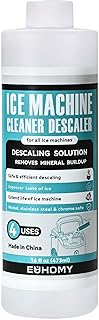
Ice makers use nickel-plated evaporator plates and aluminum components. Vinegar, CLR, and bathroom descalers will strip that plating and void your warranty, so the label phrase to look for is “nickel safe.” Beyond that it comes down to format. Tablets are the easy default for countertop and nugget machines: the ACTIVE Ice Machine Cleaner tablets and the 36-pack Ice Machine Cleaner Descaler Tablets both dose themselves, travel well, and cover Frigidaire, Opal, GE Profile, and KitchenAid units without measuring. Liquids give you more control on heavier buildup, which is why Affresh Ice Machine Cleaner and the EUHOMY 16 oz Descaler are worth keeping around for a neglected machine. If you maintain a built-in undercounter unit or several machines across a property, the Nickel Safe 1-gallon Ice Maker & Machine Cleaner meets Manitowoc spec GES-6 and works out far cheaper per cycle.
The Cleaning Cycle, Step by Step
- Empty the bin completely and unplug the unit. Discard the ice; never save it “for the cooler.”
- Drain the reservoir using the plug underneath, then wipe out grit and leaf debris with a damp cloth.
- Refill to the fill line with cool water, add your dosed descaler, and plug the machine back in.
- Run the clean cycle if your model has one. If it does not, run one normal ice cycle, then discard the cloudy ice it produces.
- Drain, refill with plain water, and run two full rinse cycles. Discard both batches. This step is not optional and it is the one people skip.
Clean the Parts the Cycle Cannot Reach
Descaler circulates through the pump and over the evaporator, but it never touches the bin walls, the lid gasket, the ice chute, or the scoop holder, and that is where mold actually shows up on outdoor units. Wash those surfaces by hand with warm water and a mild dish soap, get into the gasket channel with a soft toothbrush, then wipe with a food-safe sanitizer and let everything air-dry with the lid propped open. Pull the water filter if the unit has one and check the condenser fins at the back; a shop vac and a soft brush clear the pollen mat that makes an outdoor compressor run hot.
Build a Schedule Around Your Season
Indoor manufacturers say every six months. Outdoors, plan on every two to three months during heavy use, plus a full clean before you fire the unit up in spring and another before you shut it down in fall. Well water or hard municipal water shortens that interval considerably. The honest signal is the cubes themselves: when they start looking hazy at the edges or taste faintly metallic, you are already overdue.
Winterizing Matters More Than Cleaning
Water left in a reservoir through a freeze will crack a pump housing, and no descaler fixes that. After your final clean of the season, drain the reservoir and the drain line fully, leave the bin door or lid ajar so the interior dries out, and store portable units indoors. Built-ins should be drained at the line and covered.
Tips
- Filter the water going in. An inline sediment and carbon filter cuts scale buildup more than any cleaner removes it.
- Never mix descaler with bleach or any other cleaner in the reservoir. Descale first, rinse, then sanitize separately.
- Give the unit six inches of clearance on all vented sides. Restricted airflow forces longer cycles and accelerates scaling.
- Buy a bulk pack. A 24- or 36-count tablet supply covers a year or more and removes the excuse to postpone a cycle.
Frequently Asked Questions
Can I just use vinegar?
It will dissolve light scale, but it is acidic enough to attack nickel plating and gaskets over repeated use, and it leaves a taste that takes several rinse cycles to clear. A purpose-made nickel-safe descaler costs about a dollar per cycle and is the safer call.
How many rinse cycles do I really need?
Two minimum, three if you used a liquid descaler at full strength. Taste a cube from the third batch. If there is any chemical note at all, run another rinse.
Are tablets as effective as liquid descaler?
For routine maintenance, yes, and they are harder to overdose. For a machine with visible white crust on the evaporator, a liquid like the EUHOMY or Affresh solution lets you run a stronger first pass.
Why does my outdoor ice smell like the patio?
Ice absorbs odors readily, so smoke, mulch, and chlorine off a nearby pool all end up in the bin. Keep the lid closed between uses, empty the bin at the end of a gathering rather than letting cubes sit, and hand-wash the bin monthly.
Conclusion
Treat descaling as seasonal maintenance rather than a repair, and an outdoor ice maker will run clear and quiet for years. Keep a bulk pack of nickel-safe tablets or a gallon of liquid descaler on the shelf with your grill supplies, put two reminders on the calendar at the start and end of the season, and spend the extra ten minutes hand-washing the bin and gasket. That is the entire job, and it is the difference between clean cubes and a machine you end up replacing.