Key takeaways
- Support the foam so the section you are cutting overhangs the table edge slightly, keeping the blade path clear.
- Let the blade do the work in long, even strokes rather than pushing down; downward pressure deforms the foam and bows the cut.
- Have a helper hold the cut-off side steady, or weight it with a board so the material does not roll into the blade.
- Cut in one pass per layer when possible. Restarting a stroke mid-line is where most visible steps and ridges come from.
What's inside
Anyone who furnishes a porch, a screened gazebo, or the sleeping platform in a camper eventually runs into the same puzzle: the foam you own is the wrong size for the space you love. A queen memory foam mattress can become two daybed cushions for a covered patio, a fitted berth for a small boat, or a padded bench seat under a pergola. The material is willing. What usually goes wrong is the cut, not the concept.
This guide walks through how memory foam actually behaves under a blade, which tools suit viscoelastic foam versus the closed-cell foams common in outdoor builds, and how to lay out and support a mattress so your finished edge looks factory-made instead of chewed. You will also learn when a hot knife is the right call, when it absolutely is not, and how to finish an edge that will live outdoors in humidity and sun.
As an Amazon Associate we earn from qualifying purchases.


Know Your Foam Before You Touch It
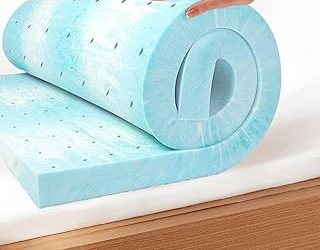
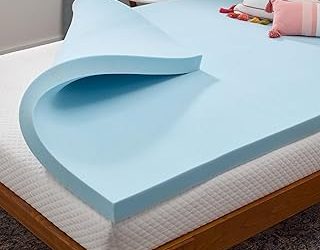
Memory foam is open-cell and viscoelastic: it grabs, compresses, and springs back. That is why a dull or short blade drags, tears, and leaves a scalloped edge. Most mattresses are layered, too, with a soft memory foam comfort layer bonded to a firmer high-density support core, sometimes with a transition layer between. Unzip the cover and inspect the stack first. Each layer may respond differently, and a blade that glides through the plush top can stall in the dense base. If your mattress contains pocketed coils, stop, because that becomes a metal-cutting job with sharp ends, not a foam project. Closed-cell foams such as EVA and XPS, the kind you often find in outdoor cushion cores and marine seating, are a different animal entirely and are the natural home for heat-based tools.
Choose the Right Cutting Tool
For memory foam, a long serrated blade that shears in a single continuous stroke is the most reliable choice. An 8-inch Sponge Cutting Knife with replaceable blades gives you enough length to pass through a full comfort layer without stopping mid-cut, and swapping in a fresh blade is the single biggest upgrade to edge quality. A dedicated Foam Cutter for DIY, Upholstery & Mattress is worth considering if you cut foam more than once or twice a year, since the reciprocating action does the sawing for you and keeps the cut face square.
Hot tools earn their place on the closed-cell side of the shop. The Preciva Hot Knife Foam Cutter with its digital display and twenty temperature steps is excellent for XPS, PE foam, rope, and fabric, and the overheat protection makes long sessions less nerve-racking. The 200W Hot Knife Foam Cutter RM-005 kit handles thicker EPS and EPP board for insulated outdoor benches, while the 18W Cooltop Foam Cutter and the 3 in 1 Foam Cutter suit smaller craft work, KT board, and pearl cotton. One honest caveat: heat melts memory foam rather than parting it, producing acrid smoke and a hard glazed lip. Keep hot knives for the materials they were built for.
Measure, Mark, and Support the Foam
Compress the mattress as little as possible while measuring. Lay it flat on a large work surface, let it fully rebound for twenty minutes, then measure twice and mark with a long straightedge and a fine marker or chalk line on all faces you intend to follow. Carry the line down both side walls so you have a target for the blade to track through the full thickness. If the piece will sit inside an existing frame or cushion cover, cut roughly an eighth of an inch generously; foam compresses into a snug fit, and a slightly oversized insert fills corners better than one cut precisely to the number.
Make the Cut Cleanly
- Support the foam so the section you are cutting overhangs the table edge slightly, keeping the blade path clear.
- Let the blade do the work in long, even strokes rather than pushing down; downward pressure deforms the foam and bows the cut.
- Have a helper hold the cut-off side steady, or weight it with a board so the material does not roll into the blade.
- Cut in one pass per layer when possible. Restarting a stroke mid-line is where most visible steps and ridges come from.
Finishing for Outdoor Use
Raw memory foam and weather are poor companions. It soaks up moisture, holds it, and grows musty fast. After cutting, wrap each piece in a breathable batting layer, then a waterproof liner, then a solution-dyed acrylic cover for anything that sees rain or spray. Reticulated quick-dry foam is the better long-term choice for fully exposed seating, so consider using your cut memory foam for covered or seasonal spots and saving open-air positions for drainage foam.
Tips
- Change blades more often than feels necessary. A fresh edge cuts memory foam cleanly; a tired one tears it.
- Cut layers separately if the mattress delaminates easily, then rebond with spray adhesive designed for foam.
- Work at room temperature. Cold memory foam turns stiff and rubbery, and warm foam sags out of square.
- Save your offcuts. Small wedges make excellent lumbar bolsters for outdoor chairs and shims for uneven bench frames.
Frequently Asked Questions
Can I use an electric carving knife on a memory foam mattress?
Yes, and it works surprisingly well on comfort layers. The twin serrated blades shear rather than compress. Its limitation is depth, so it struggles on dense support cores thicker than the blade length.
Will cutting my mattress ruin its support?
Cutting does not damage the foam’s structure, but it does remove the edge reinforcement some mattresses build in. Expect slightly softer perimeter support on your new piece and plan the frame accordingly.
Is a hot wire cutter safe to use on memory foam?
Not really. It melts instead of cutting, releases unpleasant fumes, and leaves a stiff crust. Reserve hot knives and hot wire tools for EPS, XPS, EVA, and EPP.
How do I get perfectly square corners?
Cut each side as a full straight pass rather than pivoting through the corner. Overlap the two cuts slightly at the corner point, then trim the small tab with a fresh blade.
Conclusion
Cutting a memory foam mattress is far less intimidating than it looks once you match the tool to the material, mark your lines on every face, and commit to long, unhurried strokes with a sharp blade. Give the foam proper support while you work, treat closed-cell foams as a separate job for your hot knife, and protect the finished pieces from moisture before they go outside. Do that, and one retired mattress can quietly furnish an entire porch.