Key takeaways
- Water-resistant means a sprayed-on DWR (durable water repellent) finish. It beads drizzle and morning dew but wets through within 20–30 minutes of steady rain. Adequate for covered patios, not for winter storage.
- Waterproof means a coating or membrane on the fabric’s underside — either PU (polyurethane), which stays flexible in freezing temperatures, or PVC/vinyl, which is cheaper but stiffens and can crack in hard frost.
The right heavy duty covers for outdoor furniture for most climates are 600-denier or higher polyester with a polyurethane coating rated to at least 3,000 mm hydrostatic head, taped or welded seams, buckle straps on every corner, and mesh-backed air vents. Each of those specs solves a different failure — tearing, leaking, and blow-off — and no single one compensates for weakness in the other two. Here’s how to read the labels and pick by your actual situation.
- Denier Explained: What the Number Does and Doesn’t Tell You
- Waterproof vs. Water-Resistant: The Coating Matters More Than the Fabric
- Sizing: Measure Once, Add Two Inches
- Securing Features, Ranked for Wind
- Fabric Trade-Offs: Polyester vs. Canvas vs. Vinyl
- What About Furniture Sold With Its Own Cover?
- Pick by Your Situation
- The Best Way to Cover Outdoor Furniture
- What Wears First, and When to Replace
- FAQ
Denier Explained: What the Number Does and Doesn’t Tell You
Denier (D) measures yarn weight — grams per 9,000 meters of fiber. A 600D thread is roughly three times heavier than a 210D thread, which translates to thicker, more abrasion-resistant fabric. What denier does not tell you is weave density, coating type, or UV treatment, which is why a cheap “1200D” cover can still leak through pinhole seams.
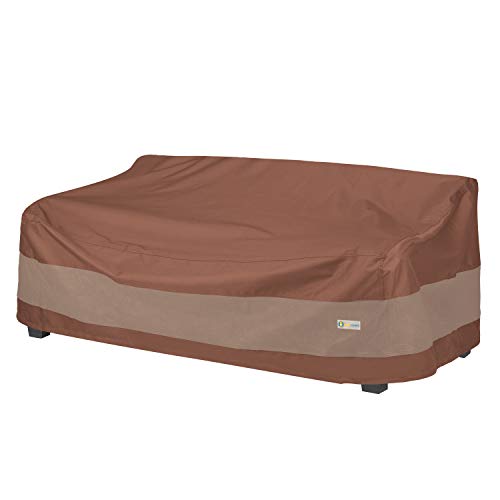
DUCKCOVERS Ultimate Waterproof Patio Sofa Cover, Outdoor Couch Cover with All Weather Protection, Patio Furniture Covers with Attachment Strap, 77"W x 35"D x 35"H, Outdoor Sofa Cover
Included for 'Heavy Duty Covers for Outdoor Furniture: Denier, Waterproofing, and Fit Explained' because the listing specifies Outdoor Couch Cover with All Weather Protection and Patio Furniture Covers with Attachment Strap, details this guide uses to compare options.
View on Amazon
Duck Covers Ultimate Waterproof 127 Inch Rectangular/Oval Patio Table with Chairs Cover
Included for 'Heavy Duty Covers for Outdoor Furniture: Denier, Waterproofing, and Fit Explained' as a relevant option in this category; details come from the product listing.
View on Amazon
DUCKCOVERS Ultimate Waterproof 36 Inch Patio Chair Cover, Outdoor Chair Covers
Included for 'Heavy Duty Covers for Outdoor Furniture: Denier, Waterproofing, and Fit Explained' because the listing specifies Outdoor Chair Covers, details this guide uses to compare options.
View on Amazon
Duck Covers Ultimate Waterproof Round Patio Table & Chair Set Cover, 108 Inch
Included for 'Heavy Duty Covers for Outdoor Furniture: Denier, Waterproofing, and Fit Explained' because the listing specifies 108 Inch, details this guide uses to compare options.
View on Amazon| Denier | Feel / typical weight | Handles | Best for |
|---|---|---|---|
| 210D | Featherweight, ~0.5–1 lb for a chair cover | Dust, dew, light showers | Covered porches, summer-only use |
| 420D | Light, packs small | Spring/fall rain, moderate sun | Mild climates, frequent on/off |
| 600D | Sturdy; ~3–5 lb for a large sofa cover | Year-round rain and frost | The practical floor for “heavy duty” |
| 900–1200D | Stiff, heavy, harder to fold | Snow load, coastal wind, hail | Harsh winters and exposed yards |
The trade-off at the top end is handling: a 1200D cover is genuinely awkward for one person to wrestle over a sectional, and the stiffness means it creases rather than drapes. For most buyers, 600–900D is the sweet spot between durability and usability.
Waterproof vs. Water-Resistant: The Coating Matters More Than the Fabric
These terms are not interchangeable, and listings blur them constantly.
- Water-resistant means a sprayed-on DWR (durable water repellent) finish. It beads drizzle and morning dew but wets through within 20–30 minutes of steady rain. Adequate for covered patios, not for winter storage.
- Waterproof means a coating or membrane on the fabric’s underside — either PU (polyurethane), which stays flexible in freezing temperatures, or PVC/vinyl, which is cheaper but stiffens and can crack in hard frost.
If you see a hydrostatic head rating, read it this way: under 1,000 mm is water-resistant; 1,500–3,000 mm handles normal rainfall; 5,000 mm and above stands up to wind-driven storms and sitting snow. Then check the seams — needle stitching punches thousands of holes through any coating. Genuinely heavy duty waterproof outdoor furniture covers use taped, welded, or bound seams, and that single construction detail separates real waterproofing from marketing. The same applies if you’re shopping for heavy duty waterproof garden furniture covers under UK-style listings — the spec language differs, the physics doesn’t.
Sizing: Measure Once, Add Two Inches
Push the furniture together the way it will actually sit under the cover, then measure the longest length, width, and height — including chair-back tops and armrests. Add 1–2 inches of total slack so the cover slips on without forcing seams, but never buy more than about 4 inches oversized: excess fabric pools water on top and acts as a sail in wind. Typical real-world sizes:
- 3-seat outdoor sofa (~78–90″ wide, 32–36″ deep): look for a 88–96″ cover
- 6-seat dining set pushed together: usually needs a 108–130″ × 70–84″ rectangular cover
- Lounge chairs (~25–30″ wide): individual covers run 28–36″ wide; stacking four to six chairs under one tall cover is often cheaper and more secure than separate heavy duty outdoor chair covers
Ideally the hem sits about an inch above the patio surface — a hem dragging on wet ground wicks moisture upward and abrades faster.
Securing Features, Ranked for Wind
- Click-close buckle straps around legs — the only feature that reliably survives 40+ mph gusts. Look for at least four on large covers; two is decoration.
- Drawcord hem with a cord lock — the essential baseline, present on almost every cover; cinch it after buckling.
- Velcro leg ties — useful backup, weaker than buckles over time.
- Elasticized hem alone — fine on a sheltered porch, insufficient in open yards.
Air vents sound counterintuitive on a waterproof cover but serve two jobs: they let condensation escape, and they stop the cover inflating like a parachute. Dual vents on opposite sides outperform a single vent. One underappreciated reality: most covers fail from flapping abrasion against the furniture, not from blowing away entirely — a snug, strapped-down fit is the actual fix, which is why fit matters as much as denier.
Fabric Trade-Offs: Polyester vs. Canvas vs. Vinyl
| Material | Strengths | Weaknesses | Realistic lifespan |
|---|---|---|---|
| 600D+ polyester, PU-coated | Waterproof, UV-stable if solution-dyed, light, packs small | Coating eventually flakes; budget versions fade fast | 2–4 years |
| Canvas (woven poly or solution-dyed acrylic) | Breathable, premium look, best fade resistance | Cotton-blend canvas mildews if stored damp; usually water-resistant rather than waterproof; heavy to handle; highest cost | 5+ years for solution-dyed acrylic |
| Vinyl / PVC | 100% waterproof, cheapest per cover | Zero breathability → condensation trap; cracks in hard frost; shortest life | 1–2 seasons in cold climates |
Canvas outdoor furniture covers deserve a caveat: “canvas” in listings can mean untreated cotton (avoid outdoors), woven polyester (good), or solution-dyed acrylic of the type Sunbrella popularized (the premium tier). Only the last two belong outside long-term, and even acrylic canvas typically needs a vented, well-fitted design to avoid trapping moisture underneath.
What About Furniture Sold With Its Own Cover?
Outdoor furniture with built-in covers — usually means a fitted cover that stores in an attached pocket — and any outdoor furniture set with cover bundled in the box share the same caveat: the included cover is often 300–420D uncoated or lightly coated polyester. It’s sized perfectly and fine for summer showers, but if the listing doesn’t state a denier rating and seam construction, assume it’s light-duty and budget for a 600D replacement before winter.
Pick by Your Situation
| Your situation | Spec to buy |
|---|---|
| Covered porch, mild climate | 300–420D water-resistant; elastic hem is enough |
| Four seasons, snow, left covered Nov–Mar | 600–900D, ≥3,000 mm rating, taped seams, buckles + vents |
| Coastal or open windy yard | 900D, four or more buckle straps, snug fit prioritized over ease of use |
| Humid, mildew-prone region | Vented 600D polyester — never vinyl; cushions stored indoors regardless |
| Balcony or frequent on/off use | 420–600D with a storage bag; lighter beats thicker here |
The Best Way to Cover Outdoor Furniture
Technique matters as much as the cover itself:
- Clean and fully dry furniture first. Covering damp furniture incubates mildew within days.
- Store cushions indoors, always. Even under a waterproof cover, cushions trap moisture and are the first thing to smell.
- Tent the center. An overturned bucket or a purpose-made support pole under the middle sheds water — pooling on a flat span is the leading cause of sagging and seam failure.
- Buckle every strap, then cinch the drawcord. Skipping two of four buckles roughly halves wind resistance.
- Brush off snow beyond 2–3 inches and re-tension straps after storms.
- Lift the cover on dry days once a month to let the furniture breathe.
What Wears First, and When to Replace
UV degradation, not rain, kills most covers — fabric goes brittle at fold lines and armrest corners first. Mid-range 600D covers typically last 2–4 years (usually $30–90 per piece); premium solution-dyed options run $100+ and can double that. Replacement signs: white flaking on the inside coating, water no longer beading, or a papery feel at creases. The best quality outdoor furniture covers justify their price through solution-dyed fabric and welded seams rather than just a bigger denier number on the box.
FAQ
Do waterproof covers trap condensation?
Yes — temperature swings pull moisture from the air underneath. Vents, covering only bone-dry furniture, and periodic airing are the mitigation; this is why vinyl’s total waterproofness often backfires.
Can covers stay on all winter?
Yes, if the cover is vented, strapped down, and you brush off accumulated snow. Check after major storms for pooling or torn straps.
Is higher denier always better?
No. Past ~900D you gain tear resistance but lose flexibility — the cover gets heavy, stiff, and harder to seal snugly. Match the rating to your exposure, not to the biggest number available.