Key takeaways
- Round: a 60-inch diameter seats six adults comfortably; 54 inches works with armless chairs. A patio furniture round table and chairs set at 48 inches is genuinely a four- or five-seater.
- Rectangular: 72 × 40 inches is the standard; step up to 84 inches if chairs have arms or you want end seats.
- Footprint: each chair needs 24–26 inches of depth plus 24–30 inches to pull out, and 36–48 inches of walkway behind. A round patio table and chairs for 6 with a 60-inch top therefore needs a clear circle about 10–11 feet across; a 72 × 40-inch rectangle wants a zone of at least 10 × 12 feet.
- Heights: tables run 28–30 inches, seats 16–18 inches. Check that chair arms clear the table apron — arms need roughly 25–26 inches to tuck in.
- Umbrella: a 9-foot canopy covers a 60-inch table; use a 50-lb base minimum, 75 lb in wind.
For most patios, powder-coated aluminum is the smartest material for a patio furniture table and 6 chairs: it cannot rust, a full seven-piece set usually stays under about 150 lb so one person can rearrange it, and it needs roughly an hour of cleaning per year. Teak lasts the longest, steel wins in wind, and resin rattan delivers the most comfort per dollar — but each has one real weakness worth knowing before you spend $500 to $3,000. Here is the head-to-head, with the measurements that decide what actually fits your space.
- The four materials head-to-head
- Aluminum: rust-proof, but easy to blow over
- Teak: the 25-year option
- Resin rattan: comfortable, but the frame underneath decides everything
- Steel: the wind champion with a rust problem
- What size actually seats six
- Glass tops, cushions, and covers
- Match the material to your situation
- Common follow-ups
The four materials head-to-head
| Material | Rust risk | 7-pc set weight | Surface in full sun | Care per year | Lifespan | Typical price |
|---|---|---|---|---|---|---|
| Powder-coated aluminum | None (chips turn dull, not flaky) | 100–150 lb | Warm, 110–130°F; cools fast in shade | ~1 hour | 15–20+ yrs | $500–$1,500; cast $900–$2,500 |
| Grade-A teak | None (hardware can corrode) | 200–330 lb | Coolest of the four | 0–4 hours (oiling optional) | 25+ yrs | $1,800–$4,500+ |
| Resin rattan (HDPE wicker) | Depends on hidden frame | 100–160 lb | Moderate; stays touchable | 1–2 hours | 5–10 yrs | $600–$1,800 |
| Powder-coated steel | High at chips and weld joints | 200–300 lb | Hottest; dark colors hit 140°F+ | 2–5 hours | 8–15 yrs | $400–$1,200 |
Aluminum: rust-proof, but easy to blow over
Aluminum comes in two forms. Tube (extruded) aluminum builds the lightest, cheapest sets — chairs around 8–12 lb each. Cast aluminum is thicker, heavier, and usually more ornate. Neither rusts; a deep scratch just oxidizes to a dull gray instead of flaking. The genuine trade-offs are weight and hardware. A 10-lb chair tips in a strong gust, which matters on rooftops, open lawns, and coastal decks — cast aluminum or a heavier material suits those spots better. And cheap sets sometimes bolt aluminum frames with plain steel screws, which corrode and stain; look for stainless hardware in the spec sheet. Thin-walled aluminum heats up quickly in sun but sheds that heat within minutes of shade, and sling or textilene seats avoid the hot-metal problem entirely. Maintenance is a hose-down with mild soap twice a year and an optional coat of car wax on the finish.

Andehomy 7-Piece Patio Dining Set for 6, Outdoor Dining Set with Wicker Swivel Patio Dining Chairs with Cushions & Black Rectangular Woodgrain Dining Table with 1.75”Umbrella Hole, Black & Brown
Included for 'Patio Table and 6 Chairs: Aluminum vs Teak vs Rattan vs Steel Compared' because the listing specifies Black & Brown, details this guide uses to compare options.
View on Amazon
Oasbira Outdoor Dining Set, Patio Table and Chairs Set with Umbrella Hole, 7 Pieces HDPS + Aluminum Patio Dining Furniture Set for Backyard, Garden (Gray)
Included for 'Patio Table and 6 Chairs: Aluminum vs Teak vs Rattan vs Steel Compared' because the listing specifies Patio Table and Chairs Set with Umbrella Hole and Garden (Gray), details this guide uses to compare options.
View on Amazon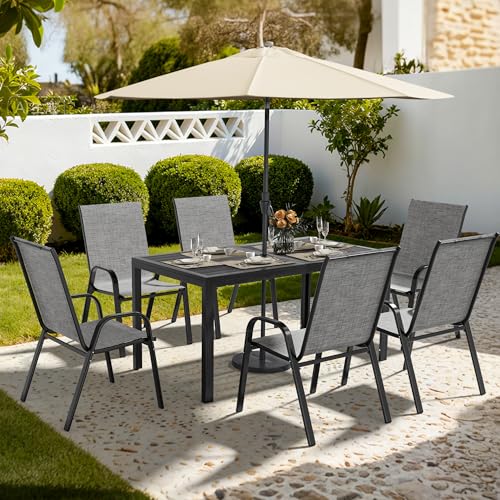
Pamapic Outdoor Dining Sets for 6, Rectangular Steel Slat Table with 6 Textilene Chairs, 7 Piece Patio Table and Chairs Set with Umbrella Hole for Patio, Backyard, Poolside (Grey, No Umbrella)
Included for 'Patio Table and 6 Chairs: Aluminum vs Teak vs Rattan vs Steel Compared' because the listing specifies Rectangular Steel Slat Table with 6 Textilene Chairs and Backyard, details this guide uses to compare options.
View on Amazon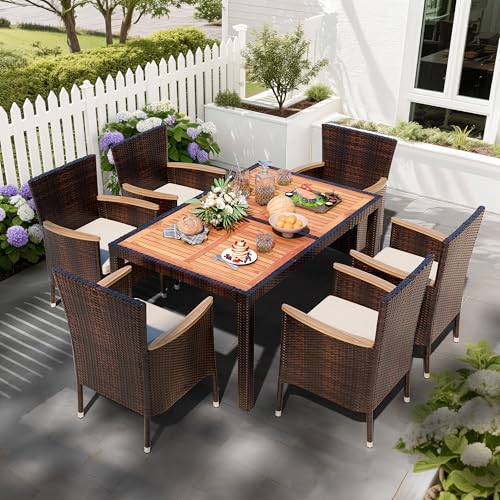
Shintenchi 7 PCS Wicker Patio Dining Set, Brown Rattan
Included for 'Patio Table and 6 Chairs: Aluminum vs Teak vs Rattan vs Steel Compared' because the listing specifies Brown Rattan, details this guide uses to compare options.
View on AmazonTeak: the 25-year option
Grade-A teak heartwood is dense, oily, and effectively weatherproof without any finish at all. It silvers to a gray patina in 6–12 months — purely cosmetic — and cleaning plus one or two coats of teak oil restores the honey color if you want it, which is where the 0–4 hour annual range comes from. At roughly 20–30 lb per chair and 90–150 lb per table, teak laughs at wind, and wood stays the coolest surface of the four on bare legs. Two catches beyond price: “teak-look” acacia and eucalyptus cost half as much but need yearly sealing and typically last half as long, and flat-packed bolt-together teak wears faster than traditional mortise-and-tenon joinery.
Resin rattan: comfortable, but the frame underneath decides everything
Natural rattan rots outdoors, so every outdoor “rattan” or “wicker” set is actually HDPE resin weave over a metal frame — and the frame is the spec that matters. Over aluminum, you get a rust-proof, light set; over steel, moisture trapped under the weave rusts quietly, stains the deck, and fails at weld points around year five. UV exposure is the other clock: resin eventually turns brittle and the weave fades noticeably by year four or five in strong sun, which is why rattan tops out near 10 years while metal frames outlast it. In exchange you get the most forgiving seat of the four — resin stays warm rather than scorching, and the weave flexes. Plan on washing it a few times a season, covering it in winter, and replacing cushions (the first thing to wear) around years three to five.
Steel: the wind champion with a rust problem
At 18–30 lb per chair and 200–300 lb for the full set, steel is the pick for exposed coastal properties and high-rise balconies where lightweight furniture becomes a hazard. The cost is vigilance: powder coat chips at arm joints, feet, and the underside of seat rims, and rust follows every chip. A realistic year involves an inspection each spring, sanding and touch-up paint on chips, paste wax on the finish, and a cover through wet months. Steel also holds heat longest — a dark frame can exceed 140°F on a July afternoon — so cushions are not optional in sunny climates. One extra check: very cheap sets use thin 1-inch tube that dents; heavier-gauge tube and true wrought-iron sets hold up far better.
What size actually seats six
Numbers that separate real six-seaters from listings that just say “seats 6”:
- Round: a 60-inch diameter seats six adults comfortably; 54 inches works with armless chairs. A patio furniture round table and chairs set at 48 inches is genuinely a four- or five-seater.
- Rectangular: 72 × 40 inches is the standard; step up to 84 inches if chairs have arms or you want end seats.
- Footprint: each chair needs 24–26 inches of depth plus 24–30 inches to pull out, and 36–48 inches of walkway behind. A round patio table and chairs for 6 with a 60-inch top therefore needs a clear circle about 10–11 feet across; a 72 × 40-inch rectangle wants a zone of at least 10 × 12 feet.
- Heights: tables run 28–30 inches, seats 16–18 inches. Check that chair arms clear the table apron — arms need roughly 25–26 inches to tuck in.
- Umbrella: a 9-foot canopy covers a 60-inch table; use a 50-lb base minimum, 75 lb in wind.
When comparing any 6 person patio table and chairs listing, match the claimed capacity against the actual diameter — a “seats 6” claim on a 54-inch top means tight elbows and plates overlapping.
Glass tops, cushions, and covers
A glass patio table with 6 chairs usually means 6–8mm tempered glass: easy to wipe, level for drinks, and common on 60-inch rounds paired with a lazy susan. Downsides are pollen and smudge visibility, plus edge chips that can spider the whole top — rare, but terminal. Check for an umbrella hole ring and rubber bumpers under the glass; many brands now ship slatted aluminum “wood-look” tops instead, which are easier to replace if damaged.
For cushions, solution-dyed acrylic fabric (Sunbrella and similar) holds color five-plus years where spun polyester fades in one or two summers; look for foam near 1.8 lb/ft³ density or quick-dry reticulated foam if the set sits uncovered. For patio furniture covers for a round table and chairs, one 96–108-inch round cover with a 30-inch drop swallows a 60-inch table with all six chairs pushed in; rectangular sets need roughly 108 × 84 inches. Prioritize 600-denier polyester, taped seams, air vents (trapped condensation causes the mildew people blame on covers), and buckle straps. Expect $60–$150, and expect rattan and steel to benefit most — teak can winter bare, though covering halves the spring cleanup.
Match the material to your situation
| Your situation | Best pick | Why |
|---|---|---|
| Coastal or salt air | Aluminum or teak | Nothing to corrode; insist on stainless fasteners |
| Windy rooftop or open lot | Steel or heavy teak | 20-lb-plus chairs resist tipping; sub-12-lb aluminum chairs blow over |
| Want near-zero upkeep | Aluminum | Wash twice a year, nothing to seal or paint |
| Budget under $800 | Steel or resin rattan | Lowest entry price; accept rust checks or a shorter lifespan |
| Hot sun, barefoot kids | Teak or sling-seat aluminum | Coolest touch surfaces; avoid bare steel arms |
| Keeping it 20+ years | Teak | Only material here that outlives its cushions twice over |
| Renting or moving often | Aluminum | Lightest boxes and easiest to haul up stairs |
Common follow-ups
Can a patio furniture table and 6 chairs stay outside all winter?
Aluminum and teak handle winter fine, though a cover keeps them cleaner. Resin rattan should be covered or stored — freeze-thaw cycles accelerate brittleness. Steel survives only if every chip is touched up and the set is covered; in wet climates, plan on storing it.
How heavy is the delivery, and how bad is assembly?
Seven-piece sets arrive in two to five boxes totaling roughly 120–250 lb. The tabletop box for a 72-inch rectangle runs about 75–78 inches long — measure doorways and hallway turns before ordering. Rattan and tube-steel chairs usually arrive flat-packed at 20–30 minutes each; cast-aluminum chairs often come pre-assembled. Budget two people and 1.5–3 hours total.
What wears out first?
Cushions and fabric go first (three to five years, sooner in full sun), then plastic foot glides. After that: rattan weave fades and frays around years six to eight, steel shows rust at weld joints if touch-ups lapse, and cheap aluminum hardware corrodes before the frames themselves ever fail.