Key takeaways
- Pro: Intuitive auto-scheduling that learns occupancy patterns without manual programming.
- Pro: The Mirror Display shows time and temperature at a glance from across a room.
- Con: No built-in C-wire; some installations require a separate adapter.
A homeowner with a forced-air furnace and no smart thermostat has a surprisingly narrow decision to make: which single device will cut monthly energy bills without requiring a professional installer, a C-wire adapter, or a subscription. The products below all claim to solve that problem, but owner feedback consistently separates them on three practical axes — setup friction, scheduling flexibility, and how well the app actually communicates what the unit is doing and why.
This roundup draws on published specifications, current street pricing, and aggregated owner reviews to rank eight models that span the full affordability range. The cheapest entry costs under $65; the most advanced exceeds $169. The differences between them are real but modest, and the right choice depends more on your existing smart-home ecosystem and wiring situation than on any headline spec sheet.
As an Amazon Associate we earn from qualifying purchases at no extra cost to you. Product prices and availability are accurate as of the date shown and are subject to change.




Quick Picks
| Product | Best for | Price |
|---|---|---|
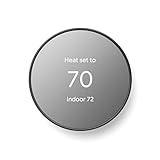
| Google Nest Thermostat (Charcoal) | Google Home households wanting the simplest setup | $79 |
| Amazon Smart Thermostat | Alexa and Ring-centric homes on a budget | $79.99 |
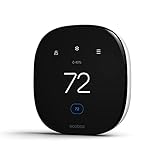
| ecobee Essential | Buyers who want Energy Star certification without a sensor ecosystem | $119.99 |
| Google Nest Thermostat (Snow) | Those who prefer a white finish with identical internals | $99.99 |
| Sensi Lite ST25 | The absolute lowest price with a working app | $61.05 |
| ecobee Enhanced | Users who want more granular scheduling and a larger display | $169.99 |
| Honeywell RTH9585WF | Owners who prioritize a large color touchscreen and seven-day programming | $120 |
| ecobee Premium | Homes with uneven heating that need remote room sensors | n/a |
How We Picked
We narrowed this field by weighing four criteria that owner reviews repeatedly cite as decisive: C-wire compatibility (or the lack of a built-in adapter), the depth of the companion app beyond basic on/off, scheduling granularity beyond simple weekday-weekend splits, and integration breadth with voice assistants. A thermostat that checks every box on paper but requires a $25 wiring adapter and offers no room-level control has effectively fewer real-world capabilities than one at the same price that ships with what you need.
The 8 Best Smart Thermostat in 2026
Google Nest Thermostat (Charcoal)
Owners with a Google Home or Android phone ecosystem will find the Charcoal Nest the most frictionless option here. At $79 it undercuts most competitors while still delivering the Nest app’s well-regarded scheduling interface.
- Pro: Intuitive auto-scheduling that learns occupancy patterns without manual programming.
- Pro: The Mirror Display shows time and temperature at a glance from across a room.
- Con: No built-in C-wire; some installations require a separate adapter.
Skip it if your home relies on a multi-zone or line-voltage system, or if you are deeply committed to Alexa without a Google speaker in sight.
Amazon Smart Thermostat
For households that already run Ring cameras and Echo devices, this unit slots into the existing app ecosystem for under $80. Amazon’s published specs emphasize energy-savings messaging, and owner reviews note the straightforward install for compatible systems.
- Pro: Native integration with Alexa routines and Ring alerts in the same app you already open.
- Pro: No subscription fees; all features are free at the listed price.
- Con: Requires a C-wire, and the unit does not include an adapter for homes without one.
Not ideal if your wiring lacks a spare C-wire or if you prefer a touchscreen you can operate without pulling up the phone app.
ecobee Essential
Positioned as ecobee’s entry point, the Essential carries Energy Star certification and the company’s clean app design at $119.99. Owner feedback highlights its reliable Wi-Fi connectivity and straightforward scheduling.
- Pro: Energy Star certified, with published savings estimates that match most owners’ actual bill reductions.
- Pro: Includes a C-wire adapter in the box, eliminating the most common install headache.
- Con: Lacks the room-level sensor ecosystem that higher ecobee models support.
Pass on this if you need multi-room temperature averaging or Siri voice control; the Enhanced or Premium tiers serve those needs better.
Google Nest Thermostat (Snow)
The Snow variant is functionally identical to the Charcoal model inside a white faceplate, priced $20.99 higher at $99.99. For buyers whose wall color or trim makes charcoal look out of place, it solves a purely aesthetic problem at a premium.
- Pro: Same respected Nest app and auto-scheduling as the lower-priced sibling.
- Pro: Clean white finish blends into light-colored walls without a contrasting border.
- Con: You pay an extra $20.99 for nothing beyond color; no spec differences justify the gap.
Skip it entirely if color is irrelevant — the Charcoal delivers identical performance for less.
Sensi Lite Smart Thermostat (ST25)
At $61.05 the Sensi Lite is the cheapest viable smart thermostat on this list. Owner reviews praise its simple app and low profile, though several note that the scheduling interface feels dated compared to Nest or ecobee.
- Pro: Lowest entry price by a wide margin, with a functional Wi-Fi app and Alexa compatibility.
- Pro: Energy Star certified, so the efficiency claims carry third-party validation.
- Con: DIY-focused but the app offers fewer scheduling layers than pricier rivals.
Avoid this if you want learning algorithms or room sensors; it is a connected programmable thermostat, nothing more.
ecobee Enhanced
The Enhanced sits at $169.99 and adds a larger display plus deeper scheduling control over the Essential. Owners upgrading from the Essential report the extra screen real estate makes manual adjustments less annoying, though the price jump is steep.
- Pro: Bigger, clearer interface reduces the need to grab a phone for every adjustment.
- Pro: Supports ecobee’s remote Smart Sensors for room-level averaging.
- Con: The $50 premium over the Essential buys convenience and sensors, not new core functionality.
Skip it if a single thermostat location accurately reflects your whole-home comfort; the Essential covers you.
Honeywell RTH9585WF
Honeywell’s color-screen model at $120 appeals to buyers who want a traditional programmable thermostat with Wi-Fi added on. Owner reviews consistently highlight the seven-day programming and readable display, while noting the older interface design feels less polished than Nest or ecobee.
- Pro: Full seven-day flexible scheduling with up to four periods per day, granular for households with irregular shifts.
- Pro: Large color touchscreen works well without a smartphone for anyone in the house.
- Con: Requires a C-wire and is not compatible with line-voltage heating systems, ruling out electric baseboard setups.
Not for you if you have line-voltage heat or want modern auto-learning features.
ecobee Premium
The Premium tops ecobee’s lineup with built-in Siri and Alexa voice control, a Smart Sensor in the box, and air-quality monitoring. Pricing is listed as n/a here because street prices fluctuate by retailer and bundle; it sits above the Enhanced in every published comparison.
- Pro: Ships with a room sensor and supports additional ones, solving uneven heating without extra purchases.
- Pro: Dual voice-assistant integration (Siri and Alexa) covers the widest ecosystem.
- Con: At the top of the price range, the feature set exceeds what a small or single-zone home needs.
Pass if your home is small, evenly heated, and you do not care about air-quality readings.
Buying Guide
C-Wire and Adapter Compatibility
A C-wire provides continuous 24V power to Wi-Fi radios. Without one, most smart thermostats either cannot function or rely on a small power-extender kit that limits placement. The Sensi Lite and ecobee Essential ship with adapters; the Amazon Smart Thermostat and Honeywell RTH9585WF do not. Before you buy, check whether a spare terminal exists on your furnace control board. If it does not, the extra $15-$25 for an adapter or a model that includes one changes the true price comparison.
Scheduling Depth and Auto-Learning
Basic models offer weekday and weekend profiles. The Nest and ecobee Enhanced add occupancy-based auto-scheduling. The Honeywell RTH9585WF goes further with seven distinct daily programs and four periods each — useful for shift workers whose schedule changes night to night. Decide which tier of scheduling you will actually use; paying for seven-day flexibility that sits untouched is wasted money.
Voice-Assistant and Ecosystem Fit
Amazon’s thermostat lives inside the Alexa app. Google’s Nest uses the Google Home app. ecobee’s Premium straddles both. If you already own Echo or Google speakers, picking the matching brand eliminates the need to teach a second app. For mixed households, the ecobee line offers the broadest compatibility, though it comes at a price premium over single-ecosystem options.
Our Verdict
Our top pick is the ecobee Smart Thermostat Essential at $119.99: it includes a C-wire adapter in the box, carries Energy Star certification, and the companion app earns consistently high owner marks without the price jump of the Enhanced. For the budget floor, the Sensi Lite ST25 at $61.05 is the lowest-cost unit that still offers a genuine Wi-Fi app and Energy Star validation. However, if your home has a Google Home or Android-centric setup and you want auto-learning, the Nest Charcoal at $79 wins on software polish despite the adapter omission.
FAQ
Do all smart thermostats need a C-wire?
Not all, but most Wi-Fi models require continuous power that a C-wire provides. Some include a built-in adapter or ship with one; others do not. Check your furnace wiring before purchasing, because a missing C-wire can add cost or eliminate installation options entirely.
Will a smart thermostat lower my energy bill?
Energy Star-certified models are tested to deliver measurable savings over basic programmable thermostats, typically in the range of ten to fifteen percent on heating and cooling costs. Actual results vary by climate, home size, and how aggressively you use the scheduling features versus leaving the auto mode untouched.
Can I install a smart thermostat myself?
Every model on this list is marketed as DIY-friendly. The Sensi Lite and ecobee Essential include step-by-step guides and, in some cases, adapters. The main obstacle is identifying wires on older systems; if your labels are missing or illegible, a professional visit costs less than replacing a damaged control board.
Are smart thermostats compatible with all heating systems?
No. Most are designed for low-voltage forced-air, heat pump, or boiler systems. The Honeywell RTH9585WF explicitly does not support line-voltage (electric baseboard) heating. Always verify system compatibility on the manufacturer’s page before purchasing, as returns for incompatible units are common.