Key takeaways
- Slide vs. chop: A non-sliding 10-inch saw crosscuts roughly 6 inches of stock, which covers deck balusters, 1×4 trim, and chair rails. If you’re mitering 2×10 planter sides or wide table aprons, a slider’s 12- to 13-inch capacity saves you from flipping and re-registering the workpiece, the single biggest source of mismatched corners.
- Single vs. dual bevel: Single-bevel saws tilt one way, so compound cuts on the opposite side mean turning the board around. Dual bevel keeps the stock planted and your reference face consistent, which matters most on mitered returns and crown-style transitions.
- Detent quality and micro-adjust: Count the positive stops, then check whether the saw offers a bevel or miter override for fine tuning. Real corners are rarely 90 degrees, and a saw locked hard at 45 can’t chase a 45.4-degree reality.
- Cut-line visibility: Shadow-line systems project the blade’s actual silhouette and never need calibration. Lasers are faster to read outdoors in shade but drift and require occasional alignment. Pick based on where you work, not on spec-sheet appeal.
- Weight and dust control: A 40-pound saw travels to the patio easily; a 56-pound slider prefers a permanent stand. Either way, plan for a shop vac hookup, because bagged collection on any miter saw is optimistic at best.
What's inside
Anyone who has built a cedar planter box or wrapped trim around an outdoor kitchen island knows the moment of truth: you dry-fit two 45-degree cuts, press them together, and a hairline gap stares back at you. Miter joints are unforgiving because the error doubles. A half-degree of drift in your saw’s detent becomes a full degree in the corner, and on a picture-frame bench seat or a mitered pergola beam wrap, that gap only widens as the wood moves through a season of humidity. No amount of glue squeeze-out hides it.
The fix is almost always the saw, not the technique. Positive stops that actually land where they claim, a blade that doesn’t deflect at the end of a wide cut, and a cut-line indicator you can trust in shed lighting will do more for your joinery than another year of practice. Below are six miter saws worth considering for furniture and outdoor-living work in 2026, spanning compact single-bevel units for deck rail and trim up to dual-bevel sliders that handle wide slab aprons and crown in one pass. I’ve noted where each one earns its keep and where it asks for compromise.
As an Amazon Associate we earn from qualifying purchases.



How to Choose a/an The Best Saw For Cutting Miter Joints Is The (2026)
- Slide vs. chop: A non-sliding 10-inch saw crosscuts roughly 6 inches of stock, which covers deck balusters, 1×4 trim, and chair rails. If you’re mitering 2×10 planter sides or wide table aprons, a slider’s 12- to 13-inch capacity saves you from flipping and re-registering the workpiece, the single biggest source of mismatched corners.
- Single vs. dual bevel: Single-bevel saws tilt one way, so compound cuts on the opposite side mean turning the board around. Dual bevel keeps the stock planted and your reference face consistent, which matters most on mitered returns and crown-style transitions.
- Detent quality and micro-adjust: Count the positive stops, then check whether the saw offers a bevel or miter override for fine tuning. Real corners are rarely 90 degrees, and a saw locked hard at 45 can’t chase a 45.4-degree reality.
- Cut-line visibility: Shadow-line systems project the blade’s actual silhouette and never need calibration. Lasers are faster to read outdoors in shade but drift and require occasional alignment. Pick based on where you work, not on spec-sheet appeal.
- Weight and dust control: A 40-pound saw travels to the patio easily; a 56-pound slider prefers a permanent stand. Either way, plan for a shop vac hookup, because bagged collection on any miter saw is optimistic at best.
The Best The Best Saw For Cutting Miter Joints Is The (2026)s Reviewed
DEWALT DWS780 12-Inch Double Bevel Sliding Compound Miter Saw
The XPS shadow light is the reason this saw keeps showing up in furniture shops: it shows exactly where the kerf will fall with zero calibration, so you can split a pencil line on a mitered apron every time. Between the dual bevel, 12-inch blade, and slide capacity, it handles wide outdoor bench and table stock without repositioning.
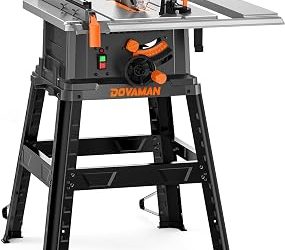
DOVAMAN 12-Inch Dual-Bevel Sliding Miter Saw
A well-equipped dual-bevel slider at a friendlier price, with a 4.2 x 13-inch capacity that swallows wide planter and bench components, plus nine positive stops and ambidextrous controls that suit left-handed users or awkward shop layouts. The 3800 RPM motor is geared toward torque in thick hardwood rather than raw blade speed.
Metabo HPT C10FCG2 10-Inch Single Bevel Compound Miter Saw
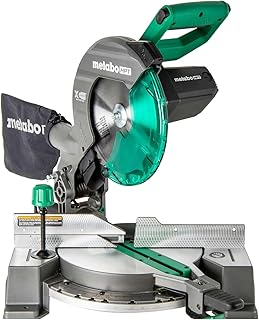
At roughly 24 pounds with a 15-amp motor and the Xact Cut shadow line, this is the saw to grab when the work moves outside to the deck or pergola site. Capacity limits it to trim, rail, and narrow frame stock, but the miter detents are crisp and repeatable, which is what miter joints actually demand.
DEWALT DWS715 12-Inch Single Bevel Compound Miter Saw
A 12-inch blade without the slide mechanism means you get generous crosscut and nested-crown capacity in a lighter, less expensive package. The tall sliding fence supports base and casing on edge, and the stainless miter detent plate holds its settings through years of moving between shop and jobsite.
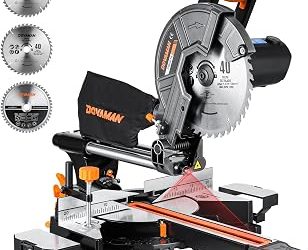
DOVAMAN Updated 10-Inch Sliding Miter Saw
Dual speeds of 5000 and 3200 RPM plus three included TCT blades make this the most flexible pick for mixed-material outdoor projects, from aluminum trim on a bar cart to PVC skirting and hardwood slats. The 3.5 x 13.4-inch capacity is impressive for a 10-inch saw, though you’ll want to verify the laser’s alignment before your first critical cut.
Frequently Asked Questions
Why do my miter joints still gap even after calibrating my saw?
Usually the workpiece, not the angle. Cupped or twisted stock won’t sit flat against both the fence and table, so the cut is technically 45 degrees but not in the plane you intended. Joint one face and one edge first, and hold the board firmly to the fence rather than the table.
Do I need a dual-bevel saw for furniture work?
Not strictly, but it pays for itself on mitered returns, angled leg assemblies, and anything where flipping the board would put a rough face against the fence. If your projects are mostly flat frames and box corners, single bevel is plenty.
How many teeth should the blade have for clean miters?
For hardwood and finish-grade softwood, an 80-tooth fine-crosscut blade on a 10-inch saw or a 90- to 100-tooth on a 12-inch gives the glue-ready surface miters need. The 36- to 40-tooth blades that ship with most saws are framing blades and will leave tear-out on exposed corners.
Can these saws cut composite decking and aluminum trim?
Composite cuts cleanly with a fine carbide blade, though it melts if you feed too slowly. Aluminum requires a non-ferrous blade and a slower spindle speed, which is where a dual-speed saw like the DOVAMAN 10-inch has a genuine advantage over single-speed models.
Final Thoughts
If your miters end up on visible furniture and you want the least fussy path to tight corners, the DEWALT DWS780 is the safe bet, largely because the XPS shadow line removes guesswork permanently. The DOVAMAN 12-inch dual-bevel slider delivers most of that capability for less if you’re willing to do a bit more setup, while the Metabo HPT C10FCG2 remains the smartest pick for portable deck, rail, and trim work where every pound you carry counts.