Key takeaways
- Use painter’s tape to mark the intended layout before ordering, including cabinet footprints and door swings.
- Install a transition ramp or beveled edge where a tile system meets bare concrete to reduce trip hazards.
- Place a boot tray and an absorbent mat near the entry door so snow and mud are captured before they spread.
- Lift a small section of tile periodically to check for trapped water, grit, or corrosion around floor drains.
What's inside
A garage is often the transition zone between the outdoors and the rest of the home. Snow, grit, muddy boots, dripping bicycles, wet camping gear, and vehicle fluids all end up on the floor, where they can stain concrete and make cleanup harder. The best garage flooring creates a tougher, safer surface while making the space more comfortable for parking, projects, storage, and outdoor-gear maintenance.
This guide explains how to choose garage flooring for your climate, vehicle use, and cleaning habits. We’ll compare interlocking tiles, solid rolls, parking mats, drainage, load capacity, installation, and long-term value, then look at where each style works best. The right choice is less about the most impressive specification and more about matching the floor to the way your garage actually lives.
As an Amazon Associate we earn from qualifying purchases.




Start with the Job Your Garage Floor Must Do
Begin by listing the messes and pressures the floor will face. A vehicle parked through snowy winters needs excellent water management and a surface that will not become slick with road salt. A workshop needs resistance to oil, stains, dropped tools, and rolling loads. A garage used for bikes, kayaks, or gardening may benefit more from easy sweeping and comfortable footing than from maximum vehicle capacity.
Also consider whether you want to cover the entire floor or only the parking area. A large parking mat, such as the Oversize Garage Floor Parking Mat, can contain drips and wet tires without committing you to a full installation. Full-floor systems look more finished and protect more concrete, but they require greater preparation and usually cost more.
Choose Between Tiles and Rolls
Interlocking tiles are a flexible choice for uneven or multipurpose spaces. Damaged sections can usually be replaced individually, and many systems can be installed without adhesive. The Garage Floor Tiles Interlocking Garage Flooring pack uses 12-by-12-inch modular plastic tiles, making it practical to build a tailored layout around posts, cabinets, or workbenches.
Open-grid tiles are especially useful where snow, rain, or wash water regularly enters the garage. SnapLock RaceDeck Free-Flow tiles use a self-draining grid that lets liquid move beneath the walking surface, helping keep the top less wet. They still need a suitable drainage path and occasional cleaning underneath; drainage tiles do not make standing water disappear on their own.
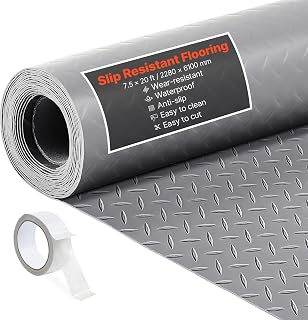
Solid rolls and mats offer a continuous surface with fewer seams to catch dirt. The VEVOR Garage Floor Roll is a diamond-plate PVC option designed for broad coverage, while the 8×20 FT Garage Floor Mat provides another thickened roll format for vehicle areas and utility spaces. Rolls are often faster to lay across a simple rectangular garage, though trimming and securing the edges neatly takes care.
Check Material, Grip, and Load Ratings
Polypropylene tiles are popular because they are tough, moisture-resistant, and relatively easy to clean. Swisstrax Ribtrax PRO tiles use commercial-grade polypropylene and a larger 15.75-inch format, which can reduce the number of joints across a space. Their raised, open construction can improve drainage and airflow beneath the floor, but small objects and fine grit may fall through.
For vehicles, look beyond the headline load rating. Rolling loads are different from a stationary load: tires concentrate weight into small contact patches, and turning the steering wheel can create considerable lateral stress. Confirm that the manufacturer’s rating applies to rolling vehicle loads and that the floor beneath is sound. A high-rated tile cannot compensate for cracked concrete, loose debris, or a badly supported edge.
Grip matters just as much as strength. Diamond-plate PVC and textured plastic can provide useful traction, but any surface becomes slippery when coated with oil, mud, or meltwater. Open-grid systems may be preferable in wet climates, while solid mats can be easier to mop when the main concern is oil and fine dust.
Prepare the Concrete Before Installation
Good preparation is the difference between a floor that feels permanent and one that shifts, curls, or traps moisture. Sweep thoroughly, then remove grease with a suitable concrete degreaser. Allow the slab to dry completely. Fill major cracks and repair loose or crumbling areas before covering them; flooring hides minor flaws but does not correct structural problems.
Measure the garage in several places, since walls are rarely perfectly square. Account for expansion gaps recommended by the flooring maker, especially in garages exposed to large temperature swings. Leave room for doors, ramps, vehicle lifts, shelving, and water to move toward a drain. For rolls, test-fit the material and let it relax flat before final placement. Use only the supplied or manufacturer-approved tape and adhesives.
Plan for Cleaning and Seasonal Change
Outdoor living brings changing types of debris. In autumn, leaves and seed pods collect in drainage channels; winter brings salt and slush; spring adds mud and pollen. Choose a floor you can clean with the tools you already use. Interlocking tiles may be lifted in sections for a deeper wash, while solid mats can generally be vacuumed, swept, or wiped in place.
Keep a stiff outdoor broom, a wet-dry vacuum, and absorbent pads nearby. Clean oil promptly rather than allowing it to soften or stain the surface. If water repeatedly enters under a roll or mat, inspect the garage threshold, downspouts, and slab slope instead of relying on flooring alone. Ventilation also matters: a dry underside discourages lingering odors and moisture buildup.
Tips
- Use painter’s tape to mark the intended layout before ordering, including cabinet footprints and door swings.
- Install a transition ramp or beveled edge where a tile system meets bare concrete to reduce trip hazards.
- Place a boot tray and an absorbent mat near the entry door so snow and mud are captured before they spread.
- Lift a small section of tile periodically to check for trapped water, grit, or corrosion around floor drains.
Frequently Asked Questions
Are garage floor tiles better than a roll?
Neither is universally better. Tiles are easier to replace and adapt around obstacles, while rolls have fewer seams and can be quicker on a straightforward floor. Select tiles for modularity and drainage; choose a roll for broad, simple coverage and easy surface cleaning.
Can garage flooring go over cracked concrete?
It can cover minor cosmetic cracking, but significant movement, loose concrete, or moisture problems should be addressed first. Flooring installed over an unstable slab may separate, rock, or develop visible depressions.
Do open-grid tiles require a floor drain?
Not always, but they need somewhere for water to go. If meltwater has no drain or suitable slope, it can collect beneath the tiles. Check the slab and local conditions before choosing a drainage-style system.
How much flooring should I buy?
Measure the usable area, then add a modest allowance for cuts, mistakes, and future replacement pieces. Tile layouts may need extra material around posts and corners, while rolls should be sized to avoid awkward narrow strips wherever possible.
Conclusion
The best garage flooring for 2026 is the system that suits your weather, vehicle, and cleanup routine. Choose open-grid interlocking tiles for wet, active garages; solid rolls for broad, low-seam protection; or an oversized parking mat when you need focused coverage. Prepare the concrete carefully, plan drainage and edges, and prioritize dependable traction over appearance alone. A well-chosen floor will make the garage safer for daily use and far more welcoming for the outdoor projects that happen there.