Key takeaways
- Solution-dyed acrylic (Sunbrella and similar): pigment is added to the liquid acrylic solution before it’s extruded into fiber. The color runs all the way through each strand, so fading requires the pigment itself to break down under UV exposure, which happens slowly.
- Piece-dyed polyester: the fabric is woven first in its natural off-white state, then dipped in dye that coats the surface. UV light and moisture attack that surface layer directly, so color loss shows up faster, especially on reds, blues, and other saturated shades.
What's inside
A 9 foot patio umbrella made with genuine Sunbrella acrylic fabric will hold its color roughly two to three times longer than the same size umbrella made with dyed polyester, and that difference is the whole reason Sunbrella canopies cost $80 to $250 more than standard versions. If you’re comparing options for a table umbrella that sits in direct sun most of the day, the fabric grade matters more than the frame material, the tilt mechanism, or almost any other spec on the listing.
Solution-Dyed Acrylic vs. Polyester: Why the Color Lasts
The difference comes down to how the color gets into the fiber, not how it looks on day one.
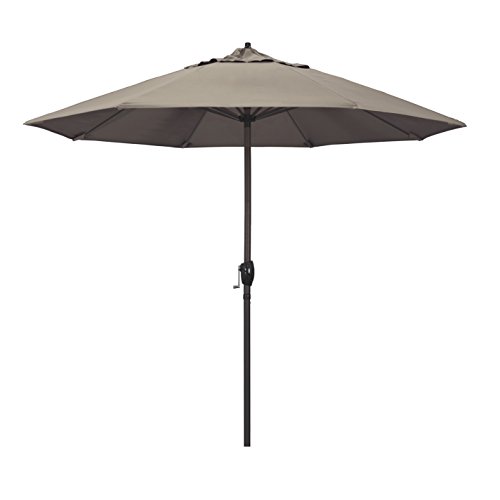
California Umbrella 12-Year Protection 9-Ft Outdoor Patio Umbrella, Sunbrella Fade-Resistant Acrylic Fabric, Auto Tilt and Crank, Heavy-Duty Aluminum Frame/ Reinforced Ribs, Bronze Pole, Taupe
Included for '9 Foot Sunbrella Patio Umbrellas: Fabric Grade, Fade Life and Cost' because the listing specifies Sunbrella Fade-Resistant Acrylic Fabric and Auto Tilt and Crank, details this guide uses to compare options.
View on Amazon
California Umbrella GSPT908302-5439 9' Round Aluminum Market, Crank Lift, Push Button Tilt, Black Pole, Sunbrella Navy Patio Umbrella, 9-Feet
Included for '9 Foot Sunbrella Patio Umbrellas: Fabric Grade, Fade Life and Cost' because the listing specifies Crank Lift and Push Button Tilt, details this guide uses to compare options.
View on Amazon
California Umbrella 9' Rd Sunbrella Aluminum Patio Umbrella, Crank Lift, Auto Tilt, Bronze Pole, Jockey Red
Included for '9 Foot Sunbrella Patio Umbrellas: Fabric Grade, Fade Life and Cost' because the listing specifies Crank Lift and Auto Tilt, details this guide uses to compare options.
View on Amazon
California Umbrella 9' Rd Sunbrella Aluminum Patio Umbrella, Crank Lift, Auto Tilt, Bronze Pole, Natural
Included for '9 Foot Sunbrella Patio Umbrellas: Fabric Grade, Fade Life and Cost' because the listing specifies Crank Lift and Auto Tilt, details this guide uses to compare options.
View on Amazon- Solution-dyed acrylic (Sunbrella and similar): pigment is added to the liquid acrylic solution before it’s extruded into fiber. The color runs all the way through each strand, so fading requires the pigment itself to break down under UV exposure, which happens slowly.
- Piece-dyed polyester: the fabric is woven first in its natural off-white state, then dipped in dye that coats the surface. UV light and moisture attack that surface layer directly, so color loss shows up faster, especially on reds, blues, and other saturated shades.
This is also why a red 9 foot patio umbrella is a useful test case. Red and other deep colors are the first to show chalking or pinking on cheap polyester canopies, often within one or two seasons in a high-UV climate. The same red in solution-dyed acrylic keeps its saturation for years because the pigment isn’t sitting on the surface waiting to be stripped off.
Fabric Grade Comparison
| Fabric type | Typical fade timeline (full sun, southern/southwestern climates) | Typical price add-on vs. base polyester | Best for |
|---|---|---|---|
| Dyed polyester (standard) | 1-2 seasons before noticeable dulling | Baseline | Occasional use, shaded patios, budget replacement plans |
| Solution-dyed polyester | 2-3 seasons | $20-$50 | Moderate sun exposure, coastal humidity |
| Solution-dyed acrylic (Sunbrella) | 5+ seasons, often 8-10 with average care | $80-$250 | Daily direct sun, saturated colors like red or navy, long-term ownership |
What the Fade Warranty Actually Covers
Sunbrella’s own fabric warranty (typically 5 years on umbrella-weight fabrics, sometimes longer on upholstery-weight goods) covers loss of color and strength from normal outdoor exposure. It does not cover the umbrella frame, the stitching done by the umbrella manufacturer, or damage from storms, mildew neglect, or improper storage. A few things trip people up:
- The warranty is on the fabric itself, issued by the fabric mill, not the umbrella brand. If your umbrella maker used Sunbrella fabric but sewed a defective seam, that’s a manufacturer’s warranty claim, not a fabric claim.
- “Fading” under warranty usually means a measurable color shift beyond a set tolerance, not the slight, expected mellowing that happens to every outdoor fabric in year one.
- You’ll typically need the original receipt and the fabric tag or style number sewn into a seam. Keep a photo of both when the umbrella is new.
- Claims are prorated in many cases, meaning a fabric that fails in year 4 of a 5 year warranty gets a partial replacement value, not a full one.
Non-Sunbrella “solution-dyed” fabrics sometimes carry a 2 to 3 year fade warranty with similar terms, worth checking before assuming any acrylic-labeled fabric matches Sunbrella’s coverage.
The Real Cost Over Five Seasons
Here’s where the math actually favors the pricier fabric for anyone keeping the umbrella more than two or three years. A 9 foot canopy uses roughly 8 to 9 yards of fabric depending on the number of ribs, so the fabric upgrade cost scales with that yardage.
| Scenario (9 ft umbrella, 5 seasons of ownership) | Polyester canopy | Sunbrella acrylic canopy |
|---|---|---|
| Initial umbrella cost | $120-$220 | $220-$450 |
| Replacement canopies needed | 2 (roughly year 2 and year 4) | 0-1 |
| Replacement canopy cost each | $60-$110 | $150-$280 |
| Estimated 5-season total | $240-$440 | $220-$730 (often no replacement needed) |
The ranges overlap, but the polyester path assumes you’re comfortable with visible fading and a canopy swap partway through, plus the labor of removing and re-threading a new cover through the ribs. The acrylic path more often means one purchase that still looks presentable at year five, which matters if the umbrella anchors a dining set or pool area where a faded, patchy canopy is the most visible thing in the yard.
Other Factors That Affect Fade Life
- Climate: high-altitude and desert sun (Arizona, New Mexico, inland Southern California) degrades any fabric faster than coastal or northern climates due to stronger UV index, regardless of fabric grade.
- Color: darker and more saturated colors (red, navy, forest green) absorb more UV energy and show fading sooner than tans, grays, and whites, even within the same fabric line.
- Closure habits: closing the umbrella when not in use, or using it as intended rather than leaving it open through wind and storms, adds real years to canopy life independent of fabric type.
- Cleaning: mild soap and water rinses twice a season prevent mildew staining, which can look like fading but is actually a separate problem that acrylic resists better than polyester due to its lower moisture absorption.
Picking the Right Fabric for Your Situation
| Your situation | Recommended fabric |
|---|---|
| Umbrella sits in full sun 6+ hours/day, sun belt climate | Solution-dyed acrylic (Sunbrella) |
| Want a bold color like red or cobalt that needs to stay vivid | Solution-dyed acrylic; avoid standard dyed polyester for saturated colors |
| Patio is mostly shaded, umbrella used a few weekends a month | Solution-dyed polyester is adequate |
| Renting or planning to replace patio furniture within 2 years | Standard polyester; no reason to pay for longevity you won’t use |
| Coastal home with high humidity and salt air | Solution-dyed acrylic; better mildew and moisture resistance |
Frame and Size Notes for a 9 Foot Canopy
A 9 ft umbrella is the common step up from the 7.5-8 ft sizes used for small bistro sets, sized for tables around 42 to 66 inches, seating 4 to 6 people with enough overhang to shade the chairs, not just the tabletop. At full tilt or crank height, expect roughly 7.5 to 8 feet of clearance under the canopy’s lowest point on most aluminum or wood-pole frames, enough for standing room but worth checking against tall patio chairs or bar-height tables. Pair a Sunbrella canopy with a rust-resistant frame (powder-coated aluminum or stainless hardware); a premium fabric on a frame that corrodes in three seasons defeats the purpose of the upgrade.