Key takeaways
- Keep the relief valve unobstructed and pointed away from your house or grill. This valve vents pressure if the tank overheats.
- Use a milk crate, tank stabilizer ring, or built-in grill cabinet with ventilation holes to prevent tipping. A fallen tank can damage the valve and cause a leak.
- Keep the tank at least 10 feet from open flames, fire pits, and HVAC intakes, and at least 3 feet from windows and doors to living spaces.
- Always close the service valve completely by turning it clockwise until snug, even if you think the tank is empty.
Storing a propane tank correctly is the difference between a safe, ready-to-light grill and a serious fire hazard. Propane is heavier than air, expands quickly in heat, and can leak from a faulty valve without much warning, so outdoor storage is not just a recommendation — it’s required by fire codes and every major grill manufacturer. Whether you are running a full-size patio grill or a tabletop setup, a few consistent habits will keep your fuel safe and your grill season stress-free in 2026.
Most grill owners overthink storage and underthink placement. You do not need a special shed or expensive enclosure, but you do need fresh air, a stable upright position, and distance from heat and ignition sources. This guide breaks down exactly where and how to store standard 20-pound and 30-pound grill tanks as well as small 1-pound cylinders, with concrete distances, temperatures, and inspection checks you can use today.
Our top picks




As an Amazon Associate we earn from qualifying purchases at no extra cost to you.
⚡ Save on Your Next PC — Amazon Prime
Prime members get fast free shipping on the systems above, plus early access to Prime Day & Black Friday PC deals. New members get a 30-day free trial.
Watch: How to Safely Store Propane Tanks for Your Grill Outdoors — Video Review
Rule One: Always Store Outdoors, Upright, and Ventilated
Never store any propane tank indoors, including garages, basements, sheds, or under stairwells. Propane sinks and pools in low, enclosed spaces where a small leak can create an explosive atmosphere. The Department of Transportation (DOT) and National Fire Protection Association (NFPA 58) require cylinders to be stored outdoors in a well-ventilated area, secured in an upright, vertical position with the valve closed tightly.
- Keep the relief valve unobstructed and pointed away from your house or grill. This valve vents pressure if the tank overheats.
- Use a milk crate, tank stabilizer ring, or built-in grill cabinet with ventilation holes to prevent tipping. A fallen tank can damage the valve and cause a leak.
- Keep the tank at least 10 feet from open flames, fire pits, and HVAC intakes, and at least 3 feet from windows and doors to living spaces.
- Always close the service valve completely by turning it clockwise until snug, even if you think the tank is empty.
Where to Place Your Tank on a Patio, Deck, or Balcony
The ideal spot is a flat, dry, non-combustible surface with airflow on at least two sides. Concrete, pavers, or a metal grill cart are better than wood decking directly against siding, and you should never place a tank in a fully enclosed grill island without vents.
- Elevate slightly if your patio pools water. Standing water accelerates rust on the collar and foot ring, which can hide corrosion.
- Secure tanks from rolling or tipping in wind. On elevated decks or in high-wind areas, a simple chain or approved tank holder prevents falls from 3 feet or more that could damage an OPD valve.
- Do not store spare tanks under the grill or closer than 6 inches to the firebox. If you keep a spare for quick swaps, store it on the outer edge of the patio, not stacked behind the grill.
- For apartment balconies, check local fire codes — many municipalities prohibit tanks larger than 20 pounds on balconies above the first floor.
Temperature, Sun, and Seasonal Storage
Propane pressure rises fast with heat. A tank can vent propane through its relief valve once internal pressure exceeds about 250 PSI, which can happen when a tank in direct sun exceeds 120°F. That is why shade and airflow matter more than cold.
- Store in shade whenever possible, but never wrap a tank in a plastic tarp or sealed cover. Use a ventilated propane tank cover that leaves the bottom and valve area open.
- Do not lay tanks on their side to shade them or to fit them in a vehicle. Horizontal storage can allow liquid propane to reach the relief valve.
- For winter or off-season storage, leave the tank outdoors. Cold down to -40°F does not damage propane, but moisture and temperature swings do damage the tank. Disconnect from the grill, close the valve, add a threaded POL cap, and keep the tank upright on a dry surface.
- Never store near electrical tools, mowers, or chemicals that produce heat or sparks, and keep tanks at least 20 feet from any bulk gasoline storage.
Choose a Tank Size That Fits Your Space and Use
Matching tank size to your grill and storage area makes safety much easier. Bigger is not always better if you have a small patio with limited ventilation.
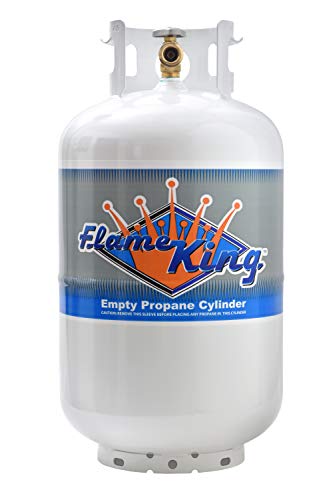
- For most full-size grills, the standard Flame King YSN-201 20-Pound Steel Propane Tank with Type 1 OPD Valve is the easiest to store and exchange. It holds about 4.6 gallons of propane, weighs roughly 38 pounds full, and fits standard grill cabinets and exchange cages.
- If you grill 4+ times per week, host often, or use a large island grill, the Flame King YSN-301 30 Pound and the Flame King YSN330 30lb with Gauge give you 30% more runtime with the same footprint, just 4 inches taller. The built-in gauge on the YSN330 helps you avoid storing an extra spare you do not need.
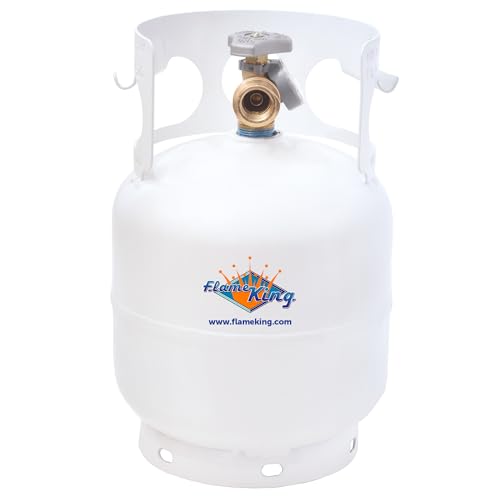
- For portable grills, tailgating, or tight balconies where a 20-pound tank is impractical, the compact Flame King 3LB Empty Steel Propane Tank with gauge is far easier to keep upright and secured than a full-size cylinder.
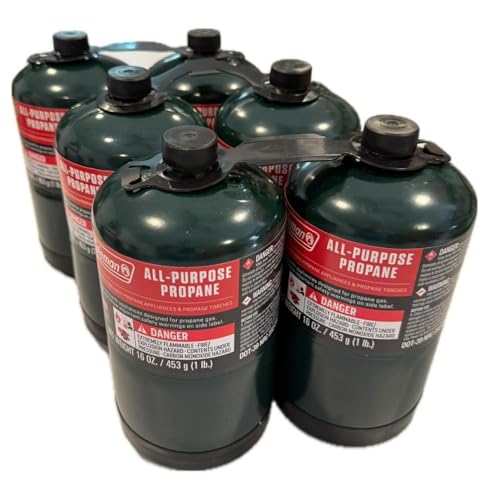
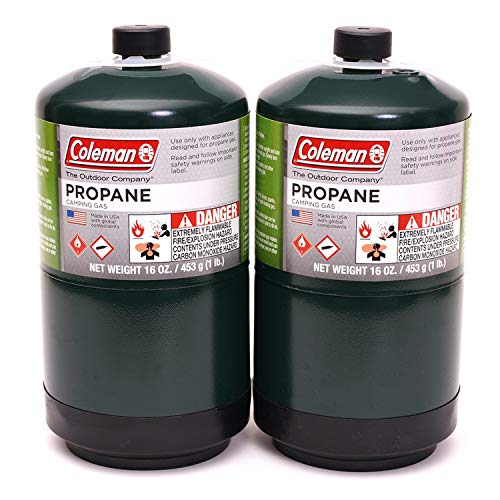
- For tabletop grills, torches, or camping stoves, 16-ounce cylinders like the Coleman 2 Pack Propane Fuel Tank – 16 oz and the Boss Life Outdoors Propane Cylinders 16 Oz 6 Pack should also be stored upright outdoors, never in a drawer or kitchen cabinet. Keep their small brass thread caps on when not in use and store them in a ventilated bin, not a sealed plastic tote.
Tips
- Inspect before you store: Check for rust, dents, gouges, or a bent collar. Use soapy water on the valve and connections — steady bubbles mean a leak. If you smell rotten eggs or hear hissing, close the valve, move the tank to open air, and do not use it.
- Follow the 10-year recertification rule: DOT cylinders require visual recertification 12 years after manufacture and every 5 to 10 years after that (stamped on the collar as month-year plus an E). Exchange the tank if it is out of date.
- Never repair or repaint a tank yourself with heavy coatings that hide rust. Light surface rust can be brushed and touched up only if the metal is still solid and the collar stamp is legible.
- Transport like you store: Drive with the tank upright, secured, windows cracked for ventilation, and never leave a tank in a hot closed trunk over 120°F for more than a few minutes.
Frequently Asked Questions
Can I store my propane tank in the garage or shed if I leave the door open?
No. Even with doors open, garages and sheds are considered enclosed spaces and trap heavier-than-air propane at floor level. Fire codes require outdoor storage at all times, except for brief transport. If you must keep a tank near the house during a storm, place it on an open covered patio with at least two sides open to air, upright and 10 feet from ignition sources.
How far should a propane tank be from the grill and my house?
When connected, the tank should be as designed by the grill manufacturer, typically 18 to 30 inches from the firebox in a ventilated cabinet or on a side cart. When storing a disconnected spare, keep it at least 10 feet from the grill in use, and at least 3 to 10 feet from doors, windows, and dryer vents, depending on local code. Never store within 10 feet of a central air conditioner that could pull vapors inside.
How do I know if my tank is leaking while in storage?
Look, listen, and test. Look for frost on the valve, listen for faint hissing, and smell for the strong sulfur-like odorant ethyl mercaptan. Confirm with a 50/50 soap-and-water solution brushed on the valve, regulator connection, and weld seams. Do not use an open flame to test. If bubbles grow or the smell persists after tightening, close the valve, move the tank away from people and ignition sources, and exchange it.
Do small 1-pound green bottles need the same outdoor storage?
Yes. While the fuel volume is smaller, 16-ounce cylinders like Coleman and Boss Life Outdoors bottles contain the same propane and must be stored upright, outdoors, with caps on, and below 120°F. Do not store them in cars, boats, or interior closets, and never refill DOT-39 disposable cylinders. Puncture or dispose of them only at a proper household hazardous waste facility after they are completely empty.
Conclusion
Safe propane storage is simple when you make it routine: keep every cylinder outdoors, upright, valve-closed, and ventilated, protected from direct sun and tipping, and inspected regularly for rust and leaks. Choose a tank size that matches your grill and patio — whether that is a standard Flame King 20-pound tank for weekly grilling, a 30-pound tank with gauge for longer runtime, or smaller Flame King 3LB and 16-ounce cylinders for portable setups — and give it a dedicated, shaded, stable spot away from your home. Do that, and your fuel will be safe, legal, and ready the next time you fire up the grill.