Limited square footage doesn’t mean limited harvests. In 2026, the best raised garden beds for patios are taller, deeper, and smarter about water management than ever, letting urban gardeners grow herbs, greens, tomatoes, and even root vegetables without tearing up a yard or building permanent structures.
Whether you’re working with a 6×10 foot concrete patio or a sunny apartment balcony, the right elevated bed solves the three biggest small-space challenges: poor soil, limited drainage, and back-straining access. We compared and compared the most popular patio-ready options for build quality, growing depth, footprint, and ease of assembly to find the standouts for urban gardening.
Our top picks



As an Amazon Associate we earn from qualifying purchases at no extra cost to you.
⚡ Save on Your Next PC — Amazon Prime
Prime members get fast free shipping on the systems above, plus early access to Prime Day & Black Friday PC deals. New members get a 30-day free trial.
Watch: Best Raised Garden Beds for Urban Gardening on Patios — Video Review
How to Choose
- Height and Ergonomics: Look for a bed height of 29 to 32 inches to garden without bending or kneeling. This range reduces strain and keeps soil off hot patio surfaces.
- Growing Depth: Choose at least 10 to 12 inches of soil depth for lettuce and herbs, and 15 to 16 inches for carrots, peppers, and tomatoes. Deeper beds hold moisture longer and support stronger root systems.
- Footprint and Drainage: Measure your patio and allow 18 to 24 inches for airflow and access. A built-in drainage plug or slatted base is essential to prevent water pooling on concrete or decking.
- Material and Durability: Food-safe resin and galvanized steel resist rust, rot, and fading better than untreated wood in full sun and rain. Powder-coated metal supports 800 to 1200 pounds when fully loaded with wet soil.
- Water Management: Self-watering reservoirs, water gauges, and dual drainage options help prevent over- and under-watering, which is critical for containers that dry out 2 to 3 times faster than in-ground beds.
The Best Picks Reviewed
Keter Urban Bloomer Raised Garden Bed
Ideal for first-time and herb-focused gardeners, the Keter Urban Bloomer packs a 12.7-gallon capacity into a compact 32.3 x 14.5-inch footprint that fits even narrow balconies. Its standout feature is the self-watering system with a visible water gauge and dedicated drainage plug, which prevents root rot on patios. Made from weather-resistant resin in dark grey, it won’t rust, rot, or peel and includes a seedling tray for starting herbs indoors. Best for basil, parsley, cilantro, and strawberries.
Best Choice Products Elevated Wood Planter Box Stand
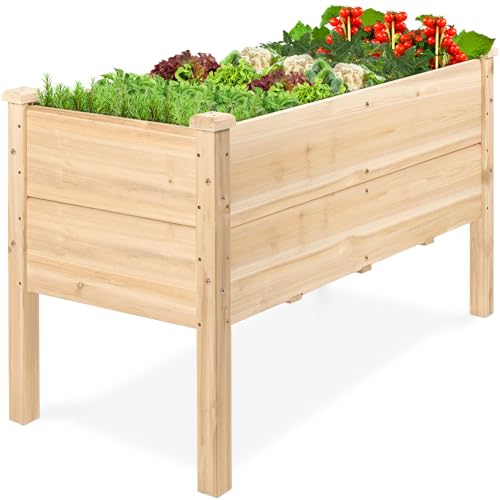
A classic choice for serious vegetable growers, this elevated fir wood bed measures 48 x 24 x 30 inches with an extra-deep 16-inch growing depth. That depth allows for proper root development for carrots, peppers, and dwarf tomatoes while the 30-inch standing height eliminates bending. The four divided interior sections and built-in drainage holes help organize crops and prevent waterlogging. The natural fir is sanded smooth and holds up well with a seasonal sealant, offering a warm look that suits patios and balconies.
Yardbliss Large Galvanized Raised Garden Bed with Legs
Built for durability and heavy harvests, the Yardbliss bed measures 48 x 26 x 30 inches and is engineered with a reinforced steel frame rated for up to 1200 pounds of soil and plants. The galvanized metal bed with powder coating resists corrosion, UV fading, and warping, making it a long-term outdoor solution. Its open-base design with excellent drainage and generous depth supports deep-rooted vegetables and flowers equally well, while the elevated legs keep the patio clean and pest pressure low.
Vertical Raised Bed with Planter Boxes
When floor space is tight, going vertical is the smartest strategy. This tiered vertical raised bed uses stacked planter boxes on legs to grow 3 to 4 times more plants in the same square footage as a flat bed. Each tier is independently drained to protect lower levels, and the staggered layout ensures every row gets direct sunlight. It is perfect for growing a succession of lettuce, spinach, and strawberries on a small patio or against a sunny wall where a traditional 48-inch bed won’t fit.
SnugNiture Raised Garden Bed with Legs 2-Pack
For gardeners who want symmetry or to separate crops, this 2-pack offers exceptional value. Each bed measures 48 x 18 x 32 inches, providing a tall, comfortable working height and ample depth for most herbs and vegetables. The slatted wood construction promotes airflow and drainage, while the narrower 18-inch width makes them ideal for lining a patio railing or placing on either side of a doorway. Use one for greens and one for companion flowers to maximize pollination in a small space.
Frequently Asked Questions
How deep should a patio raised bed be?
For most patio crops, 10 to 12 inches is sufficient for herbs, lettuce, and radishes. For fruiting and root crops like tomatoes, peppers, cucumbers, and carrots, choose 15 to 16 inches or more. Deeper beds also buffer soil temperature and require less frequent watering during summer heat.
Do raised beds on patios need different soil?
Yes. Use a lightweight raised bed or potting mix, not garden soil or topsoil, which compacts and drains poorly in containers. A mix of 60% peat or coco coir, 30% compost, and 10% perlite provides the right balance of moisture retention, nutrition, and drainage for elevated beds.
How do I prevent water damage on my patio?
Always use beds with drainage holes or plugs and elevate them on legs. Place saucers or a drip tray underneath if you are on a wood deck, and avoid overfilling reservoirs. Empty self-watering gauges before heavy rain and ensure water can flow away from the building foundation.
Can I grow vegetables year-round in a patio raised bed?
In many climates, yes with season extension. Cool-season crops like kale, spinach, and garlic grow well through fall and winter, while warm-season crops take over in spring and summer. For beginners, the book Field Guide to Urban Gardening offers excellent month-by-month guidance on succession planting, vertical gardening, and small-space techniques like hydroponics for balconies and rooftops.
Final Thoughts
For most urban patios in 2026, the Yardbliss Large Galvanized Raised Garden Bed with Legs is the most durable all-around workhorse, while the Keter Urban Bloomer is the easiest low-maintenance pick for herbs and small balconies. If you want to maximize growing area or create a dedicated salad and flower setup, pair the SnugNiture 2-Pack or the Vertical Raised Bed with Planter Boxes to double your harvest without adding footprint.