A patio umbrella that is stable on a calm afternoon can become a dangerous sail in a 25 mph gust. Most freestanding patio umbrellas are only rated to handle 15 to 20 mph winds when properly anchored, yet a single strong gust can generate more than 70 pounds of lift on a 9-foot canopy. Proper anchoring is not just about keeping your shade in place, it protects people, furniture, and the umbrella frame itself.
This 2026 guide shows you exactly how to anchor your patio umbrella securely on concrete patios, decks, grass, and sand. You will learn how much base weight you actually need, which anchor systems work best for each surface, and how to use vented canopies and stabilizer accessories to reduce wind load before high winds hit.
Our top picks
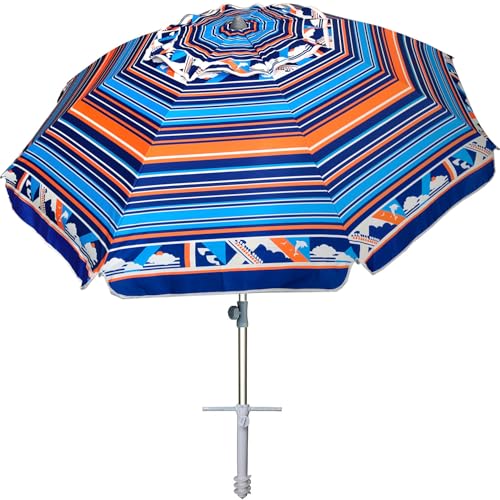
 AMMSUN 8 Feet Large Beach Umbrella with
- Air vented 8ft beach umbrella.air-vent designed to facilitate…
- The umbrella is supported by 10 strong fiberglass…
- Large umbrella with UPF 50+ UV protection filters…


As an Amazon Associate we earn from qualifying purchases at no extra cost to you.
⚡ Save on Your Next PC — Amazon Prime
Prime members get fast free shipping on the systems above, plus early access to Prime Day & Black Friday PC deals. New members get a 30-day free trial.
Watch: How to Anchor Your Patio Umbrella Securely in High Winds — Video Review
1. Match Your Anchor System to Your Surface
There is no universal anchor. The right system depends entirely on where you place your umbrella, and using the wrong one is the most common reason umbrellas fail.
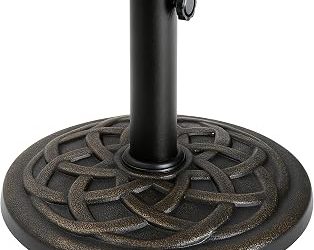
- Patio and deck pavers (concrete, stone, composite): Use a heavy freestanding base. For a 7.5-foot umbrella, you need at least 50 pounds of ballast; for a 9 to 11-foot umbrella, aim for 75 to 100 pounds. Fillable bases with water or sand are effective, but a solid steel or cast iron base resists tipping better in sustained wind.
- Grass and lawn: A ground spike or auger is far more secure than a weighted base. The Patio Umbrella Steel Anchor Grass Auger Spike screws 14 to 18 inches into firm soil and locks the pole at ground level, preventing the wobble that loosens freestanding bases.
- Sand and beach: You need an auger-style sand anchor, not just a pointed tip. Models like the AMMSUN 8 Feet Large Beach Umbrella and the Tempera Heavy Duty High Wind Beach Umbrella include a dedicated sand anchor that buries 16 to 20 inches deep and widens at the base to resist pullout.
2. Install Sand and Ground Anchors Correctly
Even the best sand anchor will fail if it is installed too shallow or at the wrong angle. Proper technique creates a solid foundation that holds in winds up to 25 mph.
- For sand: Screw the anchor in vertically until the top is flush with or just below the surface. Moisten dry sand first – wet sand holds up to 3x more weight than loose dry sand. Insert the pole at least 12 inches into the anchor sleeve and tighten the collar screw firmly. The AMMSUN 8ft Large Beach Umbrella with Sand Anchor is designed for this direct sleeve fit, which eliminates pole wobble.
- For grass and soil: Screw the auger spike clockwise while applying downward pressure until only the top plate remains above ground. Avoid hammering straight stakes into hard, dry ground – they can bend and loosen. If your soil is rocky, pre-water the spot and use a steel auger rather than a plastic one.
- Test before you shade: After installation, pull the pole laterally with about 30 pounds of force. If it shifts more than one inch, reset it deeper or relocate to firmer ground.
3. Reduce Wind Load with Vents, Tilt, and Stabilizer Straps
Anchoring holds the pole down, but reducing lift on the canopy itself is equally important. Wind pressure is what causes bending, inversion, and frame failure.
- Choose a vented canopy: A double-vent or air vent at the top lets trapped air escape instead of pushing the umbrella upward. The air vent on the Tempera Heavy Duty High Wind Beach Umbrella and both AMMSUN 8-foot models significantly reduces ballooning in gusty conditions compared to single-layer canopies.
- Use the tilt correctly: In moderate wind (10 to 18 mph), tilt the canopy 15 to 20 degrees into the wind to deflect airflow over the top rather than catching it underneath. Never leave an umbrella fully horizontal in high wind.
- Add stabilizer straps: For larger or cantilever umbrellas, additional tie-downs are essential. The Celeyearnirs Umbrella Wind Stabilizer Straps are adjustable, reusable straps that anchor the canopy ribs to the pole or to ground stakes, preventing the canopy from flexing and inverting. Secure two to four straps evenly spaced around the frame for best results.
4. Position and Secure Your Umbrella for Maximum Stability
Placement and daily habits matter as much as hardware. A well-positioned umbrella can handle 10 mph more wind than a poorly placed one with the same base.
- Lower the height when wind builds: If your umbrella has a crank or push-button tilt like the Handy Beach Umbrella with 10 Second Easy Setup, lower the canopy to its lowest usable height to reduce the lever arm on the pole. A lower center of gravity cuts tipping force by up to 30 percent.
- Wind angle and surroundings: Place the umbrella on the leeward side of a windbreak such as a fence, wall, or hedge if possible. Avoid open corners where wind funnels and accelerates between buildings.
- Lock all joints: Always tighten the pole lock, crank lock, and tilt button. Vibration from wind will gradually loosen a hand-tightened collar and create play that worsens with every gust.
- Close it when unattended: No patio umbrella, even with a 100-pound base and auger, is designed to stay open in winds above 25 to 30 mph. Close, strap, and cover the canopy whenever you leave the patio or expect thunderstorms.
Tips
- Weigh your base properly: Fill water bases completely – a half-filled 50-pound base only provides about 25 pounds of effective ballast. Top off with sand for 20 percent more density if your base allows it.
- Use a table plus base combo: For through-table umbrellas, use both a table clamp and a weighted base underneath. The table alone is not an anchor and will lift and flip in a gust.
- Check hardware monthly: Tighten bolts, inspect ribs for cracks, and replace frayed stabilizer straps. A single loose rib increases wind stress on the remaining ribs.
- Have a quick-close plan: Keep the crank handle attached and the strap velcro handy. In sudden gusts, you should be able to lower and secure the canopy in under 30 seconds.
Frequently Asked Questions
How heavy should my patio umbrella base be?
For most residential use, use at least 50 pounds for umbrellas up to 7.5 feet, 75 pounds for 9-foot umbrellas, and 100 pounds or more for 11-foot or cantilever styles. In consistently windy locations, add 20 to 30 percent more weight and consider supplementing with Celeyearnirs Umbrella Wind Stabilizer Straps or a ground tether.
Can I leave my umbrella open overnight?
We do not recommend it. Overnight winds are unpredictable and often stronger than daytime breezes. Even heavy-duty models like the Handy Beach Umbrella with 10 Second Easy Setup Hammer In Anchor, which is ASTM F3681 safety tested, should be closed and strapped when not supervised. Closing it takes seconds and prevents most wind damage.
Are sand anchors usable on grass or a patio?
No. Sand augers rely on the weight and compaction of sand to hold. On grass, use a steel auger spike like the Patio Umbrella Steel Anchor Grass Auger Spike. On concrete or pavers, use a weighted freestanding base. Interchanging them will result in poor holding power and a higher risk of tipping.
What wind speed is too high for an open umbrella?
Close any open umbrella when sustained winds reach 20 mph or gusts reach 25 mph, regardless of anchor type. Most manufacturers rate even high-wind models to 25 to 35 mph when perfectly anchored, but real-world gusts, changing directions, and worn hardware lower that threshold. When in doubt, close it.
Conclusion
Securely anchoring your patio umbrella comes down to three steps: use enough weight or a proper auger for your surface, reduce wind lift with a vented canopy and stabilizer straps, and close the canopy before winds exceed its limits. With the right combination of a heavy base, a correctly installed sand or grass anchor, and accessories like wind straps, your umbrella will stay safe and stable through the breezy days and be ready to close quickly when severe weather arrives.