Key takeaways
- Propane 5-Year Cost Projection:
- Initial Fire Table Purchase: $360
- Two 20-lb Propane Tanks (one active, one backup): $100
- Fuel Consumption: A 50,000 BTU burner consumes a 20-lb tank in about 4.5 hours. For 80 hours of annual use, you will need approximately 18 tank refills per year. At an average exchange cost of $25 per tank, fuel costs $450 annually.
- 5-Year Fuel Total: $2,250
- Total Estimated 5-Year Propane Cost: $2,710
Adding a fire pit table to your deck is one of the most rewarding outdoor upgrades you can make. It instantly transforms an underutilized deck into a cozy, multi-season living room. However, before you choose a table style, you face a fundamental mechanical decision: propane vs natural gas. This choice dictates how much you will spend upfront, how your deck layout will function, and whether you will be hauling heavy tanks every weekend or enjoying unlimited, hands-free warmth.
For deck owners, this decision is uniquely critical. Unlike a concrete patio, a wooden or composite deck has structural weight limits, strict clearance-to-combustible requirements, and aesthetic challenges when it comes to hiding fuel lines. As we look at the outdoor living trends of 2026, the demand for clean-burning, low-maintenance warmth is higher than ever. Choosing the wrong fuel source can lead to expensive post-purchase modifications, safety hazards, or a beautiful fire table that sits unused because running it is too much of a chore.
Our top picks


As an Amazon Associate we earn from qualifying purchases at no extra cost to you.
Quick Verdict
If you prioritize portability, instant setup, and lower upfront costs, choose a propane fire pit table. It requires no professional gas line installation and can be relocated easily if you redesign your deck layout. However, if you want uninterrupted fuel, the lowest operating costs over time, and a sleek look without a visible tank or hose, invest in a natural gas fire pit table. While it requires an upfront investment in professional plumbing, it offers unmatched long-term convenience and boosts your home’s resale value.
Side by Side
To help you weigh your options, this side-by-side comparison highlights how propane and natural gas perform across the key metrics that matter most to deck owners.
| Feature | Propane Fire Pit Table | Natural Gas Fire Pit Table |
|---|---|---|
| Fuel Source | Portable liquid propane (LP) tanks (typically 20 lbs) or small cylinders. | Your home’s main natural gas utility line. |
| Upfront Cost Range | Low ($200 to $1,500+ for the table; no plumbing installation needed). | Moderate to High ($300 to $2,000+ for the table + $500 to $2,000 for line installation). |
| Operating Cost | High ($4.00 to $6.00 per hour of use, depending on local tank exchange prices). | Very Low ($0.50 to $1.50 per hour of use, billed directly to your utility). |
| Portability | Excellent. Can be moved around the deck or to a new home easily. | None. Permanent installation anchored by a fixed utility line connection. |
| Heat Output (BTUs) | Typically 40,000 to 60,000 BTUs. Burns slightly hotter per unit of volume. | Typically 40,000 to 60,000 BTUs. Safe, consistent, but slightly lower energy density than LP. |
| Aesthetics & Space | Requires housing for the tank (either inside the table base or via an external tank cover). | Ultra-clean look with no tanks, but requires a gas line run beneath or through the deck. |
| Maintenance | Low. Keep burner clean and periodically check the regulator hose for leaks. | Very Low. Keep burner clean; no tanks to refill or regulators to replace. |
| Resale Value | Adds little to no home value as it is a portable personal property item. | Adds moderate home value as a permanent, built-in outdoor upgrade. |
Where Propane Wins
Propane is the champion of convenience and immediate gratification. For the vast majority of homeowners, the appeal of a propane fire pit table lies in its “plug-and-play” nature. You can purchase a table, buy a standard 20-pound propane tank at a local grocery store or gas station, and have a roaring fire on your deck within an hour. There is no need to wait for permits, schedule municipal inspections, or hire a utility contractor.
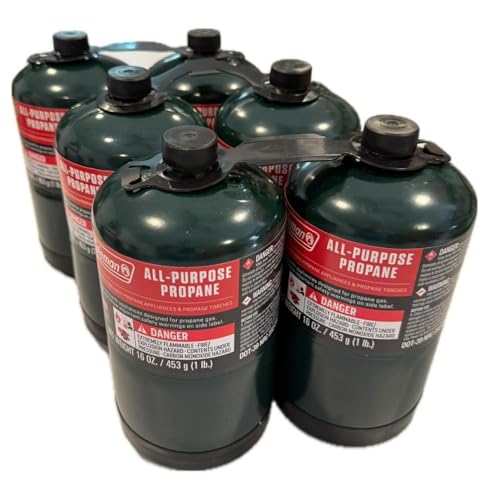
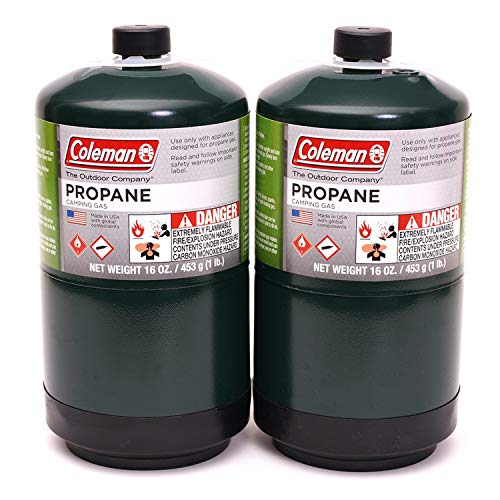
Portability is another massive advantage. If you decide to rearrange your deck furniture, move the fire table to a paved patio, or pack up and move to a new home, a propane unit goes with you. For tabletop auxiliary heaters, smaller portable fire bowls, or camping trips, you can even rely on compact canister options like the Coleman 2 Pack Propane Fuel Tank – 16 oz, Green, Steel ($24.94) or the Boss Life Outdoors Propane Cylinders – 16 Oz (6 Pack) ($55.89) to keep your secondary outdoor gear fueled without hauling a heavy 20-pound tank.
Finally, propane units are ideal for decks where running a hard line is structurally impossible or prohibitively expensive. If your deck is elevated on a second story, suspended over a steep slope, or built over a solid concrete pad, routing a natural gas line can cost thousands of dollars in structural alterations. Propane sidesteps these architectural roadblocks entirely.
Where Natural Gas Fire Pit Table for Deck Wins
Natural gas is the gold standard for luxury, uninterrupted convenience, and long-term economy. The single greatest benefit of a natural gas fire pit table is that it never runs out of fuel. There is nothing more frustrating than hosting a dinner party on a chilly evening, only to have your fire table sputter and die mid-conversation because the propane tank ran empty. With natural gas, your flame is connected directly to your home’s utility line, providing endless warmth for as long as you leave the key valve open.
Operating costs are also significantly lower. On average, natural gas costs one-third to one-fourth as much as propane per hour of operation. If you plan to use your fire pit table multiple times a week for several hours at a time, the savings on your utility bill will quickly offset the initial cost of running the gas line.
From an aesthetic perspective, natural gas tables are unmatched. Because the fuel line is permanently plumbed up through the deck boards directly beneath the unit, there are no unsightly hoses to trip over, and you do not have to sacrifice valuable internal table space to hide a bulky tank. Many modern, high-end tables are engineered to give you the best of both worlds. For instance, the 32-inch Outdoor Gas Fire Pit Table with Natural Gas Conversion Kit ($359.55) and the more spacious 48-inch Fire Table with Natural Gas Conversion Kit ($359.97) allow you to start with propane and seamlessly convert to a permanent natural gas line down the road when your budget allows.
Cost Over 5 Years
To understand the true cost of ownership, you must look beyond the initial price tag of the fire table itself. Let’s break down the estimated expenses of operating a 50,000 BTU fire pit table on a deck over a five-year period, assuming moderate usage of 80 hours per year (approximately 2 hours per week during spring, summer, and autumn).
- Propane 5-Year Cost Projection:
- Initial Fire Table Purchase: $360
- Two 20-lb Propane Tanks (one active, one backup): $100
- Fuel Consumption: A 50,000 BTU burner consumes a 20-lb tank in about 4.5 hours. For 80 hours of annual use, you will need approximately 18 tank refills per year. At an average exchange cost of $25 per tank, fuel costs $450 annually.
- 5-Year Fuel Total: $2,250
- Total Estimated 5-Year Propane Cost: $2,710
- Natural Gas 5-Year Cost Projection:
- Initial Fire Table Purchase (with conversion kit): $360
- Professional Plumber Installation (running 20 feet of line to deck): $1,200
- Fuel Consumption: 50,000 BTUs is equivalent to 0.5 therms of natural gas per hour. At an average national rate of $1.20 per therm, operating the table costs $0.60 per hour. For 80 hours of annual use, fuel costs $48 annually.
- 5-Year Fuel Total: $240
- Total Estimated 5-Year Natural Gas Cost: $1,800
As this projection shows, even with a $1,200 professional plumbing installation fee included, the natural gas option becomes the more economical choice before the end of year four. If you use your fire table more frequently—say, 150 hours a year—the break-even point occurs in less than two years.
Which One for Your Home
Condo or Apartment Deck
If you live in a multi-family building with a private deck, your decision will likely be dictated by local building codes and Homeowner Association (HOA) bylaws. Most condo and apartment associations strictly prohibit the storage of 20-pound liquid propane tanks on balconies or decks due to fire safety regulations. In this scenario, if the building does not have a pre-piped natural gas hookup on the balcony, you may be restricted to using smaller, highly regulated portable canisters, or you may not be allowed to operate a gas fire table at all. Always check your HOA rules before purchasing.
Family with Kids and Pets
Safety is the primary concern for households with active children and pets. For these decks, a permanently plumbed natural gas fire pit table is the safer choice. Because the gas line is hard-piped directly underneath the table through the deck floor, there are no exposed hoses or external tanks for kids or dogs to trip over. If you must use propane, choose a fire table model that houses the tank entirely within its base, rather than an external tank connected by a 10-foot hose draped across the deck surface.
Rental Property
If you are renting your home or managing a short-term vacation rental, propane is the clear winner. Landlords rarely permit tenants to make permanent alterations like running new gas lines. A portable propane table can be set up without property modifications and packed into a moving truck when your lease ends. For vacation rental owners, however, be aware that guests may not know how to safely swap propane tanks, making natural gas a lower-maintenance option if you own the property and want to avoid constant guest complaints about empty tanks.
Long-Term Homeowner
If you own your home and plan to stay for five or more years, investing in a natural gas fire pit table is a highly rewarding upgrade. It integrates beautifully with your home’s infrastructure, eliminates the chore of manual refueling, costs pennies to run, and acts as a permanent luxury feature that appeals to future home buyers. Opting for a flexible unit that includes a conversion kit gives you the freedom to use propane immediately while planning your permanent natural gas line installation for a future home improvement phase.
FAQ
Can I convert a propane fire pit table to natural gas later?
Yes, but only if the manufacturer specifically states that the burner is compatible with natural gas and provides an official conversion kit. Converting a gas appliance requires changing the burner orifices and installing a natural gas regulator to accommodate the lower pressure of utility gas lines. Never attempt to DIY a conversion using mismatched parts, as this can lead to dangerous gas leaks or improper combustion.
Is it safe to put a gas fire pit table directly on a wood or composite deck?
Most certified propane and natural gas fire pit tables are engineered to vent heat upward and outward, leaving the base of the unit cool to the touch. This makes them safe to place directly on wood or composite decking. However, you must always consult the manufacturer’s user manual for specific clearance requirements and consider using a protective, fire-resistant deck mat underneath the unit for added peace of mind.
How many BTUs do I need for a standard-sized deck fire table?
For a standard deck seating area (designed for 4 to 6 people), a fire table rated between 40,000 and 60,000 BTUs is ideal. This range provides a robust, visually appealing flame and throws off enough radiant heat to keep everyone comfortable on a chilly evening without consuming fuel too rapidly or creating an uncomfortably hot environment.
Do I need a permit to install a natural gas line for my deck fire table?
In almost all municipalities, running a new natural gas line requires a utility permit and must be installed by a licensed professional plumber or gas fitter. This ensures the line is safely buried, pressure-tested, and compliant with local building and fire safety codes. Attempting to install a utility gas line yourself is highly dangerous and can void your home insurance policy.