Key takeaways
- Bleach on printed polyester. It removes the color along with the mold.
- Pressure washing. Anything above about 1,200 PSI or closer than 2 feet blows out seams and drives water deep into foam.
- Putting cushions back damp. Mold regrows in 48 to 72 hours inside wet foam.
- Cleaning on the patio. Spores and rinse water end up on the furniture and pavers you just cleaned.
- Machine washing non-removable cushions or drying covers on heat. Covers shrink and no longer zip.
- Skipping the underside. Mold starts where the cushion meets the seat and stays damp.
- Using both bleach and vinegar. The combination releases chlorine gas.
What's inside
Mold on patio cushions is a two-part problem, and most people only fix half of it. They scrub the black speckles off the fabric, put the cushion back on the chair, and watch the spots return in three weeks because the foam inside was never dried and the spores were never killed. The other failure is overcorrecting: a full-strength bleach soak on printed polyester leaves a pale blotch that is more visible than the mold was, and a pressure washer opens the seams. The right process cleans the cover, kills what is living in the foam, dries everything completely, and then changes the conditions so the mold does not come back.
What You Need
| Item | Why | Optional? |
|---|---|---|
| Soft-bristle scrub brush | Lifts mold from the weave without fuzzing the fabric | No |
| Bucket, garden hose with spray nozzle | Mixing solution and rinsing thoroughly | No |
| Mild dish soap | Base cleaner; breaks down the dirt mold feeds on | No |
| White vinegar or an outdoor fabric mold cleaner | Kills mold on fabrics that cannot take bleach; commercial cleaners run $15 to $30 per bottle | No, one or the other |
| Household bleach | Fastest mold killer for solution-dyed acrylic and white or light textilene only | Yes, fabric-dependent |
| Rubber gloves, eye protection, N95 mask | Mold spores and bleach fumes | No |
| Spray bottle | Targeted application on seams and welting | Yes |
| Wet/dry vacuum | Pulls water and loosened spores out of the foam | Yes, but speeds drying by hours |
| Fabric protector spray | Restores water repellency after cleaning | Yes |
| Cushion storage bag or deck box | Prevention; keeps cushions dry between uses | Yes |
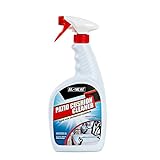
Two listed cleaners cover the common approaches. AL-NEW Patio Cushion Cleaner, a 32-ounce bottle safe for outdoor fabrics including cushions, awnings, and covers, lists at $15.95 and suits routine cleaning and light mildew. POFL Outdoor Fabric and Furniture Cleaner, a 25.36-ounce mold and mildew stain remover for cushions, sling, mesh, canvas, and vinyl, lists at $29.99 and is the heavier-duty option for established growth. Either replaces the vinegar step below for fabrics that cannot take bleach.
As an Amazon Associate we earn from qualifying purchases at no extra cost to you. Product prices and availability are accurate as of the date shown and are subject to change.

Step-by-Step
1. Identify the fabric (5 minutes)
Check the care tag. Solution-dyed acrylic and olefin tolerate diluted bleach. Printed or piece-dyed polyester, cotton blends, and anything with a pattern do not; use vinegar or a commercial cleaner instead. If there is no tag, test the bleach solution on a hidden corner for 10 minutes and look for lightening.
2. Work outdoors and brush off dry mold (5 minutes)
Put on the mask and gloves. Take the cushions to a driveway or lawn, away from the patio, and brush the dry surface hard with the soft brush. Dry spores come off in a cloud; you do not want that on the furniture you are about to put the cushions back on.
3. Remove the covers if they zip (5 minutes)
Zippered covers come off and get cleaned separately, which lets you treat the foam directly. Non-removable cushions get cleaned as a unit; the process is the same but drying takes longer.
4. Mix the solution (3 minutes)
For bleach-safe fabric: 1 cup bleach plus 1/4 cup dish soap per gallon of cool water. For everything else: 1 cup white vinegar plus 1/4 cup dish soap per gallon, or the commercial cleaner at label strength. Never combine bleach and vinegar.
5. Apply, wait, and scrub (20 to 30 minutes)
Wet the cushion or cover, apply the solution generously to the moldy areas and 2 inches beyond, and let it sit 10 to 15 minutes. Scrub with the brush in small circles, paying attention to seams, piping, and the underside where mold starts. Reapply and repeat on stubborn spots.
6. Treat the foam (10 minutes)
If the cover came off, spray the foam with the vinegar solution (not bleach, which degrades polyurethane) on any discolored areas and let it sit 10 minutes. If the cover does not come off, press the solution into the cushion so it reaches the foam under the moldy patches.
7. Rinse until clear (10 minutes)
Hose everything thoroughly, top, bottom, and sides, until no suds appear. Residual soap feeds the next mold colony. Squeeze the cushion to push rinse water through the foam.
8. Extract and dry (15 minutes plus 24 to 48 hours)
Stand cushions on edge in full sun and breeze. If you have a wet/dry vacuum, run it over the fabric to pull water out of the foam; it cuts drying time roughly in half. Flip every few hours. Do not put cushions back until the center of the foam is dry, which is 24 hours for thin seat pads and up to 48 for 5- to 6-inch deep seats. Sunlight also helps kill remaining spores.
9. Protect and store (10 minutes)
Once dry, spray the fabric with a water-repellent protector and let it cure per the can. From here on, store cushions in a deck box or breathable bag when not in use for more than a day.
Mistakes to Avoid
- Bleach on printed polyester. It removes the color along with the mold.
- Pressure washing. Anything above about 1,200 PSI or closer than 2 feet blows out seams and drives water deep into foam.
- Putting cushions back damp. Mold regrows in 48 to 72 hours inside wet foam.
- Cleaning on the patio. Spores and rinse water end up on the furniture and pavers you just cleaned.
- Machine washing non-removable cushions or drying covers on heat. Covers shrink and no longer zip.
- Skipping the underside. Mold starts where the cushion meets the seat and stays damp.
- Using both bleach and vinegar. The combination releases chlorine gas.
How Often
Inspect the undersides of cushions every two weeks in humid months and after any stretch of rain. Brush off pollen and debris weekly; that organic film is what mold eats. Do a full soap wash at the start and end of the season and once midsummer. Treat any black or gray speckling within a week of spotting it, while it is still surface growth. Reapply fabric protector every 1 to 2 years. In 2026, quick-dry reticulated foam cushions have become common; if you replace cushions, choosing that foam plus solution-dyed fabric cuts this whole schedule roughly in half.
When to Call a Pro or Replace
An upholstery cleaning service, usually $15 to $40 per cushion, makes sense for a large sectional set with 10 or more deep cushions in expensive acrylic fabric that you want to save. Replace when mold has penetrated more than the surface inch of foam and the smell persists after two full cleanings, when the fabric has thinned or torn at the seams during scrubbing, or when the cushion stays visibly stained after a bleach wash on bleach-safe fabric. Replacement seat cushions run $25 to $60 in polyester and $80 to $180 in solution-dyed acrylic; at the low end, a second round of professional cleaning costs more than a new cushion.
FAQ
Can I use bleach to clean mold off patio cushions?
Only on solution-dyed acrylic, olefin, and light textilene, at 1 cup per gallon of water. Printed polyester and cotton blends lose color. When in doubt, use vinegar or a commercial outdoor fabric cleaner.
Does vinegar kill mold on outdoor cushions?
Yes. White vinegar kills most mold species on contact given 10 to 15 minutes of dwell time. It is slower than bleach and does not remove staining as well, but it is safe on every outdoor fabric and on foam.
How do I get mold out of the foam inside a cushion?
Unzip the cover if possible, spray the foam with a vinegar solution, let it sit, rinse by squeezing water through, extract with a wet/dry vacuum, and dry on edge in sun for 24 to 48 hours. If the smell remains after a second treatment, the foam is done.
How do I stop mold from coming back on patio cushions?
Keep them dry. Stand cushions on edge after rain, store them in a deck box or breathable bag when not in use, keep pollen and leaves brushed off, and reapply a water-repellent spray each season. Cushions with quick-dry foam and mesh underside panels resist mold far better than closed-cell foam in a sealed cover.