Key takeaways
- Going wider than 4 feet. Anything over 48 inches forces you to step in the bed to reach the middle, which compacts the soil you just paid for.
- Building too shallow. Six-inch beds dry out in a day of summer sun and cannot hold a tomato root system. Twelve inches is the practical minimum.
- Underestimating soil volume. Length times width times depth in feet gives cubic feet; a 4 by 8 by 1 foot bed is 32 cubic feet, not the 8 or 10 bags people often buy.
- Skipping path width. Beds 12 inches apart cannot be weeded or harvested from the sides, and a wheelbarrow will not pass.
- Starting with three beds. Weeding, watering, and harvesting 96 square feet in the first season is the most common reason beginners quit by August.
- Ignoring bed weight on decks. Wet soil weighs 75 to 100 pounds per cubic foot. Even a small bed can exceed a deck’s live-load rating of 40 pounds per square foot.
The Short Answer
The best first raised bed for vegetables is 4 feet wide, 8 feet long, and 12 inches deep (122 by 244 by 30 cm). Four feet is the widest you can reach across from both sides without stepping on the soil, 8 feet matches standard lumber lengths and gives 32 square feet of growing space, and 12 inches of soil depth handles nearly every beginner crop from lettuce to tomatoes. That single bed holds roughly 32 cubic feet (about 1.2 cubic yards or 0.9 cubic meters) of soil mix, costs $60 to $250 for the frame depending on material, and produces enough salad greens, herbs, and a few tomato and pepper plants for a household of two to four. If you can only reach the bed from one side, cut the width to 3 feet or 30 inches. If you are gardening on a patio or want to avoid bending, go to 17 to 24 inches tall instead of 12.
Standard Sizes
| Bed size | Dimensions (inches) | Dimensions (cm) | Growing area | Soil volume at listed depth | Good for | Frame price range |
|---|---|---|---|---|---|---|
| Starter square | 48 x 48 x 12 | 122 x 122 x 30 | 16 sq ft (1.5 sq m) | 16 cu ft (0.45 cu m) | Herbs, lettuce, radishes, one tomato | $40 to $120 |
| Classic 4 x 8 | 48 x 96 x 12 | 122 x 244 x 30 | 32 sq ft (3 sq m) | 32 cu ft (0.9 cu m) | Full beginner mix: greens, beans, tomatoes, peppers, squash | $60 to $250 |
| Narrow one-side bed | 30 x 96 x 12 | 76 x 244 x 30 | 20 sq ft (1.9 sq m) | 20 cu ft (0.57 cu m) | Against a fence or wall; greens and herbs | $50 to $180 |
| Tall 4 x 8 | 48 x 96 x 17 to 24 | 122 x 244 x 43 to 61 | 32 sq ft (3 sq m) | 45 to 64 cu ft (1.3 to 1.8 cu m) | Root crops, less bending, poor native soil underneath | $120 to $400 |
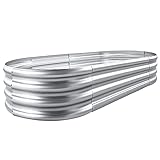
| Galvanized oval kit | About 48 to 72 x 24 to 36 x 12 to 17 | 122 to 183 x 61 to 91 x 30 to 43 | 8 to 15 sq ft (0.75 to 1.4 sq m) | 10 to 20 cu ft (0.3 to 0.57 cu m) | Patios and rentals; quick assembly | $20 to $80 |
| Long 3 x 12 | 36 x 144 x 12 | 91 x 366 x 30 | 36 sq ft (3.3 sq m) | 36 cu ft (1 cu m) | Along a driveway or fence line with one-side access | $90 to $300 |
Soil is often the bigger cost. Bagged raised bed mix runs $8 to $15 per 1.5 cubic foot bag, so a 4 by 8 by 12 inch bed needs about 21 bags, or $170 to $320. Bulk soil delivered by the cubic yard costs $40 to $90 per yard plus delivery, which is the cheaper route once you need more than one bed.
As an Amazon Associate we earn from qualifying purchases at no extra cost to you.
How to Measure Your Space
- Find the sun. Vegetables need 6 to 8 hours of direct sun. Watch the candidate spot at 9 a.m., noon, and 4 p.m. on a clear day and mark where the shadows fall. Size the bed to fit inside the sunny zone, not the whole yard.
- Measure the level area. A raised bed on a slope of more than 2 inches over 8 feet needs leveling or terracing. Record the flat footprint available.
- Subtract paths. Leave 24 inches (61 cm) between beds and any fence for walking, 36 inches (91 cm) if you will use a wheelbarrow. A 10 by 10 foot area fits one 4 by 8 bed with paths, not two.
- Check reach. Stand where the bed edge will be and reach forward. Most adults reach 24 to 30 inches comfortably. Two-sided access allows 48 inches of width; one-sided access limits you to 30 to 36 inches.
- Decide on height. Twelve inches (30 cm) is enough over reasonable soil. Choose 17 to 24 inches (43 to 61 cm) if the ground is compacted clay, concrete, or contaminated, if you want to sit on the edge while working, or if kneeling is a problem.
- Locate water. Measure the hose run. Beds more than 50 feet from a spigot get watered less, and vegetables in raised beds need water every 1 to 2 days in summer. A drip kit for one 4 by 8 bed costs $25 to $50.
By Room or Use Case
Suburban backyard, first vegetable garden
One 4 by 8 by 12 inch bed is the right starting point. Plant it with a grid layout: 16 lettuce or 9 bush beans per square foot section, one tomato or pepper per square foot with a cage, one zucchini taking 4 square feet. Resist building two beds the first year; one bed teaches watering, spacing, and pest timing without overwhelming you, and a second bed can be added next spring once you know what you actually eat.
Small urban yard or side strip
A 30-inch by 8-foot bed along a fence gives 20 square feet with one-sided access. Keep 24 inches between the bed and the fence for air flow and to reach behind tall plants. Trellised crops such as cucumbers, pole beans, and indeterminate tomatoes on the fence side use vertical space well.
Patio, balcony, or rental
Galvanized steel kits at 2 by 4 or 3 by 6 feet and 12 to 17 inches tall cost $20 to $80, assemble in 20 minutes, and can be emptied and moved. Line the bottom with landscape fabric, not plastic, so water drains. Weight matters on a balcony: a 3 by 6 by 12 inch bed holds about 18 cubic feet of wet soil weighing 1,200 to 1,500 pounds, which many balconies cannot support. Keep patio beds to 2 by 4 feet or check the load rating.
Gardener with limited mobility
Build to 24 to 30 inches tall (61 to 76 cm) and no wider than 30 to 36 inches so everything is reachable from a seated or standing position. A 6- to 8-inch wide cap board on top gives a place to sit. Fill the bottom 8 to 12 inches with logs, branches, and leaves to reduce soil cost.
Poor or contaminated soil
On compacted clay, old driveway gravel, or soil near an older house where lead paint may have flaked, use a bed of at least 17 inches (43 cm) with a bottom barrier of landscape fabric or hardware cloth and import all the soil. Root crops such as carrots and beets prefer 12 inches of loose soil above any barrier.
Common Sizing Mistakes
- Going wider than 4 feet. Anything over 48 inches forces you to step in the bed to reach the middle, which compacts the soil you just paid for.
- Building too shallow. Six-inch beds dry out in a day of summer sun and cannot hold a tomato root system. Twelve inches is the practical minimum.
- Underestimating soil volume. Length times width times depth in feet gives cubic feet; a 4 by 8 by 1 foot bed is 32 cubic feet, not the 8 or 10 bags people often buy.
- Skipping path width. Beds 12 inches apart cannot be weeded or harvested from the sides, and a wheelbarrow will not pass.
- Starting with three beds. Weeding, watering, and harvesting 96 square feet in the first season is the most common reason beginners quit by August.
- Ignoring bed weight on decks. Wet soil weighs 75 to 100 pounds per cubic foot. Even a small bed can exceed a deck’s live-load rating of 40 pounds per square foot.
FAQ
How deep does a raised bed need to be for vegetables?
Twelve inches (30 cm) covers lettuce, herbs, beans, peppers, and most tomatoes when the bed sits on open soil. Go to 17 to 24 inches (43 to 61 cm) for carrots, parsnips, potatoes, and any bed on concrete or contaminated ground where roots cannot go deeper.
How much can a 4 by 8 raised bed actually produce?
Planted intensively, 32 square feet typically supports 2 to 3 tomato plants, 2 peppers, a zucchini, 8 to 12 heads of lettuce in succession, a 2-foot row of bush beans, and a strip of herbs. That is a steady summer supply of salads and side vegetables for two to four people, not a year’s worth of food.
Wood or galvanized steel for a first bed?
Cedar or a sealed softwood bed at $60 to $250 lasts 7 to 15 years and looks traditional; galvanized steel kits at $20 to $200 last 15 to 20 years, assemble faster, and heat the soil earlier in spring. Both work. Avoid old pressure-treated lumber and railroad ties for food beds.
Should I start with one bed or several in 2026?
Start with one 4 by 8 bed. Learn what your household eats, how often the bed needs water in your climate, and where the sun really falls, then add a second bed the following spring with the paths already planned at 24 to 36 inches.