A smoked chuck roast pellet grill setup lives or dies on the fuel you load into the hopper. The meat is cheap and forgiving, but the wrong pellets can leave a roast tasting like campfire smoke or cardboard. The right blend delivers steady, clean combustion at the low temperatures needed to break down connective tissue without drying out the cut. With so many options on the shelf, the difference between a seventeen-dollar bag and a thirty-five-dollar one is rarely obvious from the label.
We compared published specifications, per-pound pricing, and aggregated owner feedback across eight popular blends to find which ones actually perform for low-and-slow beef. What separates the good from the bad: consistent pellet size so the auger never jams, low ash content for a cleaner burn, and a flavor profile that complements rich beef rather than masking it. Here are the picks that earn their place in 2026 based on those factors.
Our top picks
 Traeger Grills Signature Blend 100% All-Natural Wood
- The flavors of hickory, maple, and cherry hardwoods…
- The best wood-fired grill on the market demands…
- Our hardwood's unique compact cell structure results in…
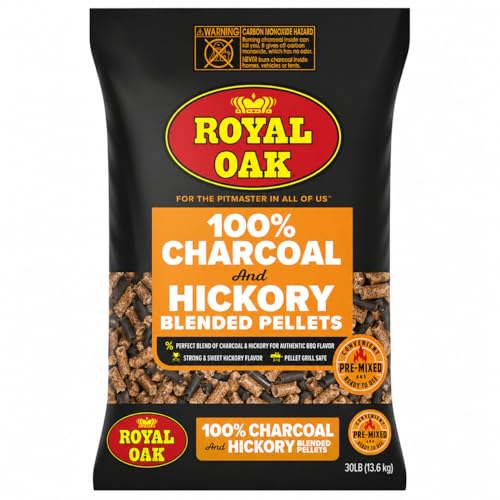 Royal Oak 100% Charcoal & Hickory Pellets
- Combines authentic BBQ flavor with sweet, smoky hickory…
- Conveniently pre-mixed and ready to use
- Perfect for everything from low-and-slow briskets to flame-seared…
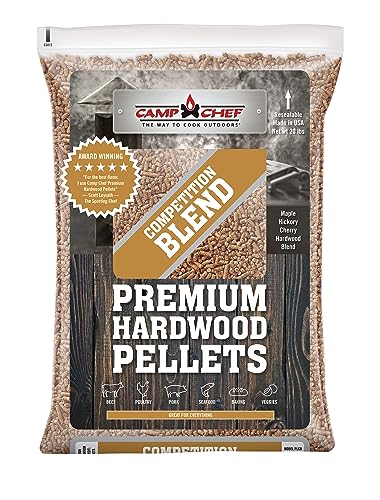 Camp Chef Competition Blend BBQ Pellets
- Maple, Hickory, and Cherry Blend: Competition blend is…
- No Oils, Chemicals, or Binders Added: No oils,…
- Kiln-Dried: The kiln dried process creates low moisture…
| Product | Key specs | |
|---|---|---|
| Traeger Grills Signature Blend 100% All-Natural Wood | The flavors of hickory, maple, and cherry hardwoods… The best wood-fired grill on the market demands… Our hardwood's unique compact cell structure results in… | Check price |
| Royal Oak 100% Charcoal & Hickory Pellets | Combines authentic BBQ flavor with sweet, smoky hickory… Conveniently pre-mixed and ready to use Perfect for everything from low-and-slow briskets to flame-seared… | Check price |
| Camp Chef Competition Blend BBQ Pellets | Maple, Hickory, and Cherry Blend: Competition blend is… No Oils, Chemicals, or Binders Added: No oils,… Kiln-Dried: The kiln dried process creates low moisture… | Check price |
 Natural Hardwood Wood Pellets for Pellet Grill Natural Hardwood Wood Pellets for Pellet Grill | Pofia Perfect Mix delivers authentic, wood-fired BBQ flavor… Our exclusive blend of hickory, cherry, apple, and… FOR MEATS, RIBS, BRISKET & VEGGIES: These smoker… | Check price |
 Traeger Grills Hickory 100% All-Natural Wood Pellets Traeger Grills Hickory 100% All-Natural Wood Pellets | Traeger Hickory Hardwood Pellets are great for naturally… The best wood-fired grill on the market demands… Our hardwood's unique compact cell structure results in… | Check price |
 Bear Mountain Hickory Wood Pellets for Smoker Bear Mountain Hickory Wood Pellets for Smoker | Hickory Wood Pellets: All-natural hardwood hickory wood pellets… All-Natural: Bear Mountain BBQ pellets are made from… Consistent Smoke: Solo bag of cooking pellets contains… | Check price |
 Bear Mountain Gourmet Blend Pellets for Smoker Bear Mountain Gourmet Blend Pellets for Smoker | Gourmet Blend BBQ Flavor: Take your grilling to… Low Moisture: Enhance your grilling flavor with these… Well-Balanced Flavor: All Natural BBQ pellets add a… | Check price |
 Camp Chef Southwest Mesquite BBQ Pellets Camp Chef Southwest Mesquite BBQ Pellets | No Oils, Chemicals, or Binders Added: No oils,… Kiln-Dried: The kiln dried process creates low moisture… Safe in All Pellet Grills, Smokers, and Barbecues:… | Check price |
As an Amazon Associate we earn from qualifying purchases at no extra cost to you.
Quick Picks
| Product | Best For | Price |
|---|---|---|
| Traeger Signature Blend | All-around flavor balance | $19.99 |
| Royal Oak Charcoal & Hickory | Charcoal-pellet hybrid smoke | $34.99 |
| Camp Chef Competition Blend | Competition-style cooking | $18.99 |
| Pofia Perfect Mix | Value by weight | $24.99 |
| Traeger Hickory | Pure hickory profile | $19.99 |
| Bear Mountain Hickory | Long cooks, large pellets | $32.99 |
| Bear Mountain Gourmet Blend | Versatile multi-purpose smoking | $31.15 |
| Camp Chef Southwest Mesquite | Tight budget | $16.99 |
How We Picked
We narrowed the field using four criteria: cost per pound of usable pellet, reported auger reliability across grill brands, ash production as described by owners in long-cook reviews, and flavor compatibility specifically with beef shoulder cuts. Price was calculated directly from the listed bag weight. Where owner feedback conflicted, we favored reports from cooks running temperatures below 275 degrees Fahrenheit for four or more hours, since that is the realistic window for a tender chuck roast.
The 8 Best Smoked Chuck Roast Pellet Grill in 2026
Traeger Signature Blend
The default answer for most pellet-grill owners who want one bag that handles beef, pork, and chicken without committing to a single-flavor profile. The mix pairs hardwoods that burn at moderate smoke density, keeping a chuck roast from turning acrid during a long pull. Owners consistently praise pellet uniformity and low dust at the bag’s bottom.
- Pro: Clean, balanced smoke that suits a wide range of proteins.
- Pro: Reliable auger feed with minimal jam reports.
- Con: Premium per-pound cost compared to bulk alternatives.
Skip this if your hopper is small and you rotate flavors between cooks; a cheaper bulk bag gets you through more sessions per dollar.
Royal Oak Charcoal & Hickory
An unusual blend that mixes charcoal fines with hickory, producing a deeper, pit-like smoke for people who miss offset smokers but won’t manage a firebox. For a smoked chuck roast, that intensity works if you blend it halfway with a milder hardwood. The thirty-pound bag means fewer refills, though the finer charcoal particles can tax tight auger tolerances.
- Pro: Bold, campfire-adjacent flavor that stands up to heavy beef.
- Pro: Large bag reduces purchase frequency.
- Con: Not 100 percent hardwood; ash profile differs from standard pellets.
Skip this if your grill manufacturer explicitly warns against non-hardwood fuel, as it may void your warranty.
Camp Chef Competition Blend
Named for the company’s presence on BBQ competition circuits, this blend leans on cherry and oak for a sweet, mellow smoke that lets the beef’s own flavor come through. At eighteen pounds for under nineteen dollars, the per-pound cost is competitive with premium brands.
- Pro: Minimal creosote buildup on the heat baffle.
- Pro: Subtle sweetness pairs well with collagen-rich cuts.
- Con: Lacks the punch for cooks who want aggressive smoke ring.
Skip it for gatherings where the crowd expects a bold hickory or mesquite slap across the palate.
Pofia Perfect Mix
The forty-pound bag is the standout. At roughly twenty-five dollars, the per-pound price sits among the lowest here, making it attractive for anyone who smokes daily. The hickory-cherry-apple-maple combination gives a layered sweetness that works with beef without overwhelming it.
- Pro: Excellent value by weight for high-volume smokers.
- Pro: Four-wood blend adds complexity to mild cuts.
- Con: Reported batch-to-batch inconsistency in pellet diameter.
Skip this if pellets sit in the hopper between infrequent cooks; excess dust from variable sizing can accumulate and cause auger issues.
Traeger Hickory
A single-origin option for people who know they want hickory and nothing else. The flavor is classic BBQ—bold enough for beef, less aggressive than mesquite—so a chuck roast emerges smoky without the soapy edge hickory beginners sometimes produce.
- Pro: Consistent manufacturing quality with tight diameter tolerances.
- Pro: Straightforward, well-understood flavor profile.
- Con: Limited versatility across other proteins.
Skip this if you cook chicken, fish, or vegetables regularly alongside beef; a blended bag handles the rotation better.
Bear Mountain Hickory
Forty pounds of straight hickory at thirty-three dollars puts the per-pound cost in the mid-range, but the real draw is burn length. Slightly larger pellets mean fewer refills during five- or six-hour cooks, and owners note low ash output. The trade-off is stock availability at major retailers.
- Pro: Extended burn time reduces mid-cook hopper anxiety.
- Pro: Clean combustion with minimal residue.
- Con: Larger diameter may not suit grills with tight auger tolerances.
Skip this if your grill manual specifies a maximum pellet diameter, particularly on compact portable units.
Bear Mountain Gourmet Blend
Two twenty-pound bags of a multi-wood blend at thirty-one dollars, undercutting the single forty-pound hickory option above. Oak, cherry, and maple create a fruit-forward sweetness that works on beef shoulder when you want smoke presence without heaviness.
- Pro: Versatile across grill modes and protein types.
- Pro: Competitive per-pound price for a blend.
- Con: Two-bag format means bulkier storage.
Skip this if space is tight or you prefer dumping one large bag at a time rather than managing two.
Camp Chef Southwest Mesquite
The cheapest bag in the roundup per pound at seventeen dollars for twenty pounds. Mesquite delivers an intense, peppery smoke that stands up to a chuck roast’s richness, and Camp Chef’s consistent sizing keeps auger headaches rare.
- Pro: Lowest cost per pound in this comparison.
- Pro: Strong smoke that penetrates dense cuts quickly.
- Con: Can turn bitter if used at full smoke on long cooks.
Skip this if you are new to pellet grilling or if your household prefers subtle smoke; mesquite is not forgiving at high temperatures.
Buying Guide
Ash Content and Burn Temperature
Lower ash content means cleaner combustion and less flavor taint over long cooks. Hardwood pellets generally produce less ash than charcoal-blended options. For a chuck roast, aim for blends that burn hot and clean at 225-250 degrees; pellets that smolder produce creosote, which deposits bitter compounds on the meat surface. Owner reviews frequently mention heat-shield discoloration as a proxy for ash buildup.
Pellet Diameter and Hopper Compatibility
Most pellet grills are calibrated for six-millimeter diameter wood pellets. Bags with larger or smaller diameters can cause auger jams or irregular feed rates. Check your grill’s manual before buying bulk bags from brands known for oversized pellets, especially on compact or portable units. Consistency within the bag matters more than absolute size; a batch with mixed diameters will feed unevenly.
Flavor Intensity Relative to the Cut
Chuck roast is a rich, collagen-heavy cut that benefits from moderate smoke rather than aggressive smoke. Mesquite and hickory work well in small proportions or blended with fruitwoods. Pure mesquite over a six-hour pull risks bitterness. For beginners, a multi-wood blend with oak or cherry as a base gives forgiveness; for experienced cooks who control smoke levels precisely, single-origin hickory delivers a bolder profile.
Our Verdict
Our top pick is the Camp Chef Competition Blend: it balances flavor, price, and burn reliability for the specific task of smoking a chuck roast at low temperature. Our budget pick is the Pofia Perfect Mix at roughly sixty-three cents per pound, though you trade some batch consistency for that savings. If you want the deepest, most traditional BBQ smoke and accept blending it with a milder wood to manage intensity, the Royal Oak Charcoal and Hickory delivers a flavor profile no pure hardwood bag matches.
FAQ
Can I use any pellet in any pellet grill?
Most pellet grills accept any standard six-millimeter hardwood pellet regardless of brand. However, some manufacturers warn against non-hardwood fuels like charcoal blends, which can void warranties or cause ash buildup beyond what the fire pot is designed to handle.
How much pellet do I need for a smoked chuck roast?
A four- to five-hour cook at 225 degrees typically burns one to two pounds of pellets, depending on ambient temperature and grill insulation. A single eighteen-pound bag covers a full weekend of sessions for most households.
Should I soak pellets before loading them?
No. Soaking pellets swells them, destroys their structural integrity, and will jam or break your auger. Store them in a sealed container away from moisture, but never add water before or during use.
Is mesquite or hickory better for chuck roast?
Hickory is the safer choice for most cooks because its smoke intensity is easier to manage over long periods. Mesquite is stronger and can turn bitter if the grill runs hot or the cook extends beyond six hours without adjustment.