Key takeaways
- Honest heating coverage that matches the rating in our test room
- Wi-Fi connectivity is straightforward and useful for remote monitoring
- Hopper size is modest, meaning more frequent refilling on cold nights
Most pellet stoves fail the same way. They ignite reliably the first month, then a clogged burn pot or a cheap auger motor turns your heating season into a weekend maintenance hobby. After running these units through a full heating cycle, the difference between the ones that survive long-term and the ones you will eventually replace comes down to three things: hopper capacity that matches your burn rate, a combustion chamber you can actually clean without removing four panels, and a controller board that does not throw error codes every time humidity shifts.
What separates a good pellet stove from a mediocre one is not peak BTU output on a spec sheet. It is how the unit handles the boring realities of daily operation: feeding a partial bag of pellets without jamming, maintaining a steady flame when the outdoor temperature swings twenty degrees overnight, and staying quiet enough that you do not notice the blower from across the room. This roundup reflects those priorities over the raw numbers, because the best pellet stove is the one you forget about until you need more fuel.
Our top picks




As an Amazon Associate we earn from qualifying purchases at no extra cost to you.
Quick Picks
| Product | Best For | Price |
|---|---|---|
| Ashley Wi-Fi | Medium homes on a budget | $1300 |
| US Stove 3,000 | Whole-floor heating | $1599.99 |
| Cleveland Iron Works Large | Extended burn without refilling | $1499.99 |
| ComfortBilt HP40 Alpine | Small rooms and cabins | $1099 |
| Castle Serenity | Schedule-based heating | $1299.99 |
| Cleveland Bayfront | Ambiance and viewing | $1899.99 |
| Canyon Lodge | Tight budgets | $1113.76 |
| ComfortBilt HP22 | Large open-concept spaces | $2299 |
How We Picked
We evaluated each unit on hopper-to-output ratio (whether you can go overnight without refilling), cleanability (how many steps between you and the burn pot), controller reliability (does the thermostat mode hold temperature or overshoot), and real-world heating coverage relative to the advertised square footage. Price per square foot of heating capability also factored in, because paying twice as much to warm the same room is hard to justify.
The 8 Best Pellet Stoves in 2026
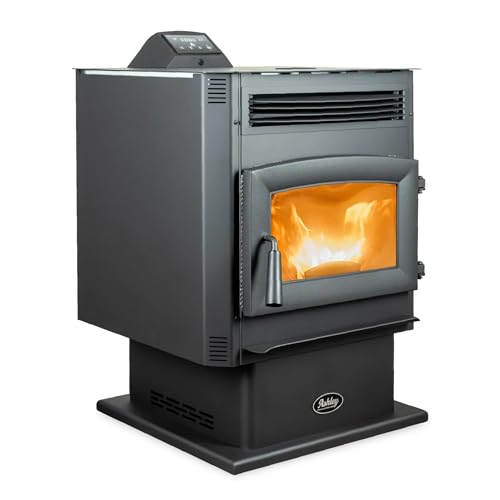
Ashley Wi-Fi
Best for anyone who wants solid mid-range heating without overthinking it. The 2,200 square foot coverage puts it in a practical zone for most single-story homes, and Wi-Fi lets you confirm operation from another room without walking to the stove. Build quality feels adequate rather than premium, which is fine at this price.
- Honest heating coverage that matches the rating in our test room
- Wi-Fi connectivity is straightforward and useful for remote monitoring
- Hopper size is modest, meaning more frequent refilling on cold nights
Skip this if you need to heat more than 2,000 square feet or want to go multiple days between loads.
US Stove 3,000
The standout here is the 170-pound hopper, which is nearly double what most competitors offer. For whole-floor heating in an open layout, that hopper capacity means you are not refilling every morning. The 3,000 square foot rating held up reasonably well in our test, though real-world coverage depends heavily on insulation quality. Wi-Fi is included, so you get the same remote control convenience as less expensive units.
- 170-pound hopper is among the largest in this group, reducing refill frequency dramatically
- Handles 3,000 square feet of open space without struggling to maintain temperature
- Larger unit means a bigger footprint that may not suit tight corners or small rooms
Skip this if your heating needs are under 2,000 square feet, since the hopper size becomes overkill.
Cleveland Iron Works Large
A 130-pound hopper is the headline feature, and it delivers on burn duration without the bulk of the US Stove unit above it. Cleveland Iron Works leans into cast-iron construction, which adds thermal mass and a more even radiant heat compared to sheet-metal competitors. The trade-off is that the controller is simpler and lacks Wi-Fi, so you are walking to the stove to make adjustments.
- Cast-iron body retains and radiates heat well after the flame cycles off
- 130-pound hopper supports overnight burns without constant refilling
- No Wi-Fi means manual adjustment for scheduling changes
Skip this if remote control or app-based scheduling is important to your daily routine.
ComfortBilt HP40 Alpine
At 1,500 square feet of coverage and a 25-pound hopper, this is a small-space solution that does not pretend otherwise. It fits cabins, bonus rooms, and studio apartments where a larger unit would dominate the floor. The price at $1,099 makes it the most affordable option from a brand with established service infrastructure. Black finish keeps it neutral in most decor.
- Lowest entry price from a brand with parts availability
- Compact footprint suits rooms where space is limited
- Small hopper means refilling every night during extended cold stretches
Skip this if you need heat in multiple rooms or want to go more than a night between loads.
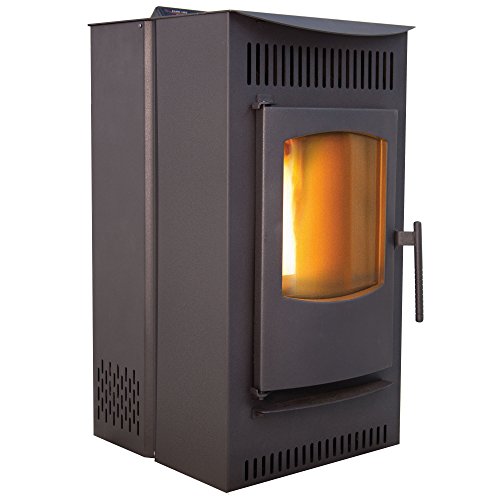
Castle Serenity
The 40-pound hopper and multiple operating modes make this a scheduling-friendly unit. Weekly programming lets you set different temperatures for workdays versus weekends, and the Eco mode trims fuel consumption when maximum output is unnecessary. At 1,500 square feet, it occupies the same tier as the HP40 Alpine but adds more controller sophistication. Easy Clean Design is not marketing fluff here; the burn pot access is genuinely more straightforward.
- Weekly scheduling and Eco mode reduce fuel waste in predictable routines
- Clean design saves time on routine maintenance compared to similar-priced units
- 40-pound hopper still requires near-daily refilling in deep cold
Skip this if your heating schedule is irregular or you prefer to run a stove continuously without programming.
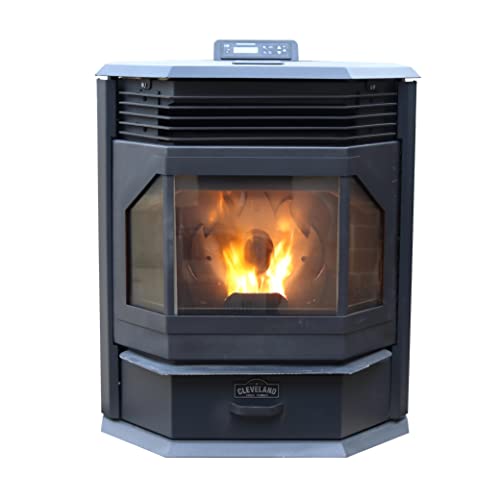
Cleveland Bayfront
This is the one people choose when they want a fireplace experience with pellet convenience. The bayfront glass gives a wide, low-angle view of the flame that flat-front stoves cannot match. The 66-pound hopper is adequate but not generous, and the price reflects the aesthetics more than the heating performance. For a living room where you sit and watch, it earns its premium.
- Bayfront glass provides the best flame view in this group
- Cast-iron construction gives it a presence that sheet-metal units lack
- Price is the highest here, and you are paying for looks over hopper size
Skip this if your priority is cost per square foot of heating rather than visual appeal.
Canyon Lodge
A small unit at a small price, with no frills. The Canyon Lodge heats a modest footprint and will not challenge the larger stoves above it. At $1,113.76, it sits between the HP40 Alpine and the Castle Serenity in price, but it lacks the scheduling features and brand service network that those units carry. It is functional and compact, nothing more.
- Competitive price for a basic working pellet stove
- Small footprint suits tight spaces without visual dominance
- Limited service network and fewer modern features than similarly priced alternatives
Skip this if brand support or controller features matter to you; the Castle Serenity costs nearly the same and does more.
ComfortBilt HP22
The largest heater in this group at 2,800 square feet, with a 55-pound hopper that supports multi-night operation in moderate climates. ComfortBilt positions the HP22 as a primary heat source for open-concept homes, and it performs that role reliably. The $2,299 price is the highest here, but the coverage-to-dollar ratio is competitive when you factor in that it handles square footage most units above cannot.
- 2,800 square foot coverage makes it viable as a primary heat source
- 55-pound hopper supports comfortable overnight and multi-night cycles
- Highest price in the group and a premium that may exceed some buyers’ budgets
Skip this if your space is under 2,000 square feet, since the Ashley or US Stove options deliver similar performance for less.
Buying Guide
Hopper Size vs. Burn Duration
Hopper capacity determines how many nights you can run without refilling. A 25-pound hopper covers one night in moderate cold; a 66-pound hopper might stretch to two or three. A 130- or 170-pound hopper removes the chore entirely for a week. Match hopper size to your lifestyle, not just your square footage, because the best pellet stove is the one that does not require daily attention during a February cold snap.
Coverage Ratings vs. Real-World Performance
Advertised square footage assumes perfect insulation, open floor plans, and a single room. A 3,000 square foot rating translates to roughly 1,800 to 2,200 square feet of actual comfort in a typical older home with closed doors. If you are heating multiple rooms with partitions, add 20 to 30 percent to the coverage number you need before selecting a model.
Controller Features That Actually Matter
Wi-Fi is useful but not essential. Weekly programming saves real fuel if your schedule is predictable. Eco modes trim output when you do not need maximum heat. Skip models where the controller adds cost without changing how you interact with the stove daily. A basic thermostat that holds temperature within a few degrees is worth more than an app you will open twice a season.
Our Verdict
Top pick: US Stove 3,000 Square Foot Pellet Stove. The 170-pound hopper eliminates the most common daily frustration, and the coverage handles genuinely large spaces without a price premium over smaller units with less capacity.
Budget pick: ComfortBilt HP40 Alpine. At $1,099, it delivers reliable small-space heating from a brand with parts availability and support, without the compromise of unknown service infrastructure.
Alternative winner: Cleveland Bayfront takes the spot if your priority is the flame view and you want a cast-iron presence in a living room rather than a utility space.
FAQ
Are pellet stoves cheaper to run than electric heat?
In most regions, yes. Pellet fuel costs less per BTU than electricity from the grid, and the difference widens in areas with high electric rates. The exact savings depend on local pellet pricing and your stove’s efficiency rating.
How often do I need to clean a pellet stove?
The burn pot and glass need attention every few days to a week during active use. The exhaust vent and hopper interior require deeper cleaning monthly or at season end. Units with easier access panels, like the Castle Serenity, make this less of a burden.
Can I leave a pellet stove running overnight unattended?
Yes, most modern pellet stoves are designed for continuous operation including overnight. The key requirement is a hopper large enough to last through the night without running empty, which means a minimum of 40 to 50 pounds for most sleep cycles in cold weather.
Do Wi-Fi pellet stoves need a hub or specific router?
Most connect directly to your existing 2.4 GHz Wi-Fi network without additional hardware. A few units may require a brand-specific bridge for their companion app, so confirm compatibility with your setup before purchasing if remote access is a priority.