Key takeaways
- Behind a table, for walking: leave at least 30-36 inches of clear space so one person can pass comfortably.
- In front of a buffet, for serving: plan on 36-42 inches so guests can stand, fill a plate, and step away without bumping the next person.
- Next to counter stools: allow 24 inches of width per stool, plus 12 inches of knee clearance from the table edge.
- Against a railing: a console table 14-16 inches deep still leaves roughly 24-30 inches of walkway on a standard 10-12 foot wide deck, which keeps the path usable even with a chair or two nearby.
What's inside
Counter-height buffet tables (36-42″) pair with bar stools for entertaining, while console-height tables (28-32″) work against a railing or wall for drinks and décor without blocking sightlines. The right pick depends on where the piece sits on your deck and what it needs to survive.
Height First: Counter vs. Console
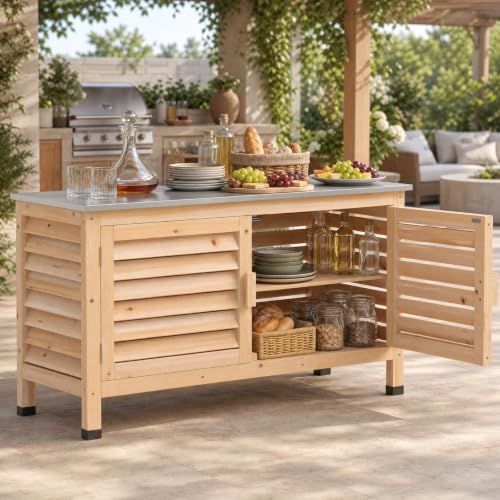
A console-height outdoor table (typically 28-32 inches) matches a standard dining chair or reads as a low accent piece against a wall, railing, or the back of a sectional. It’s the right call when the table needs to stay visually low so it doesn’t block a view or a doorway sightline. A counter-height buffet (36-42 inches) is built to be used standing, or with counter stools pulled up to one side, and it does double duty as serving space during a party and storage the rest of the time.

Best Choice Products 48in 2-Shelf Eucalyptus Wooden Console Table Indoor Outdoor Multifunctional Buffet Bar Storage Organizer w/Foot Sliders - Black
Included for 'Outdoor Buffet and Console Tables: Height, Depth and Material Trade-Offs' because the listing specifies Black, details this guide uses to compare options.
View on Amazon
Stoog Outdoor Console Table, All-Weather 2-Tier Buffet Bar Table, Grey
Included for 'Outdoor Buffet and Console Tables: Height, Depth and Material Trade-Offs' because the listing specifies All-Weather 2-Tier Buffet Bar Table and Grey, details this guide uses to compare options.
View on Amazon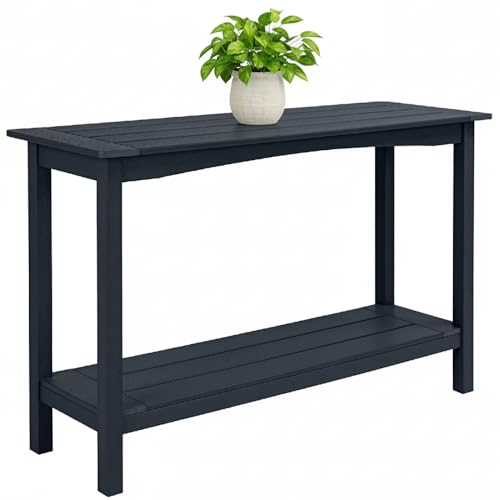
Sunnibety Weatherproof HIPS Outdoor Console Table, 48'' 2-Shelf Side Table Indoor/Outdoor Use, Multifunctional Buffet Table Bar Storage Organizer for Entryway,Yard, Outside Plant Stand Table, Black
Included for 'Outdoor Buffet and Console Tables: Height, Depth and Material Trade-Offs' because the listing specifies 48'' 2-Shelf Side Table Indoor/Outdoor Use and Yard, details this guide uses to compare options.
View on Amazon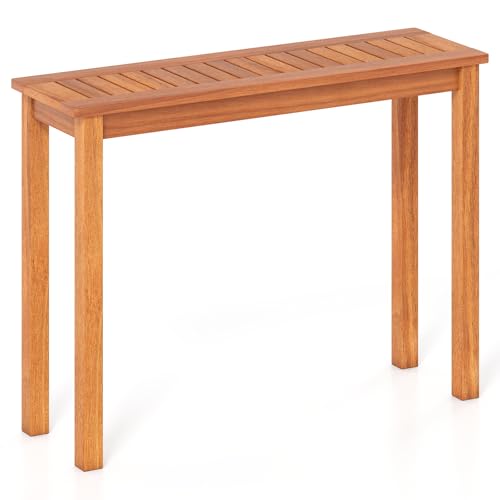
Tangkula Narrow Outdoor Dining Table, Solid Wood Furniture Patio Console Table with Slatted Tabletop, Wooden Buffet Bar Plant Stand for Garden Deck Entryway Porch Balcony
Included for 'Outdoor Buffet and Console Tables: Height, Depth and Material Trade-Offs' as a relevant option in this category; details come from the product listing.
View on AmazonDepth matters as much as height. Console tables typically run 14-18 inches deep, which is enough for lamps, drinks, and small planters without eating into walking space. Buffet tables run deeper, usually 18-22 inches, because they’re meant to hold serving trays, chafing dishes, or a row of bottles and glasses side by side.
| Type | Height | Depth | Best placement |
|---|---|---|---|
| Console table | 28-32 in | 14-18 in | Against railing, wall, or behind a sofa |
| Buffet/sideboard table | 36-42 in | 18-22 in | Serving zone near grill or dining table |
| Bar-height buffet | 40-42 in | 16-20 in | Standing entertaining, small footprint decks |
How Much Deck Footprint You Actually Need
The table itself is only part of the equation. Traffic flow around it determines whether a deck feels usable or cramped.
- Behind a table, for walking: leave at least 30-36 inches of clear space so one person can pass comfortably.
- In front of a buffet, for serving: plan on 36-42 inches so guests can stand, fill a plate, and step away without bumping the next person.
- Next to counter stools: allow 24 inches of width per stool, plus 12 inches of knee clearance from the table edge.
- Against a railing: a console table 14-16 inches deep still leaves roughly 24-30 inches of walkway on a standard 10-12 foot wide deck, which keeps the path usable even with a chair or two nearby.
On a smaller deck (say 10×12 feet), a full buffet table with stools can consume nearly a third of the usable floor area once you factor in stool pull-out space. A console table against the rail, by contrast, adds serving surface while giving up almost none of the walking path, which is why it’s the more common choice for tight footprints.
Material Trade-Offs: Teak, Aluminum, and Tile
Outdoor buffet and console tables are exposed to sun, rain, and whatever gets spilled on them during a party, so the top material drives both looks and long-term upkeep more than the frame does.
| Material | Heat handling | Rain/moisture | Staining risk | Upkeep |
|---|---|---|---|---|
| Teak | Stays cool to warm, comfortable in direct sun | Naturally water-resistant, sheds rain well | Red wine and grease can darken raw teak; sealed teak resists better | Oil or seal 1-2x/year to keep color; grays naturally if left untreated |
| Aluminum (powder-coated) | Can get hot to the touch in full sun; frame doesn’t degrade | Excellent, won’t rust like steel | Low; wipes clean, but coating can chip and expose bare metal over years | Rinse occasionally, touch up chips with matching paint |
| Tile (ceramic/porcelain top) | Very heat-tolerant, safe near grills or hot dishes | Excellent, fully waterproof surface | Very low on glazed tile; grout lines can stain if unsealed | Reseal grout every 1-2 years; otherwise wipe clean |
| Wicker/rattan (synthetic resin) | Can fade or become brittle with years of UV exposure | Good if resin-based, poor if natural fiber | Spills can seep into weave gaps | Cover in off-season; check for weave separation yearly |
Teak is the standard choice for buyers who want a table that ages into a silvery patina and don’t mind occasional oiling. Aluminum frames with a tile or stone-composite top are the lower-maintenance route, especially near a grill where a hot pan might land directly on the surface. Tile tops are also the most forgiving for red wine, barbecue sauce, or citrus, which matters more on a buffet table than a console since buffets see more food traffic.
Outdoor Console Tables with Drawers: What to Check
A console table with drawers adds closed storage for napkins, lighters, bottle openers, or citronella candles, but drawers are also where outdoor furniture fails first. Look for:
- Drawer material: aluminum or teak drawer boxes hold up far better than particleboard or MDF, which swells and delaminates with humidity.
- Weep holes or drainage gaps: a well-designed outdoor drawer has a small gap or drainage channel so pooled water from a driving rain doesn’t sit inside.
- Glide hardware: stainless steel or coated nylon glides resist corrosion; standard zinc-plated drawer slides will rust within a season or two in humid or coastal climates.
- Weight limit per drawer: most outdoor console drawers are rated for 10-20 lbs; treat that as a hard ceiling rather than a suggestion, since overloading warps thin drawer bottoms.
If the deck is fully covered or the table lives on a screened porch, drawer durability is less of a concern. Fully exposed to weather, a solid-front drawer with no drainage is the piece most likely to swell shut by the second summer.
Matching the Table to Your Situation
| Your situation | Recommended pick |
|---|---|
| Small deck (under 120 sq ft), want extra surface without blocking traffic | Console table, 14-16 in deep, against the railing |
| Host regularly, need serving space for food and drinks | Buffet table, 18-22 in deep, with a tile or sealed teak top |
| Near a grill or firepit | Aluminum frame with tile top; skip raw teak or resin wicker near heat |
| Coastal or high-humidity climate | Powder-coated aluminum or teak; avoid steel hardware and MDF drawers |
| Renters or frequent movers | Aluminum console table; lighter to carry, resists warping if stored briefly indoors |
| Storing bar tools or linens outside | Console with drawers, stainless glides, drainage gaps |
Assembly and Moving Notes
Teak buffet tables ship heavier than most buyers expect, often 60-90 lbs boxed, since real teak is dense hardwood. Aluminum-framed pieces with tile tops are lighter overall but the tile insert itself adds weight and requires careful handling during assembly since chipped tile edges can’t be repaired invisibly. Most console and buffet tables ship in one or two boxes and take 20-40 minutes to assemble with a hex key, typically attaching legs to a pre-built top. Check the flat-packed box dimensions against door and stairway widths before ordering if the table needs to go through a narrow hallway to reach the deck; a 42-inch buffet top usually ships in a box close to 44-46 inches long, which can be awkward on tight interior stairs.
Expect general market pricing of $150-$350 for aluminum console tables, $300-$600 for teak consoles and buffets, and $400-$900 for larger tile-top buffet tables with drawer storage, depending on size and finish quality.