Key takeaways
- T-bar + 3-point harness: The standard for bucket swings. A T-shaped front bar prevents forward ejection, with one strap between the legs and two at the waist. Best for 6-18 month olds. Make sure the crotch strap is adjustable and the buckle requires two hands to open.
- 5-point harness: Two shoulder straps, two waist straps, one crotch strap. Required if you choose a hammock-style or if your baby is a climber. Look for shoulder straps that sit at or just above the shoulders, not on the neck.
- Avoid rope-only or lap-belt-only swings: Any swing that relies on the child holding a rope or has only a single waist strap is not suitable for infants on a porch. Babies can slump or slide out sideways during a gust or push.
The best porch swing for baby in 2026 is a full bucket seat with a 3-point harness and front T-bar for infants under 30 lbs, while a hammock-style swing with a 5-point harness is the better pick for toddlers over 18 months who can sit upright and need more room to recline.
If you have a standard covered porch with a single beam or A-frame stand, choose the bucket style for maximum containment and easier clearance. Choose hammock-style only if you have at least 36 inches of side clearance and ceiling height above 9 feet to prevent tipping and wall contact.

Little Tikes Snug 'n Secure Blue Swing with Adjustable Straps, 2-in-1 for Baby and Toddlers Ages 9 Months - 4 Years
Included for 'Best Porch Swing for Baby in 2026: Safe and Comfortable Picks' because the listing specifies 2-in-1 for Baby and Toddlers Ages 9 Months and 4 Years, details this guide uses to compare options.
View on Amazon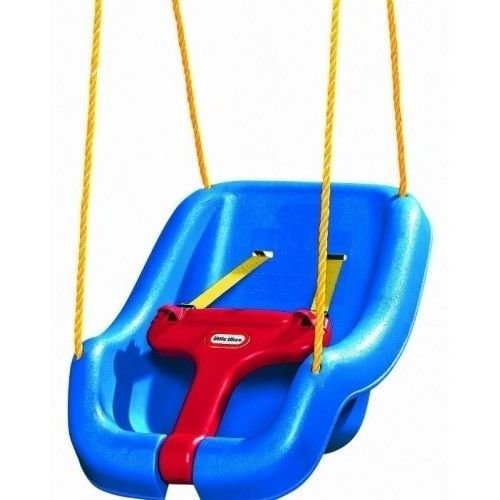
Little Tikes Baby Swing, Portable Hanging Rocker, Blue, Indoor Outdoor Use, Adjustable Straps, 50 lb Weight Capacity
Included for 'Best Porch Swing for Baby in 2026: Safe and Comfortable Picks' because the listing specifies Portable Hanging Rocker and Blue, details this guide uses to compare options.
View on Amazon
Swurfer Coconut Toddler Swing – Comfy Baby Swing Outdoor, 3-Point Adjustable Safety Harness, Secure, Safe Quick Click Locking System, Blister-Free Rope, Easy Installation, Ages 6-36 Months, Rose Pink
Included for 'Best Porch Swing for Baby in 2026: Safe and Comfortable Picks' because the listing specifies Comfy Baby Swing Outdoor and 3-Point Adjustable Safety Harness, details this guide uses to compare options.
View on Amazon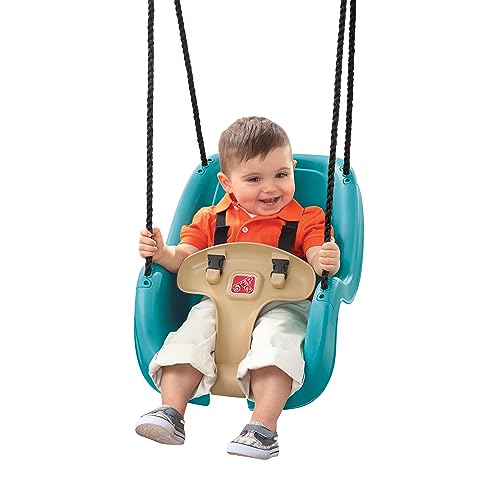
Step2 Infant to Toddler Swing, Baby Outdoor Swing, Backyard Bucket Style Swing Seat, Secure Harness, Outside Weather-Resistant Rope, Attach to Playset, For Toddlers 9 Months -3 Years Old
Included for 'Best Porch Swing for Baby in 2026: Safe and Comfortable Picks' because the listing specifies Baby Outdoor Swing and Backyard Bucket Style Swing Seat, details this guide uses to compare options.
View on AmazonBucket vs. Hammock-Style: Head-to-Head for Infant Use
These two designs function very differently on a porch, and only one is truly infant-safe for unsupervised swing motion.
| Feature | Bucket Seat Swing | Hammock-Style Swing |
|---|---|---|
| Seat Shape | Molded high back, deep sides, leg holes | Fabric sling or padded cradle, open sides |
| Harness Type | 3-point (lap + crotch) with T-bar, some 5-point | 3-point or 5-point integrated into fabric |
| Best Age / Weight | 6 months to 3 years, usually 20 to 50 lbs limit | 12 months to 4 years, usually 40 to 80 lbs limit |
| Swing Arc | Narrow, front-to-back, 18-24 inch travel | Wide, side-to-side sway, 24-36 inch travel |
| Porch Space Needed | Compact: fits in 4×6 ft footprint | Large: needs 6×8 ft footprint minimum |
| Infant Head Support | Excellent – rigid shell keeps torso upright | Poor to moderate – fabric can fold, head can flop |
| Typical Price Range | Usually $45–$120 for seat + rope/chain kit | Usually $90–$250 for fabric swing + hardware |
Bottom line: For babies under 15 months or under 25 lbs who cannot reliably hold their head upright for long periods, a rigid bucket seat is safer and more predictable on a porch. Hammock styles are more comfortable for napping toddlers but require stricter harnessing and more space to be safe.
What Makes a Porch Swing Safe for a Baby?
A porch is not a playground. Wind, beam height, and hard surfaces like concrete or deck boards change what is safe compared to a tree swing in grass.
1. Harness Types and When Each Is Needed
- T-bar + 3-point harness: The standard for bucket swings. A T-shaped front bar prevents forward ejection, with one strap between the legs and two at the waist. Best for 6-18 month olds. Make sure the crotch strap is adjustable and the buckle requires two hands to open.
- 5-point harness: Two shoulder straps, two waist straps, one crotch strap. Required if you choose a hammock-style or if your baby is a climber. Look for shoulder straps that sit at or just above the shoulders, not on the neck.
- Avoid rope-only or lap-belt-only swings: Any swing that relies on the child holding a rope or has only a single waist strap is not suitable for infants on a porch. Babies can slump or slide out sideways during a gust or push.
2. Weight Limits and Age Reality
Do not go by age alone. Check the stamped weight limit on the seat and the hardware rating separately.
- Most plastic bucket seats are rated 35 to 50 lbs. Rope kits are often rated to 200 lbs total, but the seat itself is the limiting factor.
- Hammock fabric swings often list 80 to 150 lbs, but infant inserts or padding may only be rated to 35 lbs. Remove newborn inserts once the baby exceeds the insert limit.
- For porch beams: Use a single heavy-duty eye bolt rated to at least 4x the baby’s weight. A 30 lb baby needs hardware rated to 120 lbs minimum to account for dynamic swing force, which can be 2-3x static weight.
3. Porch Beam Clearance: The Measurement Most Listings Skip
A baby swing needs less forward travel but more side and bottom clearance than an adult swing because an adult must push it and walk around it.
| Measurement | Minimum Safe Clearance | Ideal Clearance | Why It Matters |
|---|---|---|---|
| From floor to seat bottom | 18 inches | 24-28 inches | Prevents dragging on deck and allows adult to push with foot without hitting ground |
| From seat sides to wall/railing/posts | 30 inches per side | 36 inches per side | Hammock swings drift sideways; buckets can rotate if pushed off-center |
| From beam/eye bolt to seat | 48 inches of rope/chain | 60-72 inches | Shorter ropes create a faster, jerkier arc that can jolt a small infant |
| From swing path to hard furniture | 36 inches front and back | 48 inches front and back | Prevents collision with tables, planters, or porch railings |
| Beam height | 8 feet | 9 to 10 feet | Low beams under 8 feet force a short rope length and harsh swing motion |
For a typical 10×12 ft porch, a bucket swing fits comfortably in one corner with a 4×6 ft open zone. A hammock-style swing needs the center of the porch and will make the space unusable for other furniture while in use. If your porch ceiling is under 8 feet, use a floor A-frame stand rated for porch swings instead of a ceiling mount, but ensure the stand footprint (usually 5×6 ft) does not block your entryway.
Decision Matrix: Which Swing Fits Your Situation
| Your Situation | Best Pick | Why |
|---|---|---|
| Small porch or apartment balcony (under 6 ft wide) | Rigid bucket seat with ropes | Narrow 20-inch width, no side sway, stores by hanging flat against wall |
| Grandparents want occasional use, easy storage | Bucket seat with quick-clip chains | Lifts off eye bolt in seconds, seat weighs 4-7 lbs, easy to carry inside |
| Toddler who naps on the porch, 18+ months | Padded hammock-style with 5-point harness | Recline allows head to rest, breathable mesh prevents heat buildup |
| Windy or uncovered porch | Bucket seat with T-bar only | Rigid shell blocks wind gusts better, fabric hammocks act like sails |
| Renters who cannot drill into beam | A-frame stand + bucket seat | No drilling, but check doorway width – stands ship in 50-inch long boxes |
| Multiple kids sharing one swing | Convertible bucket-to-toddler swing | Remove T-bar and use same seat to 50 lbs, avoids buying two swings |
Material and Construction Trade-Offs
Porch conditions – sun, humidity, temperature swings – degrade materials faster than indoor use.
| Material | Pros | Cons | Maintenance on a Porch |
|---|---|---|---|
| Rotomolded plastic (HDPE) bucket | UV resistant, easy to clean, will not splinter, light 4-6 lbs | Can get hot in direct sun, less breathable | Wipe down, store out of sun when not in use; lasts 5+ years outdoors |
| Wood bucket or frame | Stable, less static, classic porch look | Requires sealing, heavier 10-15 lbs, can splinter if finish cracks | Reseal annually with exterior polyurethane; check for cracks each spring |
| Powder-coated metal hardware | Highest weight rating, rust resistant | Chains can pinch, gets hot/cold to touch | Inspect links for rust at welds; use plastic-coated chain for baby swings |
| Fabric / canvas hammock | Soft, breathable, machine washable cover | Fades, absorbs moisture, stitching wears first at anchor points | Remove cushion after rain, wash cover monthly, stitching fails in 2-3 seasons in sun |
| Rope (polypropylene vs. nylon) | Polypropylene resists mildew; nylon is softer on hands | Nylon stretches; natural manila rope rots quickly | Replace rope every 2 years outdoors even if it looks fine; UV weakens it internally |
Foam density matters if you add padding: Look for closed-cell foam for hammock cushions. Open-cell foam soaks up rain and takes days to dry, leading to mold. For bucket seats, a thin 0.5-inch closed-cell liner is enough – thick pillows can push the baby forward and loosen the harness.
Assembly, Moving and Durability Realities
Product listings rarely mention the practical side of living with a baby porch swing.
- Box weight and size: A bucket seat ships in a 24x18x12 inch box at 6-9 lbs. A hammock swing with stand ships in two boxes, the largest often 52x12x10 inches and 25-35 lbs, which may not fit through a 30-inch apartment doorway without opening the box outside.
- Installation time: Eye bolt into a solid porch beam takes 20-30 minutes with a drill, socket wrench, and stud finder. You must hit the center of the beam or joist, not just drywall or fascia. A-frame stands take 45-60 minutes, require two people, and need 6×6 ft of flat floor.
- What wears first: On buckets, the harness buckle and rope holes crack first from UV. On hammocks, the fabric where the ropes thread through tears first. On both, the eye bolt threads loosen over time – retighten and check for wood splitting every 3 months.
- Cleaning: Plastic buckets can be hosed off. Fabric hammocks need the cover removed – check if the cover is removable before you buy. Some sewn-in covers cannot be washed without washing the entire swing.
- Off-season storage: If you leave any baby swing outside year-round, the harness webbing will stiffen and the plastic will fade within one winter. Unhook and store indoors to double its life. Ropes and fabric stored damp will mildew in one season.
Safety Checklist Before Each Use
- Harness snug enough that you can only fit one finger between strap and baby’s chest.
- Eye bolt does not wobble when you pull down with your full weight.
- Rope or chain shows no fraying, rust, or discoloration at the top loop where it meets the hook.
- Swing hangs level – if one side is 1 inch lower, the baby will lean and strain to sit straight.
- No porch furniture, planters, or railing within 36 inches of the swing’s arc.
- Never push higher than a gentle 12-18 inch arc for babies; higher arcs increase tip-over risk and neck strain.
Frequently Asked Questions
Can a newborn use a porch swing?
No. Do not use any porch swing for babies under 6 months or who cannot hold their head up unassisted. Infant swings for newborns are indoor, full-recline, motorized devices with different safety standards. A porch bucket swing requires good head and torso control.
How high should a baby porch swing be off the ground?
Hang it so the bottom of the seat is 24 to 28 inches above the porch floor when occupied. This height lets an adult push safely while keeping fall distance low. Place a soft outdoor rug or 1-inch thick play mat underneath, not bare concrete.
Are rope or chain better for a baby swing?
Coated chain is more durable and does not stretch, but bare chain can pinch hands. Polypropylene rope is softer and quieter but must be replaced every two years outdoors. For babies, coated chain or braided rope with a protective sleeve at the top hook is the safest compromise.
Can I hang a baby swing from a porch swing frame meant for adults?
Only if you add a separate, centered eye bolt rated for the baby swing. Do not hook a baby seat onto the same chains or hooks as an adult porch swing bench. The wide adult frame creates too much lateral movement for an infant seat.