Key takeaways
- Footprint: Most infant A-frames are 55 to 68 inches long and 50 to 62 inches wide at the base. You need at least 6 feet of clearance in front and behind the swing arc, and 3 feet on each side from walls, fences, or furniture.
- Height: Top bar is typically 47 to 60 inches high. Seat should hang 12 to 16 inches off the ground at rest for a baby swing — low enough that a fall is short, high enough that feet do not drag.
- Surface: Place on level grass, pavers, or concrete. On hard surfaces, use rubber feet or a 1-inch outdoor play mat underneath to prevent sliding and reduce impact.
- Anchoring: Frames under 40 lbs should be staked or sandbagged if left outdoors in wind. Jumbo frames usually include ground anchors for lawns.
- Assembly reality: Box weight is 35 to 65 lbs, with 30 to 45 minute assembly and a 13mm wrench and Allen key. Doorway width is not an issue, but assembled frames do not fit through a standard 30-inch interior door — assemble on the patio.
The best outdoor swing for baby in 2026 is a full-bucket swing with a 3-point harness, T-bar or front restraint, and UV-resistant, weatherproof construction — choose a standalone A-frame if you rent or lack a suitable tree, and a tree-hang model only if you have a healthy hardwood branch or beam rated for dynamic load.
What Makes an Outdoor Baby Swing Secure
For babies and toddlers 6 months to 3 years, security comes down to three non-negotiable features. Anything missing one of these is better suited for indoor playrooms than a patio or yard.

Little Tikes Snug 'n Secure Blue Swing with Adjustable Straps, 2-in-1 for Baby and Toddlers Ages 9 Months - 4 Years
Included for 'Best Outdoor Swing for Baby in 2026: Secure Picks for Your Patio' because the listing specifies 2-in-1 for Baby and Toddlers Ages 9 Months and 4 Years, details this guide uses to compare options.
View on Amazon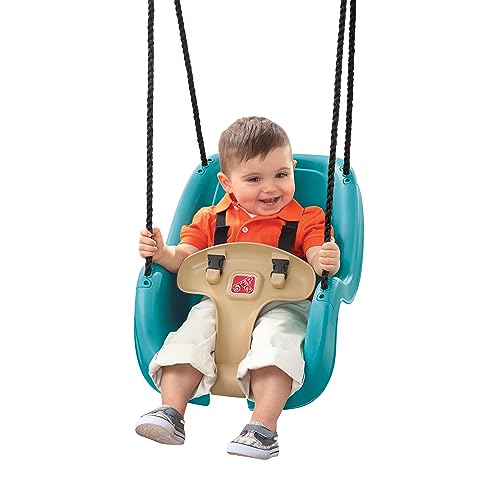
Step2 Infant to Toddler Swing, Baby Outdoor Swing, Backyard Bucket Style Swing Seat, Secure Harness, Outside Weather-Resistant Rope, Attach to Playset, For Toddlers 9 Months -3 Years Old
Included for 'Best Outdoor Swing for Baby in 2026: Secure Picks for Your Patio' because the listing specifies Baby Outdoor Swing and Backyard Bucket Style Swing Seat, details this guide uses to compare options.
View on Amazon
Swurfer Coconut Toddler Swing Comfy Baby Outdoor, 3- Point Adjustable Safety Harness, Secure, Safe Quick Locking System, Blister-Free Rope, Easy Installation, Ages 9 Months and Up, Ivo, White
Included for 'Best Outdoor Swing for Baby in 2026: Secure Picks for Your Patio' because the listing specifies 3- Point Adjustable Safety Harness and Secure, details this guide uses to compare options.
View on Amazon
Swing-N-Slide WS 4001-G Plastic Infant Swing with Nylon Rope Swing Set Attachment, Green w/Yellow
Included for 'Best Outdoor Swing for Baby in 2026: Secure Picks for Your Patio' because the listing specifies Green w/Yellow, details this guide uses to compare options.
View on Amazon1. Full-Bucket Seat, Not Half-Bucket or Strap Seat
A full-bucket wraps around the baby’s back, sides, and under the legs, keeping the center of gravity low. Look for a seat depth of 9 to 11 inches and a back height of 12 to 14 inches. Shallow seats under 8 inches deep allow younger babies to lean and shift sideways, especially in wind.
2. 3-Point Harness vs. T-Bar Alone
A true 3-point harness has two shoulder straps and a crotch strap that buckle at the center, often combined with a front T-bar or lap bar. A T-bar alone without straps is not enough outdoors — it prevents forward falls but does not stop a baby from twisting out. The best designs use both: a rigid T-bar to distribute force and a 3-point harness to keep the baby seated correctly. Buckles should be two-step release to prevent toddler escape but operable with one adult hand.
3. Weather-Resistant Materials
Outdoor swings live in sun, rain, and temperature swings. Indoor plastic and untreated nylon will fade, crack, and weaken in one season.
| Material / Component | Pros Outdoors | Cons / What Wears First | Best For |
|---|---|---|---|
| Rotomolded HDPE Plastic Seat | UV-stable, will not splinter, easy to clean, holds up to 75 lbs | Fades slightly after 2-3 years without UV inhibitor; hotter to touch in direct sun | Most patios, long-term outdoor use |
| EVA Foam-Padded Bucket | Softer edges, more comfortable for longer sits | Foam can absorb water if outer skin punctures; requires cover when not in use | Covered porches, mild climates |
| Powder-Coated Steel Frame | Highest weight capacity, stable | Heavy (45-65 lbs boxed), can rust at welds if coating chips | Permanent backyard setup |
| Rope: Polypropylene or Coated Nylon | Weatherproof, mildew-resistant | Stiffens in cold; check for fraying at knots yearly | Tree-hang and porch-beam installs |
| Rope: Natural Cotton or Untreated Polyester | Softer hand feel | Absorbs water, rots or stretches, not recommended outdoors | Indoor only |
| Hardware: Stainless or Zinc-Plated Chains | Corrosion resistant | Chains can pinch fingers; need plastic-coated version for babies | Tree-hang where adjustability matters |
For year-round outdoor use, prioritize HDPE or polypropylene seats with stainless steel or galvanized hardware and UV-treated ropes. Usually $50–$150 for a quality hang-only bucket and $150–$350 for a bucket plus A-frame, with powder-coated metal frames at the higher end.
Frame vs. Tree-Hang: Installation Requirements
Your patio structure decides this more than your budget. Both are safe when installed correctly, but the requirements are completely different.
Standalone A-Frame Swing
An A-frame is a self-contained tripod or four-leg frame that holds the swing. No drilling or tree needed, which makes it the default for renters, concrete patios, and small yards.
- Footprint: Most infant A-frames are 55 to 68 inches long and 50 to 62 inches wide at the base. You need at least 6 feet of clearance in front and behind the swing arc, and 3 feet on each side from walls, fences, or furniture.
- Height: Top bar is typically 47 to 60 inches high. Seat should hang 12 to 16 inches off the ground at rest for a baby swing — low enough that a fall is short, high enough that feet do not drag.
- Surface: Place on level grass, pavers, or concrete. On hard surfaces, use rubber feet or a 1-inch outdoor play mat underneath to prevent sliding and reduce impact.
- Anchoring: Frames under 40 lbs should be staked or sandbagged if left outdoors in wind. Jumbo frames usually include ground anchors for lawns.
- Assembly reality: Box weight is 35 to 65 lbs, with 30 to 45 minute assembly and a 13mm wrench and Allen key. Doorway width is not an issue, but assembled frames do not fit through a standard 30-inch interior door — assemble on the patio.
Tree-Hang or Beam-Hang Swing
A hang-only bucket uses ropes or chains attached to a single overhead point. It is compact and cheaper but demands a structurally sound anchor.
- Branch requirements: Healthy hardwood branch (oak, maple, beech) at least 8 inches in diameter, 7 to 10 feet high, and extending at least 3 feet from the trunk. No dead wood, cracks, or fungus. Softwoods like pine are not recommended for dynamic loads.
- Beam requirements: For porches or pergolas, the beam must be solid wood or steel, not decorative trim or vinyl. A single-point load should be rated for at least 500 lbs dynamic force. If you are unsure, have a contractor confirm — drywall anchors and thin joists will fail.
- Hardware: Use a heavy-duty swing hanger or eye bolt with through-bolt and backing plate, not a screw hook. Rope-over-branch without hardware causes bark damage and friction wear. Wrap with a tree strap to protect the tree and distribute load.
- Clearance: Same 6 feet front/back swing path as a frame. Branch should allow the swing to hang at least 4 feet from the trunk and any posts. Clear height from seat bottom to ground: 12 to 16 inches at rest, 24 inches maximum drop distance for infants.
- Height adjustment: Ropes should adjust from 50 to 70 inches total length to match branch height. Avoid knots that slip; double-braid and locking carabiners are more reliable than simple S-hooks.
| Requirement | A-Frame Standalone | Tree / Beam Hang |
|---|---|---|
| Space Needed (L x W) | 6.5 x 6 ft minimum clear zone; frame itself 4.5 x 5 ft | 6 ft swing arc x 3 ft side clearance; no floor footprint |
| Height Needed | 4 to 5 ft top bar | 7 to 10 ft branch/beam |
| Weight Limit (typical) | 55 to 75 lbs single child | 60 to 80 lbs (limited by branch/hardware, not seat) |
| Installation Time | 30-45 minutes, no drilling | 15 minutes if anchor exists; 1-2 hours if installing hanger |
| Portability | Moves with you, folds on some models | Light to move, but needs new anchor at next home |
| Ideal For | Renters, concrete patios, no suitable tree | Large yards with mature trees, covered porches with beams |
Choose By Your Situation
Match the swing type to your space and how you will use it, not just appearance.
| Your Situation | Recommended Pick | Why |
|---|---|---|
| Small patio or balcony (under 8×10 ft) | Compact A-frame with narrow base (under 50 inches wide) or beam-hang bucket if overhead beam exists | Standard A-frames overwhelm small slabs and leave no clearance. A 48-inch wide frame or single-point hang saves 2+ feet. |
| Renters / no drilling | A-frame only | No damage to structure, fully removable |
| Large yard with mature tree | HDPE full-bucket hang with tree strap and coated chain | Lowest cost, smallest storage footprint, 6 ft clearance easy to meet |
| Uncovered, full-sun yard | UV-stabilized HDPE seat + powder-coated steel frame, light color | Dark colors reach 140F+ in sun; light HDPE stays 20-30F cooler and resists fading |
| Multiple kids or daycare use | Commercial-grade steel A-frame with 75 lb limit | Higher dynamic load and more stable base for frequent use |
| Need indoor/outdoor flexibility | Convertible bucket that transitions from baby to toddler (removable T-bar) | Grows from 6 months to 4 years; harness removes as toddler gains control |
Fit and Safety Measurements to Check Before You Buy
Measure twice — baby swings are often returned because clearance was not checked.
- Drop and swing rope length: With baby seated, bottom of bucket should be 12 to 16 inches from ground. Ropes should form a V, not vertical, to prevent twisting — attachment points 16 to 20 inches apart at the top works for most buckets 14 inches wide.
- Seat opening: Leg holes should be 5 to 6 inches wide and 3.5 to 4.5 inches deep. Too large and a small baby can slip; too small and it pinches thighs. Adjustable T-bar helps fine-tune fit.
- Harness fit: Shoulder straps should sit flat without slack when buckled; you should be able to slide one finger under the strap. Crotch strap prevents submarine sliding.
- Overall weight: Hang-only buckets weigh 4 to 7 lbs; easy to hang and store. Full A-frame kits weigh 42 to 62 lbs boxed. If you must carry up stairs or through a narrow gate (under 36 inches wide), look for frames that split into two base sections.
- Room to swing: On a 10×12 ft patio, a 5 ft wide A-frame leaves only 2.5 ft on each side — tight against the 3 ft side clearance rule. In that case, a corner-placed beam hang or a half-size foldable frame is a better fit.
Durability and Care Outdoors
What wears first is predictable. Check these points monthly in season.
- Ropes and chains: UV and rain loosen knots and rust thin links. Rinse with fresh water after pollen season and tighten or replace ropes showing fuzzing or stiffness.
- Buckles and harness: Grit jams buckles. Soak in warm soapy water and air dry. Webbing should not be frayed or sun-bleached — replace if fibers thin.
- Frame joints: Powder coating chips at leg joints first. Touch up with outdoor enamel to prevent rust, especially if stored uncovered in winter.
- Seats: Wipe HDPE with mild soap; avoid pressure washers that force water into harness slots. Store buckets indoors or under a cover in freezing weather to prevent plastic brittleness.
- Storage footprint: Most A-frames fold flat to 6 to 8 inches thick but remain 55+ inches long. Plan garage or shed wall space accordingly.
Secure Picks for Your Patio in 2026
Instead of a ranked list that changes monthly, here are the types that consistently meet the secure-pick criteria outdoors:
- Best for most patios: Powder-coated steel A-frame + HDPE full-bucket with 3-point harness and T-bar. Look for models from established outdoor play brands such as Step2, Little Tikes, and Swing-N-Slide — all offer weather-treated buckets under this spec. Usually $180–$320 as a set.
- Best tree-hang bucket: Heavy-duty HDPE bucket with coated chains and adjustable 3-point harness, installed with a tree strap and locking carabiner. Common from brands like Eastern Jungle Gym and Squirrel Products. Usually $60–$130 for the seat and hardware.
- Best for small spaces / rentals: Folding A-frame with narrow base and tool-free hinge, paired with removable bucket. Usually $150–$250, easiest to move and store upright.
- Best convertible value: 2-in-1 bucket where the T-bar and harness remove to become a toddler half-bucket up to 50-75 lbs. Extends use 2 to 3 years without buying a second swing.
Avoid novelty fabric swings or hammock-style baby swings outdoors — they lack rigid side support and rarely include a proper 3-point harness.
Quick Safety Checklist
- Always use the harness, even for 30-second sits; most tip-outs happen without it.
- Push gently — baby swings need only a 12 to 18 inch arc. Higher arcs increase tip and collision risk.
- Never leave baby unattended, and empty the seat of blankets or toys that could entangle.
- Check anchor stability before each season: tug-test tree hanger with adult weight, shake-test A-frame for wobble.
- Stop use when child exceeds 75 lbs or can climb out of the harness, even if weight limit not reached.
FAQ
At what age can a baby use an outdoor swing?
Most full-bucket swings are rated from 6 months when baby can sit with head control, up to 36 months. Pediatric groups recommend waiting until good head and trunk control is consistent. Always follow the specific seat’s age and weight rating.
How long can a baby stay in the swing?
Limit sessions to 15 to 20 minutes. Swings are not sleeping surfaces; reclined bucket seats can restrict breathing if a baby falls asleep and slumps.
Can I hang a baby swing from a pergola?
Only if the crossbeam is structural and rated for dynamic load. Decorative 2×4 or hollow aluminum pergolas often are not. When in doubt, use a standalone frame instead of risking beam failure.