
Key takeaways
- Count the plastic in the load path. Polymer shrouds and trays are the first things to crack. Mechanisms that lock steel against steel age far better on a concrete floor.
- Match increments to your lifts. Pressing and rowing tolerate 5 lb jumps. Lateral raises, curls, and rehab work stall on them, which is where 2.5 lb steps earn their keep.
- Check the ceiling, not just the starting weight. A 50 lb cap feels generous for about a year. Expandable systems let you add plates instead of replacing the whole set.
- Think about floor clearance. Long adjustable handles and wide square blocks change how a dumbbell sits at the bottom of a floor press or a Bulgarian split squat.
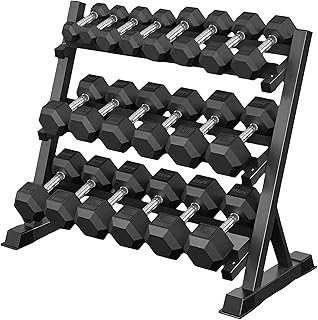
- Price the storage, too. Fixed sets need a rack, and a proper three-tier rack costs real money. Budget for it up front or the weights end up scattered.
What's inside
Dumbbells fail in predictable places. The plastic cradle under an adjustable pair cracks after the third time you set them down at an angle. A selector pin develops slop and starts rattling mid-set. On cheap fixed hex weights, the rubber head works loose from the chrome handle until you can twist it a quarter turn by hand. If you train in a garage or basement on a concrete slab, those failure points matter more than any spec on the box, because concrete punishes every design compromise a manufacturer made to hit a price.
The six pairs below are sorted by how they hold up, not by how clever the adjustment mechanism looks in a product video. I weighted three things: what the load-bearing parts are made of (steel and cast iron beat molded polymer), how the plates lock so they cannot shift under load, and whether the shape survives being lowered onto a hard floor from lockout. Grip comfort and adjustment speed are here too, but they break ties rather than decide the ranking.
As an Amazon Associate we earn from qualifying purchases at no extra cost to you. Product prices and availability are accurate as of the date shown and are subject to change.


As an Amazon Associate we earn from qualifying purchases at no extra cost to you. Product prices and availability are accurate as of the date shown and are subject to change.
Quick Comparison
| Dumbbell | Type | Weight Range (per hand) | Plate Material | Durability Verdict |
|---|---|---|---|---|
| Ironmaster Quick-Lock | Adjustable (screw lock) | 5–75 lb, expandable | Solid steel | Effectively no wear parts; best long-term bet |
| Rogue Urethane Dumbbells | Fixed | Sold per weight, 5–100+ lb | Cast iron, urethane coated | Commercial-grade; urethane resists cracking and odor |
| NÜOBELL 80LB | Adjustable (twist handle) | 5–80 lb in 5 lb steps | Steel plates | Metal where it counts; treat the cradle gently |
| PowerBlock Elite EXP | Adjustable (pin) | 5–50 lb, expandable to 90 | Welded steel | Steel cage shrugs off drops; boxy profile |
| REP Rubber Hex | Fixed | Sold per weight, 5–125 lb | Cast iron, rubber coated | Very tough for the money; slight rubber smell |
| Bowflex SelectTech 552 | Adjustable (dial) | 5–52.5 lb, 2.5 lb steps | Molded plates | Fine with careful handling, unforgiving of drops |
How to Choose
- Count the plastic in the load path. Polymer shrouds and trays are the first things to crack. Mechanisms that lock steel against steel age far better on a concrete floor.
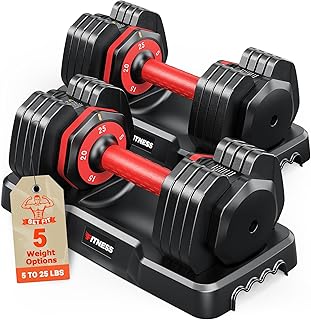
- Match increments to your lifts. Pressing and rowing tolerate 5 lb jumps. Lateral raises, curls, and rehab work stall on them, which is where 2.5 lb steps earn their keep.
- Check the ceiling, not just the starting weight. A 50 lb cap feels generous for about a year. Expandable systems let you add plates instead of replacing the whole set.
- Think about floor clearance. Long adjustable handles and wide square blocks change how a dumbbell sits at the bottom of a floor press or a Bulgarian split squat.
- Price the storage, too. Fixed sets need a rack, and a proper three-tier rack costs real money. Budget for it up front or the weights end up scattered.
Top Picks Reviewed
Ironmaster Quick-Lock Dumbbells
Steel plates, a steel handle, and a captive locking screw that threads through the stack. There is nothing to snap, nothing to lose calibration, and nothing that objects to being set on bare concrete. The tradeoff is honest labor: swapping weight takes several seconds per hand, so drop sets and heavy supersets get tedious. Add-on kits push each hand well past 100 lb, which means a single purchase can cover years of progress. If you plan to own one pair of dumbbells for a very long time, this is the pick.
Rogue Urethane Dumbbells
Fixed weights, bought a pair at a time, with knurled straight handles and urethane over cast iron heads. Urethane costs more than rubber and pays it back by resisting the chunking and tearing that rubber develops around dinged edges, and it does not off-gas into a closed basement. Handles are consistent in diameter across the range, so a 40 feels like a 70 in your hand. The obvious downside is cost and shelf space: building 20 through 60 is a project, not a purchase.
NÜOBELL 80LB
The fastest respectable adjustment on the market. Set the dumbbell in its cradle, twist the handle to the number you want, lift. Plates are steel rather than molded composite, which is the reason this outlasts most dial-style competitors, and 80 lb per hand is enough ceiling for most home pressing. The cradle is the weak link, so give it a stable, level spot and lower the handle in rather than dropping it. Loaded length is longer than a fixed dumbbell of the same weight.
PowerBlock Elite EXP
A welded steel cage with a selector pin, and it takes abuse that would end a plastic-shelled dumbbell. Expansion kits raise the base set toward 90 lb per hand without replacing anything. Two quirks decide whether you love it: the square profile sits high off the floor and can bump your forearm on deep presses, and the U-shaped handle puts your hand inside the weight, which some lifters find secure and others find claustrophobic. Try the grip mentally before committing.
REP Rubber Hex Dumbbells
The value benchmark for fixed weights. Cast iron heads in rubber, chrome knurled handles, hex faces that stay put where you set them, and a range that runs deep into three digits. Durability is high in the way a cinder block is durable: there is no mechanism to fail. Expect a rubber smell for a few weeks in an unventilated room, and expect to spend on a rack. For a garage where dumbbells get moved, kicked, and stacked, they are hard to beat per dollar.
Bowflex SelectTech 552
Two dials, 2.5 lb increments up to 25 lb, and the most useful increment scheme in this group for accessory work. It is also the most fragile pick here, because the plate assembly and tray rely on molded parts that crack when the dumbbell is dropped or set down cocked. Used deliberately on a mat, a pair lasts years and replaces a full rack in a spare bedroom. Used carelessly on concrete, it is the one that ends up in a warranty email.
Frequently Asked Questions
Are adjustable dumbbells strong enough for heavy training?
Screw-lock and pin-based systems in steel are. The mechanism to be skeptical of is any design where a molded shell carries load or protects the plate stack. Whatever you buy, avoid dropping adjustables from overhead; the plates are held by a mechanism, not cast as one piece.
What weight range should I start with?
For most beginners, 5–50 lb per hand covers pressing, rowing, and single-leg work for a year or more. If you already bench above bodyweight or plan to run heavy rows, start with a system that reaches 70–80 lb or one you can expand rather than replace.
Do I need a rubber mat under them?
Yes, if the floor is concrete or finished wood. A 3/8 inch mat absorbs the impact that cracks plate housings, protects the slab from spalling, and keeps hex dumbbells from skating. It is the cheapest durability upgrade available.
Fixed or adjustable for a small space?
Adjustable, almost always. One pair with a stand occupies roughly two square feet, while an equivalent fixed range plus rack claims a wall. Fixed weights win on grab-and-go speed and lifespan, so choose them if you have the footprint and plan to train with drop sets.
Final Thoughts
Durability here comes down to one question: what happens the day you set a loaded dumbbell down badly? Ironmaster and the fixed options from Rogue and REP simply do not care. NÜOBELL and PowerBlock tolerate it. The Bowflex 552 asks for a mat and a bit of discipline in exchange for the best increments and the smallest footprint. Decide how much floor space and how much carelessness you want to buy your way out of, then pick the heaviest ceiling your budget allows, because outgrowing a set is more expensive than overbuying one.
FAQ
Are adjustable dumbbells strong enough for heavy training?
What weight range should I start with?
Do I need a rubber mat under them?
Fixed or adjustable for a small space?

8 Best Ab Workouts with Dumbbells: 6 Support Picks Compared
Best ab workouts with dumbbells are limited more often by position than...
Best Budget Adjustable Dumbbell: 6 Picks and Trade-Offs
Best budget adjustable dumbbell shopping is really a question about what you...

Best Abs Exercise with Dumbbells: 6 Picks by Coating Type
Best abs exercise with dumbbells movements rest the weight against your chest,...
Best Abs Workout with Dumbbells: 6 Picks for Fast Circuits
Best abs workout with dumbbells formats are almost always circuits, and circuits...
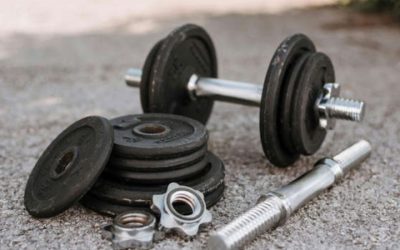
Best at Home Dumbbells: 6 Picks for Sharing a Household
Best at home dumbbells guides assume one user. Most households have two,...
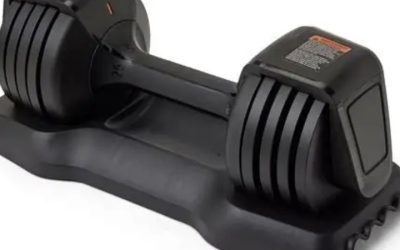
Best Dumbbells Home Gyms Use: 6 Picks Ranked by Delivery
Best dumbbells home buyers compare weight ranges and then discover the real...

8 Best Ab Exercises with Dumbbells: 6 Floor-Friendly Picks
Best ab exercise with dumbbells options are mostly done lying down, which...
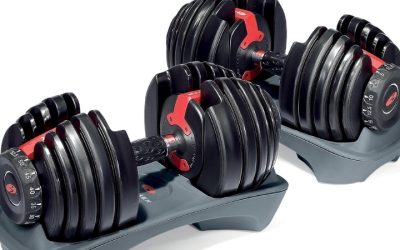
Best Dumbbell Set for Home Gym: 5 Picks Ranked by Space
Best dumbbell set for home gym shopping starts with a definition problem....
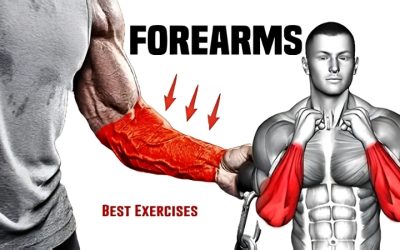
8 Best Workouts for Forearms with Dumbbells: 5 Gear Choices
Best workout for forearms with dumbbells depends less on the exercise list...
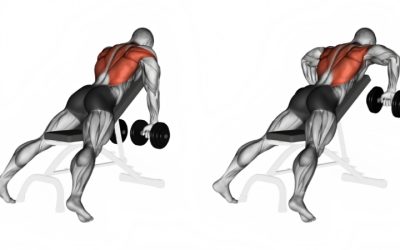
Best Lat Exercises Dumbbells: 6 Picks for Heavy Row Work
Best lat exercises dumbbells face a problem arm work never does: the...
Write Your Review
No reviews yet. Be the first to share your experience!