
Key takeaways
- Buy the plan if you already own weights: Adding a fourth pair of dumbbells to a setup that lacks structure changes nothing. A written program is usually the cheapest and highest-impact addition to an existing home gym.
- Check the program’s equipment assumptions: A routine written around a full dumbbell rack does not translate cleanly to one adjustable set. Confirm the plan works with what you own before restructuring your training around it.
- Record your sessions: Weight, sets and reps in a notes app takes ten seconds and is what makes progression visible. Without it, even a good program becomes the same workout repeated indefinitely.
- Film a set occasionally: The one thing a book cannot do is watch you. A phone propped on a shelf shows you the swinging hips and half-range reps that you cannot feel while performing them.
- Commit for eight weeks: Program-hopping is why many people never see progress. Run one plan for two months, log everything, and judge it on the numbers rather than on how each session felt.
What's inside
There is a specific kind of home gym that fails despite having everything it needs. The weights are good, the space is adequate, the person is willing. What is missing is any answer to the question of what to actually do on a given Tuesday. So they curl until it feels like enough, do some presses, and leave. Six months later nothing has changed, and the conclusion drawn is that home training does not work, when the real gap was never equipment at all.
Programming is the invisible half of the purchase. Knowing which exercises to pair, how many sets, what rep ranges, when to add weight and when to hold steady is what converts a pile of iron into results. That is why this comparison includes a written training guide alongside the hardware, and treats it as a genuine option rather than an afterthought. The five setups below cover both the equipment and the instruction, and for a lot of people the instruction is the missing piece.
As an Amazon Associate we earn from qualifying purchases at no extra cost to you. Product prices and availability are accurate as of the date shown and are subject to change.
#1 Pick

#2 Pick

#3 Pick

#4 Pick

#5 Pick

#6 Pick

#7 Pick

Quick Comparison
| Product | Best For | Standout Feature | Watch Out For |
|---|---|---|---|
| Women’s Health Dumbbell Training Guide | Anyone who owns weights but not a plan | Complete routines built around dumbbells | Static plan cannot adapt to your feedback |
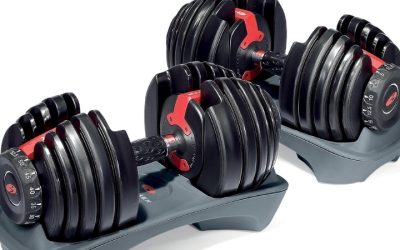
| EQUIPRO Adjustable Set | Following a program that requires progression | Increments that match written plans | Adjusting mid-circuit slows a session |
| Convertible Dumbbell-to-Barbell Set | Programs that include barbell movements | Covers both formats in one purchase | Conversion time disrupts circuit structure |
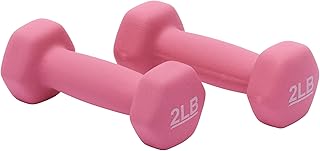
| Amazon Basics Neoprene Dumbbells | Learning technique before adding load | Light enough for honest form practice | Quickly outgrown by any real program |
| Sunlite Sports Water Weights | Adding a low-strain session to the week | Different stimulus from land training | Programming for water work is scarce |
How to Choose
- Buy the plan if you already own weights: Adding a fourth pair of dumbbells to a setup that lacks structure changes nothing. A written program is usually the cheapest and highest-impact addition to an existing home gym.
- Check the program’s equipment assumptions: A routine written around a full dumbbell rack does not translate cleanly to one adjustable set. Confirm the plan works with what you own before restructuring your training around it.
- Record your sessions: Weight, sets and reps in a notes app takes ten seconds and is what makes progression visible. Without it, even a good program becomes the same workout repeated indefinitely.
- Film a set occasionally: The one thing a book cannot do is watch you. A phone propped on a shelf shows you the swinging hips and half-range reps that you cannot feel while performing them.
- Commit for eight weeks: Program-hopping is why many people never see progress. Run one plan for two months, log everything, and judge it on the numbers rather than on how each session felt.
Top Picks Reviewed
Best Missing Piece: Women’s Health Dumbbell Training Guide
Laid-out routines with defined exercises, sets and progression remove the daily decision that stops most home sessions before they start. For someone with weights and no direction, this is the purchase that changes outcomes.
A book cannot respond to you. If a movement causes pain or a progression is too aggressive, you have to make that judgment yourself, and beginners are not always well placed to do so.
Best Program Companion: EQUIPRO Adjustable Set
Written programs assume you can add small amounts of weight regularly. A set with fine increments makes that possible, so the plan works as intended rather than stalling on unavailable loads.
Programs built around circuits suffer, because each weight change interrupts the flow. Reorganize sessions so exercises using similar loads are grouped together.
Most Program-Compatible Hardware: Convertible Dumbbell-to-Barbell Set
Many written routines include barbell movements alongside dumbbell work. Owning a set that does both means you can follow the plan as written instead of substituting exercises and hoping the swap is equivalent.
The conversion time is a real interruption. Plan a dumbbell block and a barbell block in each session rather than alternating between them set by set.
Best for Learning Form: Amazon Basics Neoprene Dumbbells
Practising the movement pattern at a weight that cannot hurt you is time well spent. Clean technique established in week one pays off for years afterwards.
They are a stepping stone. Any program with a progression scheme will move past them inside a couple of months, at which point they become warm-up weights.
Best Variety Session: Sunlite Sports Water Weights
Adding a pool session as an easy day gives the joints a break while still training the arms through resistance, which suits an otherwise demanding week.
Structured programming for water resistance is thin on the ground. You will largely be improvising, which somewhat undercuts the argument for following a plan.
Frequently Asked Questions
How do I know if my program is working?
Your logbook should show more weight or more reps at the same weight over four to six weeks. If neither number moves, the program, the effort level or the recovery needs changing.
Can I follow a gym program at home?
Usually with substitutions. Machine exercises need dumbbell equivalents, and the ordering may need adjusting around weight changes. The set and rep structure translates fine.
How many days a week should I train?
Three to four full-body or upper-lower sessions works well for most people at home. Arms get worked in nearly all of them, so dedicated arm days are optional rather than essential.
Is it worth paying for a written plan?
If the alternative is improvising indefinitely, yes. A structured plan costs a fraction of a single pair of dumbbells and typically has more effect on results.
Final Thoughts
Equipment is only half the setup. If you already own weights and progress has stalled, buy structure rather than more iron, then support it with a set that allows small weight increases so the progressions in the plan are actually achievable. Log everything, film the occasional set, and stick with one program for two months before judging it.



Write Your Review
No reviews yet. Be the first to share your experience!