Our Top Picks
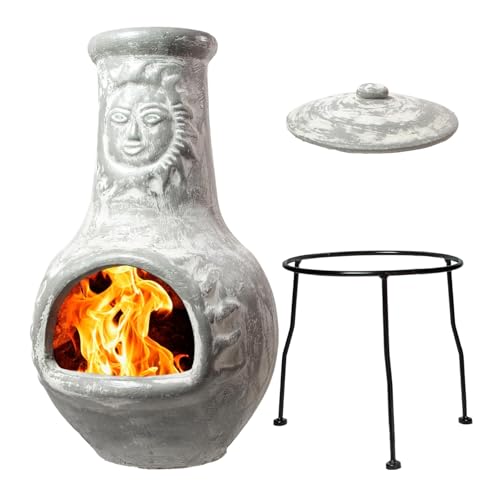 Wiosi Medium Chiminea Outdoor Fireplace Grey Clay ChimineasMedium32 x 16 x 32 inches35.3 poundsCheck on Amazon
 BALI OUTDOORS Fire Pit Wood Burning Chiminea Outside35.5"Hx17.7''D17.7 x 17.7 x 35.5 inches33.7 PoundsCheck on Amazon
 Panovue 45" H×31''W Metal Chiminea Fire Pit with45" H x 31" W x 22.5" D22.6 x 31.1 x 45 inches37.5 PoundsCheck on Amazon
Best Chimineas: Choose by Material and Where You’ll Use One
The best chiminea for most patios is a steel model with a stable, spark-screened firebox; choose cast iron when heat retention matters most, or clay when you want a traditional look and can protect it from moisture and sudden temperature changes.
Those differences matter more than appearance alone. Clay can crack, steel can rust, and heavy cast iron can be difficult to move. Before buying, measure your available space, check the manufacturer’s clearances and weight, and decide how much seasonal maintenance you’re willing to do.
Wiosi Medium Chiminea Outdoor Fireplace Grey Clay Chimineas with Chimney Rain Lids and Solid Metal Stands - Grey Terracotta Chimenea - Rustic Fire Pit Chimnea 16 x 16 x 32-inch
Chosen because it specifies Grey Terracotta Chimenea and Rustic Fire Pit Chimnea 16 x 16 x 32-inch.
View on AmazonBALI OUTDOORS Fire Pit Wood Burning Chiminea Outside
Picked as a relevant option in this category.
View on AmazonPanovue 45" H×31''W Metal Chiminea Fire Pit with Grill & Fire Poker
Picked as a relevant option in this category.
View on Amazon
Giantex Wood Burning Chiminea, Heavy Duty Fireplace Chiminea for Patio
Chosen because it specifies Heavy Duty Fireplace Chiminea for Patio.
View on AmazonClay vs. Cast Iron vs. Steel
| Construction | Heat retention | Cracking and rust risk | Footprint and moving | Maintenance |
|---|---|---|---|---|
| Clay | Warms gradually and radiates heat from its body; performance varies with thickness and design. | Does not rust, but can crack from impact, trapped moisture, or abrupt temperature changes. | Often compact at the base, but the rounded body can occupy more room than its footprint suggests. Usually awkward to carry. | Keep dry, use a cover only when fully cool, and follow the maker’s instructions for curing and winter storage. |
| Cast iron | Heats slowly and retains heat well after the fire dies down. | Can rust if its protective coating wears or it is left wet. Heavy sections can crack if dropped or subjected to severe temperature shock. | Typically the heaviest option; plan its final location before assembly. | Keep the surface dry, touch up damaged coating as directed, and inspect joints and legs for corrosion. |
| Steel | Heats quickly but generally cools faster than thick cast iron. | May rust at seams, scratches, or uncoated surfaces, especially when exposed to rain. Thicker steel and sound finishes can improve durability. | Often lighter and easier to reposition than cast iron; sizes range from compact patio units to large fireboxes. | Let ash and moisture dry out, remove ash regularly, and protect the finish from scratches and prolonged wet weather. |
Material alone doesn’t guarantee safe construction. Look for a broad, level base, secure joints, a stable spark screen or spark arrestor, and a design that lets you tend the fire without reaching over the hottest part. A spark screen reduces flying embers; it does not make a chiminea safe to use near dry plants, fabric, or overhead structures.
Which Type Fits Your Situation?
| Your situation | Best starting point | Why | Check before buying |
|---|---|---|---|
| Small patio or compact seating area | Small steel chiminea | Often easier to position and move than a heavy cast-iron model. | Measure the full body and chimney, not just the base; confirm required clearances. |
| Longer-lasting radiant warmth | Cast iron | Its mass holds heat after the fire settles. | Check assembled weight, floor or deck suitability, and whether it can be moved safely. |
| Traditional appearance and covered storage | Clay | Offers a classic form without a metal body that can rust. | Confirm curing instructions and how to protect it from rain, frost, and accidental knocks. |
| Children or pets nearby | Stable, screened model with a guarded firebox | A secure screen and solid base help reduce exposure to embers and accidental tipping. | No chiminea is childproof. Keep a clear boundary and supervise continuously. |
| Renter or frequent furniture rearrangement | Lighter steel model, if outdoor fires are permitted | Usually simpler to relocate than cast iron or a fragile clay body. | Check lease, building rules, local fire restrictions, and the route through gates or doorways. |
Measure the Space Before You Choose
As a planning example, a 10-by-12-foot patio can fit a compact chiminea and a small seating group, but only if the appliance’s listed clearances leave room for people to pass without walking close to the fire. Do not treat the numbers below as universal safety clearances: use the larger distances if the manufacturer or local fire rules require them.
| Planning measurement | Useful starting point | Why it matters |
|---|---|---|
| Clear walking route around seating | About 30–36 inches | Helps people move through the space without squeezing between chairs and the fire area. |
| Space between chair and low table | About 16–18 inches | Leaves room to sit and stand while keeping the table within reach. |
| Appliance-to-combustible clearance | Use the exact distance in the manual; it may be several feet or more. | Required spacing varies by model, fuel, and local rules. Include fences, siding, cushions, umbrellas, and overhanging branches. |
| Access path for delivery or relocation | Measure the narrowest gate, step, and turn; compare with the packaged or assembled dimensions. | A heavy unit may fit on the patio but be difficult to get there safely. |
Put the chiminea on a level, stable, noncombustible surface suitable for its weight. Avoid placing it directly on grass, a wooden deck, or a surface that could be damaged by heat unless the manual specifically permits that setup and specifies appropriate protection. Keep it away from roofs, branches, outdoor curtains, and other overhead or nearby combustibles.
Safety Features Worth Prioritizing
- Wide, stable base: Reduces wobble, especially on hard, even ground. Do not compensate for an unstable base with loose shims.
- Secure spark screen: Helps contain embers while allowing airflow. Check that it stays in place during normal use.
- Fitted door or firebox guard: Makes it easier to keep hands, paws, and loose objects away from the fire.
- Heat-resistant handle: Useful for tending the unit only as described in its instructions; surfaces can remain hot long after flames disappear.
- Clear operating instructions: Confirm approved fuel, lighting method, ash disposal, and minimum clearances before purchase.
Use a chiminea outdoors only, and check local burn bans and air-quality restrictions before lighting it. Keep a suitable means of extinguishing the fire nearby, never leave a burning fire unattended, and let the unit cool fully before moving, cleaning, or covering it.
Assembly, Moving, and Long-Term Wear
Read the boxed and assembled dimensions before ordering. A clay body may need careful two-person handling even when it is not especially heavy, while cast iron can be difficult to lift because its weight is concentrated in a compact shape. Steel is often easier to reposition, but its feet, seams, and finish still need protection from knocks and moisture. If the delivery route includes stairs or a narrow gate, check the package dimensions as well as the assembled ones.
During assembly, tighten fasteners evenly and confirm the unit stands level before the first fire. For the first use, follow the manufacturer’s curing or burn-in procedure. Don’t use a new clay chiminea at full intensity unless its instructions say to; gradual heating helps reduce thermal shock. Remove cooled ash rather than letting it collect, since damp ash can encourage corrosion in metal fireboxes.
The parts most likely to need attention are the steel finish at scratches and joints, cast-iron coating where it has chipped, and clay surfaces exposed to water or impacts. A weather cover helps protect a fully cool metal chiminea from rain, but trap-free airflow matters: covering a damp unit can hold moisture against the finish. Store clay somewhere dry and sheltered in freezing weather, following the maker’s guidance.
The Short Recommendation
Choose steel for easier handling and a practical balance of cost, footprint, and quick heat; choose cast iron when retaining warmth is the priority and you have a permanent, weight-appropriate location; choose clay when its traditional look matters and you can keep it dry and handle it carefully. In every case, the safest choice is the model whose clearances, base, screen, fuel requirements, and maintenance instructions fit your actual patio—not simply the one with the largest firebox.