Our Top Picks
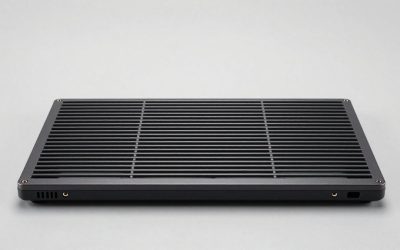
 Xiegu G90 HF Radio Transceiver 20W SSB/CW/AM/FM SDR1.77 x 4.72 x 8.26 inches3.5 PoundsCheck on Amazon
Best QRP Low-Power Ham Radio Transceivers: A 2026 Buying Guide
The best QRP low-power ham radio transceivers for most operators in 2026 are the Elecraft KX2 for CW and phone field work, the Icom IC-705 for all-mode HF-through-70 cm versatility, and the Xiegu G90 for the cheapest route to 20 W with a built-in ATU — and the correct pick for you depends far more on your battery budget, band plan, and how the radio feels in your hand than on the wattage printed on the box. Everything below compares output power, receive and transmit current draw, band coverage, pack weight, tuning ergonomics, and digital-mode plumbing, with numbers you can plan a power budget around.
Quick Picks by Situation
| Situation | Radio | Why | Typical price |
|---|---|---|---|
| Summit activations, CW, long hikes | LNR Mountain Topper MTR-4B or MTR-5B | ~20–35 mA receive, ~135 g, runs weeks on a 3 Ah pack | $400–600 |
| One radio for everything, all modes | Icom IC-705 | HF/6 m/2 m/70 cm, USB-C sound card, 10 W | $1,100–1,500 |
| Best all-round field rig, CW + SSB | Elecraft KX2 | 10 W, ~1.2 lb, internal battery and optional ATU | $1,100–1,500 |
| Tight budget, want 20 W and an ATU | Xiegu G90 | 20 W, 160–6 m, internal tuner, ~$450 | $400–550 |
| Digital modes only, tiny pack | QRP Labs QMX | Built-in USB sound card, ~60–100 mA receive | $200–320 |
| Apartment / HOA, indoor antenna | Xiegu X6100 or X6200 | Internal ATU tames a random wire or mag loop | $550–900 |
| Van, RV, or cabin base station | Yaesu FT-891 | 100 W headroom, still runs 5 W QRP when you want | $650–850 |
What “QRP” Actually Means in 2026
QRP is the amateur-radio shorthand for running low power: classically 5 W or less on CW and 10 W or less on SSB. In practice, the modern market has drifted, and “QRP transceiver” now covers anything from a 5 W single-band CW kit to a 20 W all-mode SDR with a colour touchscreen. That drift matters, because the three things that make a radio good in the field — current draw, weight, and how quickly you can change band and frequency — are not the same things that make a radio good on a desk.
Xiegu G90 HF Radio Transceiver 20W SSB/CW/AM/FM SDR Structure with Built-in Auto Antenna Tuner
Picked as a relevant option in this category.
View on Amazon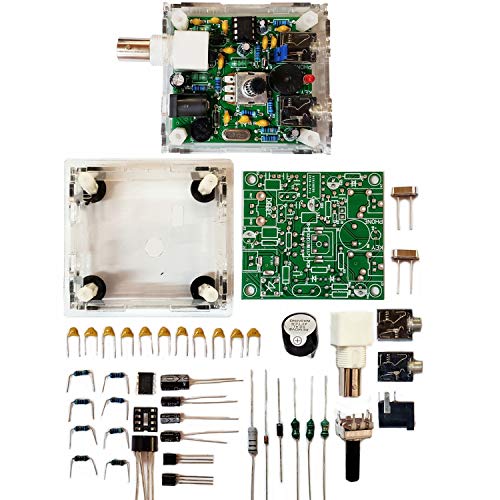
LJJDSLYU S-Pixie CW QRP Ham Amateur Shortwave Radio Transceiver 7.023 7.050 Mhz DIY Kits with Transparent Acrylic Shell
Picked as a relevant option in this category.
View on Amazon
Malahit tr usdx transceiver 5-Band usdx Multimode QRP Assembled with case by PE1NNZ and DL2MAN
Picked as a relevant option in this category.
View on AmazonA useful way to think about it: every watt you add to the transmit chain costs you roughly 150–250 mA of battery current, and every menu layer you add to the tuning interface costs you seconds of operating time on every single contact. A 20 W rig with a deep menu tree can be slower to use than a 5 W rig with one knob. The comparison below is built around that trade-off rather than around a spec-sheet wattage race.
The Six Criteria That Decide It
- Output power. 5 W into a resonant dipole is a genuinely workable station; 10 W buys you roughly one S-unit over 5 W, and 20 W buys about half an S-unit over 10 W. The jump from 5 W to 100 W is about two S-units — worth having, but not the difference between working and not working.
- Battery draw. Receive current is what kills you on a multi-day trip; transmit current only matters in proportion to how long you talk. A rig that idles at 400 mA will flatten a 9 Ah LiFePO4 pack in about 20 hours of listening. A rig that idles at 60 mA will run for five days on the same pack.
- Bands. HF coverage of 160–10 m covers every practical NVIS and DX band. Adding 6 m, 2 m, and 70 cm matters for local nets, satellites, and VHF contests, but adds weight and current.
- Portability. Weight and volume, plus whether the battery is internal, plus whether the case survives being dropped on granite.
- Tuning controls. A real weighted VFO knob, a fast band-stacking register, and a keypad beat a touchscreen on a windy summit every time.
- Digital-mode support. A built-in USB sound card plus CAT control is the difference between a two-cable FT8 setup and a three-box lash-up with an external interface.
Master Comparison Table
All figures below are approximate, drawn from published specifications and typical configurations. Real numbers move with band, supply voltage, firmware version, and whether the preamp, noise blanker, or internal tuner is engaged.
| Model | Max power | Bands | RX current (typ.) | Weight | Internal battery | Internal ATU | Digital audio | Price range |
|---|---|---|---|---|---|---|---|---|
| Elecraft KX2 | 10 W | 80–10 m | ~135 mA | ~1.2 lb / 0.55 kg | Yes (KXBT2) | Optional | USB CAT; external audio | $1,100–1,500 |
| Elecraft KX3 | 15 W | 160–6 m (+2 m opt.) | ~150–190 mA | ~2.1 lb / 0.95 kg | 8×AA | Optional | USB CAT; external audio | $1,400–2,000 |
| Icom IC-705 | 10 W (≈5 W on pack) | HF / 6 m / 2 m / 70 cm | ~300–500 mA | ~2.2 lb / 1.0 kg | Yes (BP-272) | No | USB-C sound card + CAT | $1,100–1,500 |
| Yaesu FT-818ND | 5 W | HF / 6 m / 2 m / 70 cm | ~400–450 mA | ~1.9 lb / 0.87 kg | 8×AA | No | External interface | $550–750 used |
| Xiegu X6100 | 10 W | 0.5–30, 50–54 MHz | ~300–450 mA | ~2.9 lb / 1.3 kg | Yes | Yes | USB sound card + CAT | $550–750 |
| Xiegu X6200 | 10 W | HF / 6 m / 2 m | ~350–500 mA | ~3.0 lb / 1.4 kg | Yes | Yes | USB sound card + CAT | $700–900 |
| Xiegu X5105 | 5 W | 0.5–30 MHz | ~400–500 mA | ~2.0 lb / 0.9 kg | Yes | Yes | USB CAT; external audio | $450–600 |
| Xiegu G90 | 20 W | 160–6 m | ~500–700 mA | ~2.6 lb / 1.2 kg | No | Yes | USB CAT; external audio | $400–550 |
| Xiegu G106 | 5 W | 80–10 m | ~300–400 mA | ~1.5 lb / 0.7 kg | No | No | USB CAT | $250–350 |
| QRP Labs QMX | 5 W | 80/60/40/30/20 m | ~60–100 mA | ~0.4 lb / 180 g | No | No | Built-in USB sound card | $200–320 |
| QRP Labs QMX+ | 5 W | 160–10 m | ~100–140 mA | ~1.0 lb / 450 g | No | No | Built-in USB sound card | $300–420 |
| QRP Labs QCX-mini | 5 W | Single band | ~50–70 mA | ~0.3 lb / 140 g | No | No | None (CW only) | $100–200 |
| Lab599 TX-500 | 10 W | 160–6 m | ~100–150 mA | ~1.2 lb / 550 g | No | No | USB CAT; external audio | $950–1,250 |
| CommRadio CTX-10 | 10 W | HF / 6 m | ~200–300 mA | ~1.6 lb / 0.7 kg | Yes | No | USB CAT | $900–1,200 |
| LNR MTR-4B | 4–5 W | 40/30/20/17 m | ~20–35 mA | ~0.3 lb / 135 g | No | No | None | $400–550 |
| Penntek TR-35 | 5 W | 40/30/20/17 m | ~50–80 mA | ~1.5 lb / 0.7 kg | No | No | None | $400–550 |
| uBITX v6 | ~10 W | 80–10 m | ~250–350 mA | ~2.0 lb / 0.9 kg | No | No | USB CAT; external audio | $180–300 |
| mcHF / RS-918 class | 5–10 W | 160–6 m | ~300–400 mA | ~2.0 lb / 0.9 kg | No | No | USB sound card | $400–700 |
| Yaesu FT-891 | 100 W (5 W mode) | HF / 6 m | ~1.0–1.5 A | ~4.2 lb / 1.9 kg | No | No | USB CAT; external audio | $650–850 |
The Radios in Detail
Elecraft KX2 — the reference field rig
The KX2 has been the benchmark for a decade because it does the hard things well rather than the flashy things. It puts 10 W on 80 through 10 m into a package about the size of a hardback book, weighing roughly 1.2 lb with the internal lithium pack installed. Receive current is on the order of 135 mA with the preamp off, which is low enough that a 6 Ah LiFePO4 will carry a full weekend of listening and a few hundred contacts.
What separates it from cheaper competition is the tuning interface. There is a real weighted VFO knob with adjustable drag, a second smaller knob for RIT and menus, a proper keypad for direct frequency entry, and band-stacking registers that recall mode and filter along with frequency. In cold, gloved conditions that layout is worth more than any screen. The optional KXAT2 tuner handles a wide range of wire and vertical antennas, and the internal battery charges from the same 12 V input the radio runs on, so one charger covers everything.
Digital modes need an external sound-card interface, because the USB port carries CAT only. That is the KX2’s main weakness in 2026 — competitors at half the price ship a built-in codec. The trade is that the KX2’s receiver, transmit audio, and CW keying remain a class above, and the radio holds its value unusually well. Budget $1,100–$1,500 as typically configured with tuner, battery, and charger. Best for: operators who work CW and SSB from summits, parks, and hotel rooms and want one radio that will still be serviceable in ten years.
Elecraft KX3 — more bands, more weight
The KX3 is the KX2’s larger sibling: 160 through 6 m as standard, with an optional 2 m module, up to 15 W output, and the same excellent ergonomics. It runs on eight internal AA cells rather than a proprietary pack, which is both a convenience and a limitation — disposable alkalines are easy to find anywhere, but NiMH cells sag under transmit load and give you less usable capacity than a lithium pack of similar weight.
Receive current sits around 150–190 mA, and the radio weighs roughly 2.1 lb. That extra pound and extra current buy you 160 m and 6 m coverage and a slightly better receiver front end. Availability has tightened as Elecraft’s focus has shifted to the K4 and KX2 lines, so treat the KX3 as a radio you buy when you find one, new or used, rather than one you can always order. Price runs $1,400–$2,000 depending on options. Best for: operators who want 160 m and 6 m in a portable package and do not mind carrying the extra pound.
Icom IC-705 — the do-everything portable
The IC-705 is the most versatile radio in this group. It covers HF, 6 m, 2 m, and 70 cm at up to 10 W from a 13.8 V supply, dropping to roughly 5 W on the internal BP-272 pack. That VHF/UHF coverage is the reason many operators buy it: the same radio that works a 20 m SOTA pileup will also hit the local 2 m repeater and, with a handheld Yagi, a satellite pass.
The digital story is the strongest here. A single USB-C cable carries CAT control and a built-in sound card, so FT8, JS8Call, Winlink, and RTTY work with no interface boxes. The colour touchscreen is genuinely usable, and the waterfall makes finding a clear frequency fast. D-STAR is built in for those already in that ecosystem.
The costs are real. Receive current is on the order of 300–500 mA depending on screen brightness and audio level — several times a KX2 — so it is a one-day radio on a small pack, not a multi-day one. Weight is about 2.2 lb with the battery, and the touchscreen is harder to use with gloves than a physical knob. It also lacks a built-in antenna tuner, which for portable work means either resonant antennas or a separate tuner. Expect $1,100–$1,500. Best for: operators who want one radio for HF and VHF/UHF, and who value a built-in sound card over the lowest possible current draw.
Yaesu FT-818ND — the classic, now a secondhand purchase
The FT-818ND defined portable QRP for two decades: 5 W on HF, 6 m, 2 m, and 70 cm, running on eight AA cells, in a die-cast body that survives being dropped. It is no longer in production, so in 2026 it is a used-market radio, typically $550–$750 depending on condition and included accessories.
Its strengths are band coverage, ruggedness, and the enormous body of community knowledge about modifications, filters, and battery packs. Its weaknesses are equally clear: receive current of roughly 400–450 mA is high by modern standards, the stock SSB filter is narrow for phone work, the menu system is deep and slow, and there is no built-in sound card. It is also heavy for what it does at about 1.9 lb.
Buy one if you want a genuinely indestructible VHF/UHF-plus-HF field radio at a low entry price and you are comfortable with the used market. Skip it if you want modern digital-mode convenience or long battery life. Best for: budget-conscious operators who want maximum band coverage per dollar and do not mind carrying spare AA cells.
Xiegu X6100 — the value all-rounder
The X6100 is a software-defined radio in a compact aluminium case, covering 0.5–30 MHz and 50–54 MHz at 10 W, with an internal battery and a built-in automatic antenna tuner. That combination — SDR receiver, internal battery, internal tuner — at a $550–$750 street range is the reason it appears in so many first-portable-radio discussions.
Receive current is roughly 300–450 mA, which is mid-pack: worse than an Elecraft, better than an FT-818. The tuner will match a random wire or a shortened vertical well enough to get on the air from a hotel balcony or a small garden. The colour display and waterfall make band scanning pleasant, and USB carries both CAT and audio, so digital modes need only one cable.
Compromises to understand before buying: the firmware has improved steadily but still has rough edges compared with Japanese or American radios; the touchscreen dominates the interface, with fewer physical controls than a KX2; and the internal battery gives you a few hours of mixed operation, not a weekend. Treat it as a base-camp or one-day radio and it is excellent value. Best for: newcomers to portable operating, apartment dwellers who need a tuner to make a compromise antenna work, and anyone who wants SDR features at a low price.
Xiegu X6200 — more bands, bigger screen
The X6200 is the newer, larger sibling, adding 2 m coverage to the HF and 6 m bands at 10 W, with a bigger display, internal battery, and internal tuner. Weight climbs to roughly 3 lb, and receive current to about 350–500 mA.
The appeal is the same as the X6100’s, plus local VHF work in the same box. The cost is that you are now carrying three pounds and a larger chassis for a radio that still has no weather sealing and still depends heavily on a touchscreen. For a van, a cabin, or a picnic table, that is a fine trade. For a long summit hike, it is not.
Price runs $700–$900. If you already own a 2 m handheld and only need HF, the X6100 gives you most of the same experience for less money and less weight. Best for: operators who want HF plus local VHF in one portable box and operate from vehicles, camps, or short walks.
Xiegu X5105 — 5 W with a tuner built in
The X5105 is an older design that still makes sense: 5 W on HF, an internal battery, and an internal automatic tuner in a package weighing about 2 lb. Receive current is on the higher side at roughly 400–500 mA, so its battery life is unremarkable, but the tuner plus internal battery combination means you can deploy it with nothing but an antenna wire.
Digital modes require an external audio interface, since the USB port is for CAT. The interface is menu-heavy and the display is small. At $450–$600 it competes directly with the G90, and the choice comes down to whether you want 20 W without a battery or 5 W with one. Best for: operators who want the simplest possible deploy — radio, wire, and nothing else.
Xiegu G90 — the 20 W value leader
The G90 is the most-recommended budget QRP-adjacent radio, and the reason is simple: 20 W on 160–6 m with a built-in automatic tuner for roughly $400–$550. Twenty watts is about half an S-unit over 10 W, which matters on SSB when conditions are marginal, and the tuner means almost any length of wire will load.
The trade-offs are weight and current. At about 2.6 lb it is the heaviest radio in this comparison apart from the FT-891, and receive current of roughly 500–700 mA is the highest here. There is no internal battery, so you carry a separate pack, and transmit current at 20 W can approach 4–5 A, which means a 9 Ah LiFePO4 is a reasonable minimum for a day of mixed operation.
Digital modes need an external sound interface; the USB port provides CAT. The front-panel layout is friendly, with a real VFO knob and a clear display, and the internal tuner’s memory per band segment makes band changes quick. Best for: budget-limited operators, POTA activators who want extra margin on SSB, and anyone who wants the simplest antenna matching possible.
Xiegu G106 — cheap and small, with limits
The G106 is a compact 5 W SDR covering roughly 80–10 m, weighing about 1.5 lb, at $250–$350. It has no internal battery and no internal tuner, so it is a radio you build a station around rather than a self-contained field rig.
Receive current of roughly 300–400 mA is mid-pack. The interface is simplified, with fewer controls and a small display, and the receiver performance is a step below the pricier options, particularly on a crowded band with strong nearby signals. It is a reasonable first HF radio or a backup rig for a go-kit. It is not a summit radio. Best for: entry-level operators and backup stations on a tight budget.
QRP Labs QMX — the digital-mode specialist
The QMX is the most interesting radio to appear in the budget segment in years. It is a 5 W, five-band (80, 60, 40, 30, 20 m) transceiver the size of a deck of cards, weighing about 180 g, with a built-in USB sound card and CAT control on a single cable. Receive current is on the order of 60–100 mA, which is extraordinary for a radio with a full SDR receive chain.
That combination makes it close to ideal for FT8, JS8Call, and WSPR field operation: plug in a USB cable, and the computer sees both a serial port and a sound device. No interface box, no isolation transformer, no cable spaghetti. On transmit it produces a clean 5 W from 12 V at around 1 A.
The limitations are real. It is CW and digital-oriented — SSB is available but the radio is built around narrowband modes. There is no internal battery, no tuner, no weather sealing, and the controls are minimal: a small encoder and a few buttons, with most operation driven from the host computer. It is available as a kit or assembled, at roughly $200–$320. Best for: digital-mode operators who want the smallest, most efficient possible station.
QRP Labs QMX+ — the same idea, all-band
The QMX+ takes the QMX concept and expands coverage to 160–10 m, in a larger case weighing about 1 lb, at $300–$420. Receive current rises to roughly 100–140 mA, still excellent. It keeps the built-in USB sound card and CAT, which is the headline feature.
Because it covers the full HF range including 160 m and the WARC bands, it is a more complete field radio than the five-band QMX, and it remains small enough to disappear into a pack. It still has no internal battery, no tuner, and minimal front-panel controls. If your operating is mostly CW and digital and your computer is always with you, this is one of the best value-per-watt-per-gram radios on the market. Best for: operators who want full HF coverage in a digital-first, computer-tethered package.
QRP Labs QCX-mini and QCX+ — single-band CW kits
The QCX family is the purest expression of QRP: a single-band, 5 W, CW-only transceiver available for 80, 60, 40, 30, or 20 m, sold as a kit for roughly $100–$200. The QCX-mini weighs about 140 g and draws 50–70 mA on receive. The QCX+ is the larger, easier-to-build version with more front-panel room.
These are not general-purpose radios. They have no SSB, no digital interface, and no general-coverage receiver. What they have is an excellent CW receiver, a clean transmitter, and a build process that teaches you how your radio works. For a dedicated CW operator who works one band, a QCX plus a resonant dipole and a small battery is a complete station weighing under 2 lb. Best for: CW operators and kit builders who want maximum performance per dollar and per gram on a single band.
Lab599 Discovery TX-500 — the ruggedised option
The TX-500 is a 10 W, 160–6 m transceiver in a sealed, weather-resistant aluminium body weighing about 1.2 lb, with receive current in the region of 100–150 mA. It is designed for genuinely hostile conditions — rain, salt spray, dust — and the controls are deliberately physical rather than touchscreen-based, with a large VFO knob and a clear, sunlight-readable display.
It has no internal battery and no internal tuner, so you carry both separately. Digital modes use CAT over USB with an external audio interface. At roughly $950–$1,250 it sits just below the Elecraft and Icom flagships in price while offering better environmental sealing than either.
Availability varies by region and has been affected by international trade conditions, so confirm supply before planning around it. Best for: operators who work in rain, on beaches, or in dusty environments and want a radio that does not need a dry bag.
CommRadio CTX-10 — the simple American portable
The CTX-10 is a 10 W, HF plus 6 m transceiver with an internal battery, weighing about 1.6 lb, at $900–$1,200. Its design philosophy is simplicity: fewer menus, a straightforward tuning interface, and a focus on reliable field operation rather than feature count.
Receive current is roughly 200–300 mA, which sits between the ultra-efficient QRP Labs radios and the Icom. It has no internal tuner and no built-in sound card, so digital modes need an interface. What it offers is a well-built, no-drama radio with good support and a straightforward battery story.
It is a strong choice for an operator who wants a 10 W field rig without a steep learning curve and does not need VHF coverage. Best for: operators who value simplicity and domestic support over maximum features.
LNR Mountain Topper MTR-4B and MTR-5B — the ultralight kings
The Mountain Topper series is what you buy when every gram matters. The MTR-4B covers 40, 30, 20, and 17 m at 4–5 W; the MTR-5B adds a fifth band. Both weigh around 135 g and draw roughly 20–35 mA on receive — the lowest figure in this entire comparison, by a wide margin.
That receive current is transformative for multi-day trips. A 3 Ah LiFePO4 pack will run an MTR for days of listening, and the whole station — radio, key, battery, antenna — can come in under 2