Our Top Picks
Direct answer: the best Wacom drawing tablet for most people is the Wacom Intuos Pro Medium — it covers illustration, retouching and 3D work, and it costs a fraction of a pen display; if you need to see the line under the pen, the Wacom Cintiq Pro 17 is the best balance of screen size, 4K resolution and desk footprint; if space is the constraint — a small apartment, a shared table, a laptop bag — the Wacom Movink 13 is the one that packs away; and if you are buying for a beginner, a teenager or a second workstation, the Wacom Intuos S or the Wacom One 12 does the job for the price of a decent office chair.
Everything below is organised the way the decision actually happens: desk fit and size first, then pressure sensitivity, display type, shortcut controls, stylus features and software compatibility — followed by a full section for each current Wacom model, with the price band you should expect to see and the workflow each one is genuinely right for.

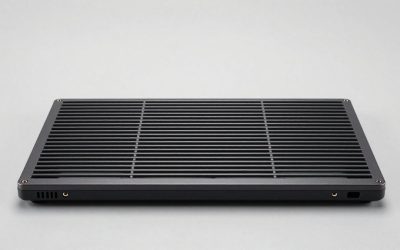
Wacom Intuos Medium, Bluetooth Graphic Drawing Tablet with Pen + Software
Chosen because it specifies Bluetooth Graphic Drawing Tablet with Pen + Software.
View on Amazon
Wacom Intuos Pro Medium, Bluetooth Graphic Drawing Tablet with ProPen 3
Chosen because it specifies Bluetooth Graphic Drawing Tablet with ProPen 3.
View on Amazon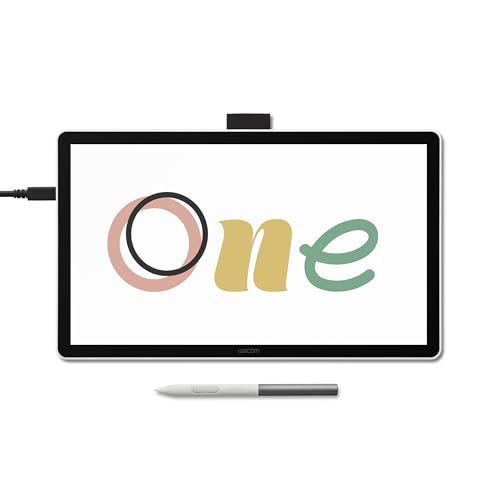
Wacom One 14, Drawing Tablet with IPS Full HD Laminated Screen & Pen
Chosen because it specifies Drawing Tablet with IPS Full HD Laminated Screen & Pen.
View on Amazon
Wacom Cintiq 16, Drawing Tablet with QHD Screen & Pro Pen 3
Chosen because it specifies Drawing Tablet with QHD Screen & Pro Pen 3.
View on AmazonHow the Wacom range splits in 2026
Wacom sells three families, and mixing them up is the single most common buying mistake. Pen tablets are slabs with no screen: you draw on the tablet while looking at your monitor. Pen displays are monitors you draw on directly. Standalone pen computers are pen displays with a full computer built in — a tier Wacom has not pushed hard in recent years, so treat it as a specialist or legacy choice rather than a mainstream recommendation.
Inside the pen tablet family there are two lines. The Intuos line is the entry tier: four ExpressKeys, a battery-free pen, wired or Bluetooth variants, small and medium sizes. The Intuos Pro line is the professional tier: larger active areas, higher pressure resolution, a Touch Ring, multi-touch on the bigger sizes, and a build quality meant to survive a decade of daily use.
Inside the pen display family there are three lines. Wacom One is the entry tier, with a bundled pen and no bezel buttons. Movink is the portable OLED tier — thin, light, designed to travel. Cintiq is the mid tier and Cintiq Pro the flagship tier, with 4K panels, wide-gamut colour, factory calibration and the most capable pens Wacom makes.
One technical fact matters across every tier: all Wacom pens use electromagnetic resonance, which means the pen has no battery and never needs charging. It draws power from the tablet’s field. That is why a Wacom pen can sit in a drawer for a year and still work, and why you never see a charging port on one.
| Family | Tier | Screen? | Typical price band (USD, street) | Built for |
|---|---|---|---|---|
| Intuos | Entry pen tablet | No | usually $70–$200 | Beginners, students, note-taking, second machines |
| Intuos Pro | Professional pen tablet | No | usually $250–$550 | Illustration, retouching, 3D, video, long sessions |
| Wacom One | Entry pen display | Yes, 1080p | usually $300–$500 | First screen tablet, teaching, annotation |
| Movink | Portable OLED pen display | Yes, 1080p OLED | usually $700–$850 | Travel, hot-desking, small desks |
| Cintiq | Mid pen display | Yes, 1080p | usually $650–$1,400 | Illustration on a budget, education, studios |
| Cintiq Pro | Flagship pen display | Yes, 4K | usually $2,000–$3,800 | Colour-critical retouching, production, CAD |
The decision matrix: match the tablet to your situation
Search results tend to rank tablets by price. That is the wrong axis. The right axis is the room, the desk and the posture you actually have. Use the table below to find your situation, then read the matching product section.
| Your situation | Best fit | Why it works |
|---|---|---|
| Shared kitchen or dining table, packed away nightly | Intuos Pro Medium or Movink 13 | Both store flat; neither needs a permanent arm or cable run |
| Small apartment, one desk for work and drawing | Intuos Pro Medium | Keeps your existing monitor and desk layout intact |
| Renter who cannot drill walls | Pen tablet, or a desk-clamp arm rated 20–25 lb | Clamp and grommet mounts leave no wall damage |
| Neck, shoulder or upper-back pain | Pen display on a low-tilt arm at 15–25° | Lets you keep the head level instead of looking down |
| Kids, cats and dogs in the house | Wired Intuos S | No glass to crack, cheapest nibs to replace, nothing to charge |
| Colour-critical print retouching | Cintiq Pro 22 or Cintiq Pro 27 | Wide-gamut panel plus hardware calibration support |
| 3D sculpting and long confident strokes | Intuos Pro Large | Active area big enough for shoulder-driven strokes |
| Illustration on the move, cafés and trains | Movink 13 | Thin OLED panel, light enough for a laptop bag |
| CAD, engineering markup, PDF annotation | Cintiq Pro 22 | Large drawing surface plus programmable bezel controls |
| Video editing, timeline scrubbing, rotoscoping | Intuos Pro Medium or Large | Touch Ring and ExpressKeys map well to NLE shortcuts |
| Teaching, tutoring, remote whiteboarding | Wacom One 13 touch | Screen plus touch, easy to share on a video call |
| Beginner, teenager, first tablet ever | Intuos S or Wacom One 12 | Low cost of entry, full driver feature set, easy resale |
Size and desk fit: the measurements that decide it
Wacom lists the active area — the drawing surface the pen actually reads. That number is not the same as the physical footprint, and the footprint is not the same as the space you need once a stand, a keyboard and your elbows are involved. Buy on the last number.
A useful rule: the clear depth you need is roughly the tablet’s depth plus 6 inches for a keyboard in front of it, or plus 12 inches if you also want a wrist rest and a comfortable angle. On a standard 30-inch-deep desk, a 22-inch pen display on its own stand leaves almost no room for a keyboard — which is why most people who buy that size end up moving the keyboard to a tray or a side table.
| Class | Active area (approx.) | Footprint on desk | Minimum clear depth | Comfortable depth | Panel weight class | Mounting note |
|---|---|---|---|---|---|---|
| Small pen tablet (Intuos S) | 6.0 × 3.7 in | 8 × 6 in | 10 in | 14 in | under 1 lb | None needed |
| Medium pen tablet (Intuos M, Intuos Pro M) | 8.5–8.8 × 5.3–5.8 in | 13 × 9 in | 14 in | 18 in | 1–2 lb | None needed |
| Large pen tablet (Intuos Pro L) | 12.2 × 8.5 in | 17 × 12 in | 18 in | 22 in | 2–3 lb | None needed |
| 12–13 in pen display (One 12, Movink 13) | 10.1 × 5.7 in / 11.6 × 6.5 in | 14 × 9 in flat | 18 in flat, 24 in on a stand | 28 in | 1–3 lb panel | Some models offer 100 × 100 mm VESA |
| 16–17 in pen display (Cintiq 16, Cintiq Pro 17) | 13.5 × 7.6 in / 15.1 × 8.5 in | 17–19 × 11–12 in | 22 in | 28–30 in | 4–8 lb panel | VESA 100 × 100 typical; arm rated 15 lb+ |
| 22 in pen display (Cintiq 22, Cintiq Pro 22) | 18.7 × 10.5 in | 22–24 × 14 in | 26 in | 30–32 in | 10–15 lb panel | Arm rated 20 lb+ if you float it |
| 27 in pen display (Cintiq Pro 27) | 23.5 × 13.2 in | 26 × 17 in with stand | 30 in | 34–36 in | 12–16 lb panel | Arm rated 25 lb+; check the stand is included |
Figures are class-typical, not model-specific — always confirm the published dimensions and weight for the exact SKU before you buy a monitor arm.
Room-size reality check
Take a common spare-room studio: 10 × 12 ft, about 120 sq ft. A 60-inch-wide desk placed against the long wall leaves roughly 30 inches behind the chair for pushing back, which is the minimum for a task chair on castors. That fits a 22-inch pen display with a keyboard tray underneath, but not a 27-inch display plus a second monitor plus a printer on the same surface.
If you are working in 8 × 10 ft, plan on a pen tablet rather than a large pen display. A medium pen tablet occupies about 13 × 9 inches — smaller than a sheet of A4 paper plus margins — and can live on a pull-out keyboard tray, which frees the entire desktop for a monitor and reference material. That single change does more for a cramped room than any upgrade to a bigger screen.
Height, tilt and reach
Standard desk height is 28–30 inches, and standard seat height is 17–19 inches. If your desk is fixed at 30 inches, a pen display lying flat on it will put the drawing surface about 2–3 inches above your thighs, which forces your neck down by 20–30°. Tilting the panel to 15–25° from horizontal is the compromise most illustrators settle on: enough tilt to see the far edge without leaning, not so much that your shoulder has to hold your arm up against gravity.
For pen tablets, the reach limit matters more than the tilt. An 8.5 × 5.5-inch active area can be covered with wrist and forearm movement. A 12 × 8.5-inch area usually requires shoulder movement — better for your wrist, but it needs roughly 18 inches of clear desk in front of you and a chair that lets you sit close enough to reach the far edge without stretching.
Pressure sensitivity: what 2048, 4096 and 8192 actually change
Pressure levels describe how many distinct values the pen can report between the lightest detectable touch and full press. More levels do not automatically make your line better; they make the transition between thick and thin smoother in software that reads pressure as a continuous value rather than a stepped one.
In practice: 2048 levels is enough for note-taking, annotation and most vector work. 4096 levels is the sensible modern floor for raster painting. 8192 levels is what every current Wacom pro pen reports, and the difference between 4096 and 8192 is subtle in isolation but visible in slow, deliberate line work where you are riding the very start of the pressure curve.
The spec that changes your experience far more than the pressure count is initial activation force — how hard you must press before the tablet registers anything at all. A pen with a light activation force lets you lay down fine hairline strokes without bearing down. Wacom does not always publish this figure prominently, but it is the number that makes a pro pen feel different from an entry pen in the first five minutes.
| Spec | Entry tier (Intuos, Wacom One) | Pro tier (Intuos Pro, Cintiq, Cintiq Pro, Movink) | What it changes for you |
|---|---|---|---|
| Pressure levels | 4096 | 8192 | Smoothness of slow tapering strokes |
| Tilt recognition | Around ±60° | Around ±60° | Whether you can shade with the side of the nib |
| Pen power source | Battery-free (EMR) | Battery-free (EMR) | No charging, no pairing, no dead pen |
| Resolution | Typically 2540 lpi class | Typically 5080 lpi class | How finely slow, precise strokes are sampled |
| Report rate | Around 133 points/sec | Around 200 points/sec | Cursor lag on fast diagonal strokes |
| Reading height | Around 7–10 mm | Around 10 mm | How far above the surface the pen still tracks |
The honest summary: if you are choosing between two tablets and one has 4096 levels and the other 8192, do not let that be the deciding factor. Choose on active area, shortcut controls and whether there is a screen. Pressure resolution is the least consequential spec on the box.
Display type: pen tablet, pen display, OLED, and what each does to your posture
Pen tablets (no screen) are the cheapest, lightest and most durable option, and they keep your head up because you watch your monitor while your hand works below. The trade-off is hand-eye decoupling: it takes most people one to three weeks to stop looking down at their hand. Once it clicks, many professional illustrators never go back, because the neck posture is better and the tablet never gets in the way of reference material.
Pen displays remove the decoupling entirely. You draw where you look. The cost is desk space, weight, cable complexity and price. A 22-inch pen display typically weighs 10–15 lb and needs a stand or arm that can hold it at a drawing angle without creeping.
OLED pen displays — the Movink class — bring true blacks, very high contrast and a much thinner, lighter panel. The practical benefits are portability and colour punch. The practical cautions are burn-in risk with static interface elements left on screen for hours, and the fact that OLED panels are typically glossier than etched-glass LCDs, so reflections become a lighting problem you have to solve in the room.
Panel surface matters as much as the panel itself. Etched glass gives a paper-like drag and resists scratches; it also slightly softens the image because it scatters light. Smooth glass with an anti-glare coating is sharper but slicker. If you add a third-party screen protector to a pen display, you change the drawing feel and can void nothing but your own satisfaction — most people who try it take it off within a month.
Resolution and colour
1080p is fine on a 13-inch display and acceptable on a 16-inch. At 22 inches and above, 1080p starts to show visible pixel structure at normal working distance, which is why the flagship tier moves to 4K. If you are judging colour for print, look for wide-gamut coverage (Adobe RGB and DCI-P3 coverage figures in the high 90s), factory calibration, and support for hardware calibration with a colorimeter. If you are working for screen only, sRGB coverage near 100% is enough and you can save a lot of money.
Shortcut controls: ExpressKeys, Touch Ring, dials and multi-touch
Shortcut controls are the most underrated spec on the box and the one you will notice daily. Every programmable button is a keystroke you do not have to reach for with your non-drawing hand. Six well-mapped ExpressKeys typically replace undo, brush size up/down, zoom, rotate canvas and pan — five or six of the most repeated actions in any drawing session.
The Touch Ring on the Intuos Pro line is a physical ring that can cycle through four functions, one per quadrant, with a centre button to switch between them. Mapped to brush size, zoom, canvas rotation and layer scrub, it removes an enormous amount of keyboard traffic. Multi-touch adds finger panning, pinch-zoom and rotation directly on the tablet surface — genuinely useful on a large tablet, mostly a novelty on a small one.
| Model | Physical controls | Touch input | Best for |
|---|---|---|---|
| Intuos S / M | 4 ExpressKeys | No | Simple shortcut sets, beginners |
| Intuos Pro Small | ExpressKeys plus Touch Ring | No | Tight desks, travel with a laptop |
| Intuos Pro Medium | ExpressKeys plus Touch Ring | Yes | The all-round professional setup |
| Intuos Pro Large | ExpressKeys plus Touch Ring | Yes | Large-stroke work, 3D, dual-monitor desks |
| Wacom One 12 | None on bezel | No | Keyboard-driven workflows, teaching |
| Wacom One 13 touch | None on bezel | Yes | Touch gestures, annotation, presentations |
| Movink 13 | Minimal bezel design | Varies by configuration | Portability-first users who rely on keyboard shortcuts |
| Cintiq 16 / Cintiq 22 | No bezel button row; ExpressKey Remote is the usual add-on | No | Budget pen displays in a keyboard-heavy workflow |
| Cintiq Pro 17 / 22 / 27 | Programmable bezel controls; layout varies by generation | Model-dependent | Professionals who want controls at the panel edge |
Two practical notes. First, the ExpressKey Remote — a small wireless button puck — can be added to displays that lack bezel buttons, and it is often a better use of money than upgrading a whole tier. Second, per-application profiles matter: set separate mappings for your painting app, your 3D app and your photo editor, so the same six buttons mean different things in each. Without per-app profiles, most people abandon half their buttons within a month.
Stylus features: pro pens, one pens, nibs and tilt
Wacom’s current pro pens are battery-free with a pressure-sensitive tip, an eraser end on most models, and one or more side switches. The flagship pen in the Cintiq Pro tier adds swappable grips and configurable button placement, so you can move the side switch to where your