Key takeaways
- Place at the first or second bend, never the final stretch before the exit. Its range cannot reach the exit lane on most maps.
- Offset one tile from the track, not directly adjacent. Directly-adjacent placement wastes the inner edge of the cone on empty tiles.
- Stack two Trash Gamers at the same bend rather than spreading them across two bends. Their cooldowns are long enough that a single unit alone leaves gaps.
- Keep one open tile beside it for a support unit. Trash Gamer has no utility of its own, so that slot should go to a range-extender or a cooldown reducer.
- On maps with a straight opening lane, place it two-thirds of the way down that lane — that is where its range band covers the most path length.
Anime Vanguards Trash Gamer Guide: Stats, Upgrade Costs, and Where to Place It
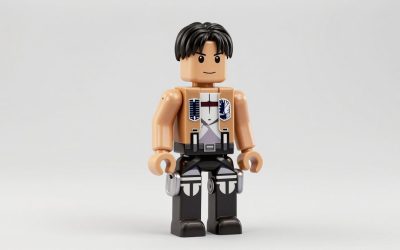
Trash Gamer is a Legendary-tier ground unit in Anime Vanguards that functions as an early-to-mid game carry, not an endgame one. It deals reliable single-target damage with a wide splash on its final upgrade, but it is held back by a short effective range and a long re-placement cooldown. Treat it as a cheap, high-tempo opener that covers your first two waves, then bench it once your Mythic units come online.
Trash Gamer base stats and upgrade path
Stats below reflect the unit at max level for each upgrade tier. Exact numbers shift with balance patches, so treat these as working figures for a current-build reference rather than frozen values.
| Upgrade | Cost | Damage | Range | Splash | Cooldown (attack) |
|---|---|---|---|---|---|
| Base (place) | — | Low, single target | Short | None | Slow |
| Upgrade 1 | Cheap, first tier | +~40% over base | Unchanged | None | Slightly faster |
| Upgrade 2 | Mid tier | +~35% over U1 | +small | None | Faster |
| Upgrade 3 | Mid-high tier | +~30% over U2 | +small | Small cone | Faster |
| Upgrade 4 (max) | Most expensive tier | +~25% over U3 | Still below average | Wide cone | Fastest |
Two things matter here. First, the damage-per-cost curve is steepest across upgrades 1 and 2, so if you are short on cash, stop at U2 rather than pushing a partial U3. Second, the splash only appears at U3, which is the point where Trash Gamer stops being a pure single-target unit and starts clearing trash mobs in clumps. If your map has tightly packed spawns, U3 is the real breakpoint.
Where to place Trash Gamer
Trash Gamer wants to sit on the inside of the first corner of a path, one tile back from the track, so enemies spend the maximum number of tiles inside its short range. Placement rules that hold up in practice:
- Place at the first or second bend, never the final stretch before the exit. Its range cannot reach the exit lane on most maps.
- Offset one tile from the track, not directly adjacent. Directly-adjacent placement wastes the inner edge of the cone on empty tiles.
- Stack two Trash Gamers at the same bend rather than spreading them across two bends. Their cooldowns are long enough that a single unit alone leaves gaps.
- Keep one open tile beside it for a support unit. Trash Gamer has no utility of its own, so that slot should go to a range-extender or a cooldown reducer.
- On maps with a straight opening lane, place it two-thirds of the way down that lane — that is where its range band covers the most path length.
Trash Gamer vs. other Legendary-tier units
The comparison that decides whether you keep Trash Gamer in a slot is not raw damage — several Legendaries beat it there — but damage per cash spent and how early it becomes useful.
| Unit archetype (Legendary tier) | Base cost to deploy | Damage profile | Range | Role |
|---|---|---|---|---|
| Cheap tempo attacker (Trash Gamer) | Low | Single target, splash at max | Short | Early carry |
| Long-range sniper archetype | Medium | High single target | Very long | Boss focus |
| Hybrid crowd-clearer | Medium-high | Consistent splash | Medium | Wave clear |
| Support / buffer | Medium | Negligible | Medium | Buffs adjacent units |
Against the sniper archetype, Trash Gamer loses on range and total damage but wins on deploy cost and ramp speed — it is online several waves earlier. Against a hybrid crowd-clearer, it loses on sustained splash because that unit splashes from base while Trash Gamer needs U3. Against a support unit, they are not competing: Trash Gamer wants one next to it.
The practical read: keep Trash Gamer only while your average deploy cost per wave is still low. Once you can afford a long-range sniper plus a support unit in the same wave, Trash Gamer’s slot is better spent elsewhere.
Team pairings that cover its two weaknesses
Trash Gamer has exactly two problems — short range and long cooldown — and each has a clean fix.
Fixing short range
- Range-extender support: a Legendary or Mythic buffer that increases attack range for adjacent units lets Trash Gamer reach a second bend or a spawn choke it otherwise cannot touch.
- Slow / freeze unit placed ahead of it: if enemies are slowed inside Trash Gamer’s range band, the short range stops mattering — this is usually cheaper than a range buffer and works from the very first wave.
- Damage-over-time or burn unit: burns tick while enemies walk out of range, so Trash Gamer’s damage window effectively extends past its cone.
Fixing long cooldown
- Cooldown-reduction support: the single highest-value pairing. Trash Gamer’s damage-per-second is decent; its downtime is what kills it.
- A second cheap attacker on the same bend: two Trash Gamers offset their cooldowns and hold a lane far better than one upgraded Trash Gamer plus an empty tile.
- A stall unit (taunt, knockback, or freeze): buys the cooldown back by keeping enemies in place rather than relying on placement alone.
A working four-slot core
Two Trash Gamers on the primary bend, one slow/freeze unit placed ahead of them on the track, and one support unit adjacent to the pair for range or cooldown. That core clears the early and mid waves on most standard stages. Swap the support unit for a long-range sniper once boss waves start.
Upgrade priority and common mistakes
- Prioritise U1 and U2 over a partial U3. The early tiers give the best damage per cash.
- Do not upgrade to max if the unit sits outside its own range band. Check the cone before spending the largest upgrade tier.
- Do not place Trash Gamer at the exit. It is the single most common mistake and makes the unit look far weaker than it is.
- Do not run Trash Gamer as a solo carry past mid game. It is a tempo unit; its value drops sharply once enemy health outpaces its max damage.
Should you build Trash Gamer?
Build it if you are progressing through the early and mid stages, if your account lacks a cheap high-tempo attacker, or if you need a filler unit that holds a bend while your expensive units come online. Skip it if you already run a hybrid crowd-clearer and a long-range sniper, or if your stage layouts funnel enemies down long straight lanes where a sniper strictly outperforms it. As a rule, Trash Gamer is worth its deploy cost for the first half of a run and not much past it.
FAQ
Is Trash Gamer worth upgrading to max? Only if it is standing inside a busy bend and you have the cash spare. The final tier adds splash, which is the upgrade’s real value — the raw damage gain is the smallest of the four tiers.
What is Trash Gamer’s biggest weakness? Cooldown downtime. Its range is short but fixable with placement; its cooldown is not, which is why a cooldown-reduction support is the highest-value pairing.
Can Trash Gamer solo a stage? No. It lacks the range to cover an exit lane and the sustained damage to burn down late-wave health pools on its own.