Our Top Picks
 Dehumidifier 1657ML 58OZ Small Dehumidifier for Home 230medium4.96 x 5.89 x 9.53 Inches2.32 poundsCheck on Amazon
 106 OZ Large Capacity Dehumidifier for Home9.4*5.7*12.7inch9.4 x 12.7 x 5.7 inches5.2 poundsCheck on Amazon
No dehumidifier kills black mold, and nothing on this page says otherwise. The best dehumidifier for black mold concerns is the one that holds a damp room at a steady, lower humidity and drains without depending on you, because mold needs moisture and a dehumidifier takes it out of the air. For a damp basement or large room, the KNKA 34 pint unit with a drain hose is the strongest match among these eight listings; for a closet or bathroom, a compact unit or a granule absorber is a more sensible fit.
That framing matters because “black mold” is a worry word. Color does not tell you what is growing, and only a qualified professional can identify it. What you can control is the moisture. This guide is organized around that: what each unit can realistically do to a damp space, how to find the water first, and when to stop shopping and call someone.
If you are also weighing air filtration, our guide to the black mold air purifier question explains what filtration can and cannot do. The short version is that filtering air and drying the room are two different jobs, and neither one cleans a moldy surface.
Read this first: what a dehumidifier can and cannot do

KNKA 2500 Ft² Max 34 Pints Dehumidifier for Basement with Drain Hose, Black | Dehumidifiers for Home, Bedroom, Bathroom, Large Room, Three Modes, Intelligent Humidity Control, Dry Clothes, 24HR Timer
One of the moisture-control product options compared in this guide.
View on AmazonDehumidifier 1657ML 58OZ Small Dehumidifier for Home 230 Ft² Safety Dehumidifiers Adjustable 10 Color Lights 5 Timers 3 Setting Modes Auto Shut Off Protection Low Noise For Bedroom Bathroom
One of the moisture-control product options compared in this guide.
View on Amazon
Dehumidifier, 1000 sq.ft Dehumidifier for Home with Auto Shut Off, Dehumidifier with Aromatherapy, Ultra-Quiet Sleep Mode, 7-Color Light for Bedroom Bathroom Basement Closet (CS08-Black)
One of the moisture-control product options compared in this guide.
View on Amazon
BEDRED Dehumidifier, 95Oz Dehumidifier for Home 1000 Sq.Ft | Quiet, Auto Shutoff, Sleep Mode, 7 Color Ambient Light for Bedroom, Bathroom, Basement (Deep Black)
One of the moisture-control product options compared in this guide.
View on Amazon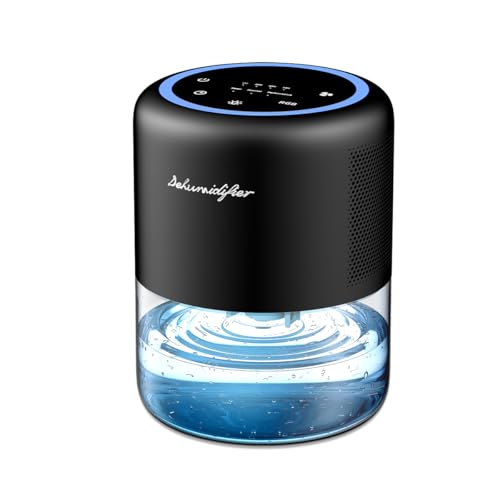
Windangel 44oz(1.3L) Small Dehumidifier for Home, Auto-Off Quiet Portable Dehumidifier with 3 Modes, 10 Color Lights, 4 Timer Settings for Bedroom Bathroom Closet, Black(215 sq.ft)
One of the moisture-control product options compared in this guide.
View on Amazon106 OZ Large Capacity Dehumidifier for Home, 1000 Sq. Ft. Coverage | Quiet Portable Dehumidifier for Basement Bedroom Bathroom RV with Auto Shut Off, Timer, Sleep Mode, 7 Color LED Light, Black
One of the moisture-control product options compared in this guide.
View on Amazon
BonAura Non-Electric Dehumidifier – Moisture Absorber for Basement, Bathroom, Closet & RV, Includes 24oz Refill Pack with Dehumidifier Granules, Reusable, Black
One of the moisture-control product options compared in this guide.
View on Amazon
Dehumidifiers for Bathroom with Moisture Absorber Bag Reusable, 68 OZ Water Tank Portable Quiet Dehumidifier for Bedroom with Auto Shut Off, 7 Colors LED Light for Home, RV, Garage, apartment, Black
One of the moisture-control product options compared in this guide.
View on AmazonWhat it can do: lower the humidity of the air in a closed room, help keep surfaces from staying damp, and make it harder for new mold to establish where the cause was ordinary dampness, such as a humid basement in summer or a bathroom with weak ventilation.
What it cannot do: kill mold, remove stains, clean mold from drywall, wood or fabric, stop a leak, or dry out a flooded structure. If there is visible growth, a persistent musty smell, or water damage, a dehumidifier is only one part of the fix, and sometimes not the first part. Find the moisture source, fix it, and then control humidity so the problem does not come back.
If you have asthma, allergies, a weakened immune system or any health concern linked to your home, talk to a doctor. Nothing here is medical advice.
Match the unit to the damp space
| Model | Key spec (from the listing title) | Price tier | Best for |
|---|---|---|---|
| KNKA 34 Pints Dehumidifier with Drain Hose | 2500 sq ft max claim, drain hose, three modes, intelligent humidity control, 24HR timer | Premium | Basements and large damp rooms |
| BEDRED 95 oz Dehumidifier (Deep Black) | 1000 sq ft claim, sleep mode, auto shutoff, ambient light | Premium | Mid-size rooms, black finish |
| Natrogix 106 oz Dehumidifier | 1000 sq ft claim, auto shut off, timer, sleep mode | Mid-range | Largest tank in the compact group |
| Onsekin CS08 Dehumidifier (Black) | 1000 sq ft claim, aromatherapy, sleep mode, auto shut off | Mid-range | Mid-size rooms (skip the scent feature) |
| BeOkay 58 oz Dehumidifier | 230 sq ft claim, 3 modes, 5 timers, auto shut off | Budget | Bathrooms and small bedrooms |
| Windangel 44 oz Dehumidifier | 215 sq ft claim, 3 modes, 4 timer settings, auto-off | Budget | Closets and tiny rooms |
| NovaLivin 68 oz Dehumidifier with Absorber Bag | 68 oz tank, reusable moisture absorber bag, auto shut off | Budget | Bathrooms, garage corners, RVs |
| BonAura Non-Electric Dehumidifier | Moisture absorber, 24 oz refill pack, reusable | Budget | Closets, cabinets, RVs |
Price tier compares these eight listings with each other: budget is the lowest group, mid-range is the middle pair, premium is the top pair. The BEDRED unit sits in the premium tier here only because of the listing price at the time we drafted this; the same-spec listings in other finishes may sit lower, so compare before you buy.
Eight picks, grouped by the kind of damp space
KNKA 34 Pint Dehumidifier with Drain Hose
This is the only unit here rated in pints per day, which is the number that matters for a damp basement. The title lists a 2500 sq ft maximum, a drain hose, three modes, intelligent humidity control, a dry-clothes function and a 24 hour timer. Everything else is “check the listing,” including the compressor type, the operating temperature range and the sound level.
The drain hose is the key feature for mold-prone spaces. A tank-only unit stops when the tank fills, and in a wet basement that can happen daily; the humidity then rebounds, and the room spends hours at a mold-friendly level. With a hose run to a floor drain, sink or sump, the unit keeps working without you. Gravity does the draining, so the hose end must sit lower than the unit outlet, and a sloped run with no kinks is essential.
Estimated, not measured: 34 pints is about 16 liters per day under the manufacturer’s rated conditions, which are usually warmer and wetter than a cool basement. In a cooler, moderately damp space, plan for real output well below the rating, perhaps half. Units at this capacity typically draw several hundred watts. At an assumed 400 watts for 10 hours a day over 30 days, that is 120 kilowatt-hours, or roughly twenty dollars a month at an assumed 17 cents per kilowatt-hour. Use your own rate and the wattage on the listing.
Pros
- Pints-per-day capacity and a drain hose suit continuous operation
- Humidity control and a 24 hour timer named in the title
- Large coverage claim leaves headroom for a basement
Cons
- Premium tier, and bulkier and heavier than the compact units
- Noise level and operating temperature range are not in the title
- A drain still has to exist where you need it
Who it’s for: a basement or large damp room where a tank would fill every day and you want the humidity held steady.
BEDRED 95 oz Dehumidifier, Deep Black
The first thing to know is the price tier. This Deep Black listing sits in the premium tier here, while other BEDRED listings with the same title specs sit much lower. The title lists a 95 oz tank, 1000 sq ft, quiet operation, auto shutoff, sleep mode and a 7 color ambient light for bedroom, bathroom and basement. Unless the product page shows a difference beyond finish, you are likely paying for the color, so compare the listings side by side.
For mold-prone rooms, the 95 oz tank is about 2.8 liters. In a damp bathroom or a basement corner, that tank can fill in a day or less, at which point the unit stops. Estimated: if it pulled 1.5 liters per day in a humid spell, the tank would be full in under two days; at 3 liters per day, it would fill daily. The title mentions no drain option, so check the listing. For a room that needs continuous drying, a tank-only unit asks you to be the drain.
The ambient light is a cosmetic extra. Mold prevention is about consistent dryness over days and weeks, so a lit-up unit is irrelevant, but it is also the sort of feature that makes people unplug the machine at night. If you can switch it off, do.
The coverage claim is a ceiling. A 1000 sq ft claim does not mean it will dry a 1000 sq ft damp basement; it means it is rated for a space that size under ideal conditions. For a space that is truly damp, read it as a unit for a bathroom, a bedroom or a mildly humid room.
Pros
- Large tank for a compact unit
- Sleep mode and auto shutoff named
- Black finish suits a dark room
Cons
- Premium tier for specs that match cheaper listings
- No drain option or humidity control named in the title
- Coverage figure is optimistic for a wet space
Who it’s for: someone who specifically wants the black finish and has a mid-size, moderately humid room.
Natrogix 106 oz Large Capacity Dehumidifier
Natrogix’s title leads with the number that matters most to a tank-only buyer: 106 oz, roughly 3.1 liters, the largest tank among the compact units here. It also lists a 1000 sq ft claim, auto shut off, a timer, sleep mode, a 7 color LED and a black finish, with positioning for basement, bedroom, bathroom and RV.
The timer is more valuable than it looks. In a room with a recurring damp spell, you can set the unit to run in the hours you are home and able to empty it. A timer plus a big tank is the closest a compact unit gets to a schedule. It does not replace a humidity setpoint, which the title does not mention. Check the listing for a humidistat, since a unit that cycles on humidity does the job without wasting power when the room is already dry.
Think of this as the compact-unit sweet spot for a bathroom, laundry nook or damp bedroom. Estimated: at 1 liter per day, the 3.1 liter tank lasts about three days; at 2 liters a day, it fills in a day and a half. If your room fills it faster than that, you have a bigger problem than a compact unit can solve, and it is time to look for the source of the water.
The title says “quiet” without a decibel figure, so treat that as a design goal, not a measurement. One more practical point: with a tank this size, place the unit near a sink or tub so the trip to empty it is short. Rooms where emptying is a chore are the rooms where the tank stays full and the unit stays off.
Pros
- Largest tank among the compact units
- Timer, sleep mode and auto shut off named
- Mid-range tier for the capacity
Cons
- Tank-only emptying; no drain option named
- No humidity setpoint or decibel figure in the title
- Coverage claim is a ceiling, not a basement guarantee
Who it’s for: a damp bathroom, laundry corner or bedroom where the largest compact tank reduces emptying trips.
Onsekin CS08 Dehumidifier, Black, with Aromatherapy
The Onsekin CS08 black version lists a 1000 sq ft claim, auto shut off, ultra-quiet sleep mode, a 7-color light and an aromatherapy feature. The headline advice for a mold-concerned buyer is simple: do not use the scent feature to cover a smell. A musty odor is information. It is telling you that something is damp, and masking it removes the one clue you had.
The unit itself is a mid-size compact model whose title does not name a tank size, a humidity setpoint or a drain, so verify those on the listing. For prevention in a moderately humid room, the practical questions are the same as for every compact unit: how large is the tank, how often will it fill, and can you empty it on that schedule.
If you are tempted by the aromatherapy feature, think about the cleaning. Anything that adds liquid, pads or oils to a moisture appliance adds a surface to keep clean, and a damp, scented reservoir is an odd place to rely on never growing anything. Read the manual first and decide whether it is worth the extra upkeep.
Estimated: compact units in this class often draw somewhere in the tens to low hundreds of watts. Check the label before assuming a monthly cost; the title gives no wattage.
The CS08-White version is sold under a separate listing with the same specs. Match model codes if you compare prices or look up the manual.
Pros
- Auto shut off and sleep mode named
- Mid-range tier
- Black finish and a model code (CS08) that makes manuals easy to find
Cons
- Tank size, humidity control and drain not stated in the title
- Aromatherapy can mask the smell you need to notice
- Extra feature, extra thing to clean
Who it’s for: a moderately humid room where you want a plain compact unit and will leave the scent feature off.
BeOkay 58 oz (1657 mL) Small Dehumidifier
BeOkay’s title is a spec sheet: 1657 mL, 58 oz, 230 sq ft, adjustable 10 color lights, 5 timers, 3 setting modes, auto shut off protection, low noise, for bedroom and bathroom. A 230 sq ft claim lines up with a bathroom, a small bedroom or a walk-in closet. It is not a basement unit and should not be bought as one.
The 5 timers and 3 modes are the interesting part for mold prevention. A bathroom is humid in bursts: after a shower, humidity spikes, then falls over several hours. A timer lets you run the unit for a few hours after use, then stop, which is better than running all day. Combine that with the bathroom exhaust fan, which should do the heavy lifting by sending steam outside, and the dehumidifier handles whatever is left. If the fan is weak or vents into the attic instead of outdoors, fix that first, because it is a common reason bathroom ceilings stay damp.
Tank math, estimated: 1657 mL is about 1.7 liters. If the bathroom gives up about half a liter on a shower-heavy day, the tank lasts three to four days. The auto shut off protects the floor but means the unit stops when it is full, so a full tank means no protection.
Check the listing for the operating temperature range. Small units in this class are often best in warm rooms, and a cold bathroom or an unheated closet may be outside their comfort zone.
Pros
- Budget tier with a 58 oz tank
- Multiple timers suit post-shower cycles
- Safety shut off named in the title
Cons
- 230 sq ft claim rules out basements and large damp rooms
- Operating temperature range not stated
- Decorative lights add nothing for moisture control
Who it’s for: a bathroom or small bedroom with occasional humidity spikes rather than a chronic water problem.
Windangel 44 oz (1.3 L) Small Dehumidifier
The Windangel is the smaller sibling of the previous unit: 44 oz, 1.3 liters, a 215 sq ft claim, auto-off, three modes, 10 color lights and 4 timer settings, positioned for bedroom, bathroom and closet. The title offers no drain, humidity setpoint or wattage.
Closets are where small units are most sensible. A closet on an exterior wall can stay damp because air barely moves; clothes, shoes and boxes press against a cold surface. A compact dehumidifier with the door closed can dry that small volume of air, and since the closet is small, a small tank is less of a liability. The unit will need emptying often, so put it where you can reach it. Estimated: a 1.3 liter tank at 0.25 liters per day lasts about five days in a modestly damp closet, and a day or two in a damp one.
Better than any dehumidifier for a closet problem is airflow. Pull items an inch or two off the wall, leave the door ajar when you can, and avoid packing the shelves tight. If the closet wall itself feels cold or damp, you may have a leak or missing insulation, which the unit will not fix.
This is also the right size to carry between small rooms, though it will not be a quiet one at all settings; the title says quiet but gives no decibel number. Keep it on a hard surface, not on a shelf where a full tank could be knocked, and never stack items against the vents.
Pros
- Budget tier and compact size
- Three modes and four timer settings
- Clear small-space positioning in the title
Cons
- Smallest tank of the powered units, so emptying is frequent
- Not suited to damp basements or large rooms
- Noise and temperature range not stated
Who it’s for: a closet or a very small room where dampness is mild and you can empty the tank often.
NovaLivin 68 oz Dehumidifier with Reusable Moisture Absorber Bag
NovaLivin’s title bundles a powered unit with a reusable moisture absorber bag: a 68 oz tank, portable, quiet, auto shut off, 7 color LED, for bathroom, bedroom, home, RV, garage or apartment. The bundle makes sense for small, awkward spaces. The unit handles the air in a room or a bathroom; the bag can sit in a place the unit cannot reach, such as a cabinet under a sink.
The title does not say what is in the bag or how it is recharged, so check the listing for the material, the way it is dried or replaced and any handling cautions. Reusable bags usually fill with moisture and need a drying cycle, which means the bag is a periodic chore, not a set-and-forget item. Treat it like a bonus for the cabinet, not a replacement for airflow.
Estimated: 68 oz is about 2 liters. In a bathroom, a modest 0.5 to 1 liter a day fills the tank in two to four days. Garage use is a bigger ask; garages are cooler and have more air exchange, so a compact unit may struggle to hold a lower humidity there. The title lists the garage, but a listing mention is not a performance claim.
It is the lowest-effort option in the budget tier for someone with two small problems at once, such as a bathroom and a leaky-feeling under-sink cabinet, and who wants to address both without buying two products.
Pros
- Powered unit plus a reusable absorber bag in one listing
- Budget tier with a 68 oz tank
- Auto shut off named in the title
Cons
- Bag contents and recharge method not in the title
- Tank-only drainage; garage use is optimistic for a compact unit
- No decibel number, humidity setpoint or coverage figure in the title
Who it’s for: a bathroom or apartment where a powered unit and a small-space absorber would both be useful.
BonAura Non-Electric Dehumidifier with 24 oz Refill Pack
The last listing is a different kind of product: a non-electric moisture absorber for basement, bathroom, closet and RV, with a 24 oz refill pack of dehumidifier granules, reusable, in black. There is no motor, no noise and no cord, which is why it suits closets, cabinets, a gear locker or an RV that sits unplugged.
The limits are the limits of any passive absorber. It holds a finite amount of moisture, so capacity is small, and it works best in a closed, small volume. In an open basement it is closer to a gesture than a solution. The title does not state how many cubic feet it covers or how long a refill lasts, so check the listing. Granule-type absorbers are commonly calcium-chloride based, but the title does not say, so look for the ingredient and handling notes, and keep it away from children and pets.
There is also the monitoring problem. A powered unit with a tank tells you when it has done something, because the tank fills. An absorber just sits there, so a hygrometer in the same space is how you know whether it is helping.
Use it where electricity is unavailable or a motor is unwelcome: seasonal storage, a camper, a safe or gun cabinet, a bag of tools. Do not count on it to fix a damp basement. When the granules are spent, follow the maker’s disposal instructions and do not pour the liquid into a place where it could harm plants or surfaces.
Pros
- No electricity, no noise, no tank to empty
- Lowest tier in the group and a refill pack included
- Reusable, according to the title
Cons
- Small capacity; only practical in small enclosed spaces
- Coverage, refill life and recharge method not in the title
- No built-in way to see how well it is working
Who it’s for: a closet, cabinet, RV or storage spot without a power outlet, where a passive absorber is enough.
How we picked these
The Editorial team worked from published specifications, manufacturer documentation and buyer reviews, the source mix we apply across the site. Nobody on the team used or measured these units. Everything stated about a specific product comes from its listing title, and where the title is silent we say “check the listing” rather than guess.
We looked for a spread of damp-space scenarios, not eight versions of the same thing: one basement-capable unit with a drain hose, a cluster of mid-size compact dehumidifiers, three small-room units, and one passive absorber. The question for each was the one that matters for mold prevention: can it keep a particular kind of space consistently dry, and how much work is it to keep running?
Performance figures, such as liters per day, tank-fill times and monthly running cost, are labeled estimates based on tank sizes, coverage claims and assumptions we state. They are not measurements. Listings change, so confirm the details on the current page.
We did not rank by price and we did not rank by the number of features. The order inside the picks section follows the space each unit suits, from the largest damp room down to the closet. Two listings in this set share near-identical titles, so we separated them by finish, price tier and the fine print you should check. Where a claim in a title sounded stronger than the physical size of the unit could support, we say so instead of repeating it.
Find the water first: a moisture triage table
A dehumidifier is a way to manage humidity, not a way to find a leak. Before you buy anything, match what you see to the likely cause. This table is a general starting point, not a diagnosis.
| What you notice | Likely moisture source | First thing to check |
|---|---|---|
| Morning condensation on windows | High indoor humidity or cold glass | Hygrometer reading, indoor laundry drying, ventilation |
| Musty basement that gets worse after rain | Water entering through walls or floor | Gutters, downspouts, grading, cracks |
| Dark spots on bathroom ceiling | Steam not leaving the room | Exhaust fan runs after showers and vents outdoors |
| Stain below a window | Leaky window or flashing | Seals, caulk, flashing; a repair may be needed |
| Damp closet on an exterior wall | Cold wall surface and no airflow | Move items off the wall, leave the door open |
| Ceiling stain that keeps growing | Roof or plumbing leak | Find and stop the leak; call a roofer or plumber |
| Damp materials after flood or burst pipe | Water damage | Dry quickly; consult a professional for anything beyond minor |
Two rules apply to every row. First, a dehumidifier is not a substitute for repairing a leak. Second, if the source is outdoors, such as groundwater or a failing gutter, the unit will run constantly and never finish, because new water is arriving faster than it can remove it.
A worked sizing example: the damp 10 by 12 foot basement room
Take a finished basement room that measures 10 by 12 feet, 120 sq ft, with an 8 foot ceiling, so about 960 cubic feet. A hygrometer shows 68 to 72 percent through the summer. The goal is a general 50 percent or lower.
A compact unit with a 1000 sq ft claim and a 95 oz tank covers the floor area on paper. The tank is the question. Using an assumed 2 liters of collection per day in that damp, cool room, the roughly 2.8 liter tank fills in about a day and a half, and every full tank pauses the drying until you empty it. Over a week, you would spend a meaningful fraction of the time with the unit stopped.
A 34-pint unit with a drain hose removes the tank from the equation. Even if its real output in a cool room is half its rating, say 8 liters a day, it has capacity to spare, and the hose carries water away continuously. It will cost more to run, perhaps twice or more the compact unit’s electricity, but it keeps the humidity steady. In a damp basement, steady matters more than cheap.
If the room reads 68 to 72 percent only after rain, the water is probably coming from outside. Look at the gutters and the ground slope. The best capacity in the world will run forever if the cause is not fixed. Once the space is drying properly, our page on the mold purifier question covers the airborne side of the problem; filtration does not replace drying the space.
What to look for in a dehumidifier for mold-prone rooms
Capacity in pints per day, with conditions
Listings that state coverage in square feet are making a loose claim. Look for pints or liters per day and the conditions behind the rating. Warm, humid conditions produce a bigger rating than a cool basement will give you in practice. Treat the rated figure as the top of a range and size up when the space is damp, cool or both. As a rough habit, a bathroom or closet can live with a compact unit, a damp bedroom or laundry nook wants a mid-size tank, and a basement wants a pints-per-day rating plus a drain.
Drainage: continuous drain beats a tank
A tank that fills stops the unit, and a stopped unit does nothing. For a space that is damp most of the time, a drain hose or a pump option lets the unit run unattended. For a bathroom or closet that is damp occasionally, a tank is fine if it is large enough. A drain hose also needs somewhere to go: a floor drain, a laundry sink or a condensate pump. If none exists, factor in the cost and noise of adding one, or accept that a tank will need emptying.
A humidity control and a hygrometer
A unit with a humidity setpoint cycles on and off to hold a target, saving power and avoiding over-drying. If the model has no setpoint, a separate hygrometer is the only way to know what is going on. A low-cost digital hygrometer in the problem room is the single most useful add-on. Place it at about chest height, away from the unit’s air outlet, and read it at the same times each day so that the trend, not a single number, guides you.
Operating temperature and defrost
Many compressor models lose capacity as the air gets cooler and may need a defrost cycle when the coil frosts. Basements and garages are exactly the places where this matters, and so is any room that cools off overnight in winter. Check the operating range in the manual, and do not assume a compact unit will behave in an unheated space the way it does in a warm bathroom.
The unit’s own cleanliness
A dehumidifier is a wet, dark, enclosed appliance, and its tank and filter can themselves become musty if neglected. Empty the tank regularly, wipe it, clean the air filter on the manual’s schedule, and unplug the unit before servicing. A smelly dehumidifier is not helping. If the tank smells musty after a rinse, check the filter and the drip area under the coil, and consult the manual about safe cleaning products rather than improvising.
Where passive absorbers fit
Granule or bag absorbers have a role in tiny, closed spaces without power. They are not a replacement for a powered unit in a damp room, and they need refills or recharging. If you use one, keep a hygrometer beside it. For more on what air-cleaning products can and cannot do about mold, see our guide to the best air cleaner for mold.
Noise, placement and power
A unit that is too loud gets switched off. Compact units with a stated decibel figure are easier to judge than those that say only “quiet”, but even a good figure is a manufacturer claim at the lowest speed. Put the unit in the open, several inches from walls and furniture, with the door closed and a hard, level floor under it. Plug it straight into a wall outlet. Avoid running a cord across a damp floor, and keep it clear of any standing water.
Reading a listing for red flags
Be wary of coverage claims with no tank or removal rate, of lists of features that never mention drainage, and of any wording that suggests the product removes or kills mold. A dehumidifier lists moisture removal, and anything beyond that is marketing. If a listing is vague on the basics, such as tank size, operating temperature or what the humidity control actually does, treat that as information too.
When to stop shopping and call a professional
A dehumidifier is a prevention tool. These are signs to bring in someone qualified rather than buy another unit.
- The visible growth covers a large area; public guidance often cites roughly 10 square feet as a threshold for professional help.
- Growth returns after you clean it, which usually means the moisture source is still active.
- A leak, flood or burst pipe was not dried within a day or two.
- You suspect hidden mold behind walls, under flooring or above ceilings.
- The water was contaminated, such as sewage.
- Someone in the home has asthma, allergies or a weakened immune system. Talk to a doctor before cleaning, and consider having someone else do it.
A qualified inspector or remediation contractor can find hidden moisture, identify the problem and recommend a repair plan. Be cautious of anyone who promises that a single product will permanently fix it.
Mistakes buyers make
Expecting the unit to kill or remove mold. It does neither. It controls humidity, which helps prevent new growth, but existing growth needs proper cleaning or professional removal, and porous materials that stay wet may need to be replaced.
Masking the smell. Scents, sprays and aromatherapy features hide an important clue. A musty odor means something is damp or growing somewhere, and the smell is how you know to look. Find what is making the room musty instead of covering it.
Skipping the leak. A unit running beside an active leak will never catch up, and your electric bill climbs while the wall stays wet. Repair first, then dry, then control humidity to keep it that way.
Buying by coverage claim. A square-footage number on a small tank says little, and the same 1000 sq ft figure appears on units with very different tanks. Check the removal rate, the tank and the drain before the headline.
No hygrometer. Without a reading, you do not know whether the unit is working, or whether the problem is even humidity. A low-cost meter turns guesses into a trend you can act on.
Forgetting to empty the tank. A full tank turns off the unit, and a dry-looking room becomes humid again by the next day. If emptying daily is unrealistic, pick a continuous drain or a bigger tank.
Putting a bathroom-size unit in a basement. It will run constantly, fill constantly and leave the room damp. Match capacity to the space, and see the sizing example above before you decide.
Cleaning visible mold without protecting yourself or fixing the cause. Disturbing growth can put particles into the air, and scrubbing a stain does nothing about the water behind it. Read current public guidance on mold cleanup, wear appropriate protection, and bring in a qualified professional for anything large or hidden.
Verdict
For a basement or large damp room, the KNKA 34 pint unit with the drain hose is the best match, and the price tier reflects it. For a bathroom, laundry corner or damp bedroom, the Natrogix 106 oz has the largest compact tank, and the BeOkay 58 oz suits smaller bathrooms on a budget. The Windangel and BonAura suit closets and cabinets, and the NovaLivin bundles a powered unit and an absorber bag for an apartment with two small problems. Treat the BEDRED Deep Black and Onsekin as plain compact units, and skip the scent feature on the latter.
Whatever you buy, measure humidity, find the water, keep the tank clean, and call a qualified professional for visible growth or health concerns. For more reading on the airborne side, see our roundup of the best HEPA air purifier for mold.
Frequently asked questions
Will a dehumidifier kill black mold?
No. A dehumidifier does not kill or remove mold that is already growing. What it can do is lower the moisture in the air, which helps make a room less hospitable to new growth and slows the damp conditions mold needs. Existing growth needs to be dealt with properly, and the water source needs to be found and fixed. For visible mold or any health concern, talk to a qualified professional or a doctor.
What humidity level helps prevent mold growth?
General household guidance often suggests keeping indoor humidity around 30 to 50 percent and below about 60 percent. Mold generally struggles to grow when surfaces stay dry, so consistently high readings in a basement, bathroom or closet are a warning sign. A small digital hygrometer shows what your room actually does. If readings stay high even with a dehumidifier running, look for a leak or poor ventilation.
Is a small dehumidifier enough for a damp basement?
Usually not. Compact units with tanks of roughly 35 to 106 oz are listed for bedrooms, bathrooms and closets, and a damp basement tends to need much more capacity and a continuous drain so the tank never fills and stops the unit. A large unit rated in pints per day with a drain hose is the more realistic match. Check the listing for the rated removal rate rather than the square footage claim alone.
Do moisture absorber granules work as well as an electric dehumidifier?
They serve a different purpose. Non-electric absorbers can help in small enclosed spaces such as closets, cabinets or an RV, where they need no power and make no noise. They hold a limited amount of moisture and have to be refilled or recharged, so they are not a substitute for an electric unit in a damp basement. Follow the product’s handling instructions and keep granules away from children and pets.
When should I call a professional about mold?
Consider a professional when the affected area is large (public guidance often cites roughly 10 square feet as a threshold), when growth keeps returning, after flooding or a leak that was not dried within a day or two, or if you suspect hidden mold behind walls. Anyone with asthma, allergies or a weakened immune system should ask a doctor before cleaning mold. Color alone does not identify a species, so do not rely on it.