
Key takeaways
- Buy per person, not per household: Individual ropes at individual lengths cost very little and remove the single biggest reason shared ropes go unused. Label each handle so they stay assigned.
- Size each rope properly: Stand on the cord’s midpoint; handles at armpit height while learning, chest height once proficient. Do this separately for each person rather than approximating.
- Match handle size to hand size: Children’s ropes have proportionally smaller handles, which matters for grip and for learning wrist-driven turning. Adults using a child’s rope will find it cramped and awkward.
- Give beginners a rope they can hear: Beaded ropes click on each pass, and that audible rhythm is how most children learn timing. It also hurts far less than a cable when a rep goes wrong.
- Keep weighted ropes for adults: A pound of added mass is a meaningful load on adult shoulders and an excessive one for a child. Weighted ropes should not be part of the shared pool.
What's inside
One jump rope in a household with a range of heights is a rope nobody uses. The length that suits a five-foot-two teenager leaves a six-foot adult stooping and clipping their head, and the adult’s setting drags a foot of slack in front of the child on every rotation. Whoever adjusts it last wins, and everyone else stops bothering within a fortnight. It is a small, entirely avoidable failure that ends more family fitness intentions than lack of motivation does.
The fix is either ropes that adjust quickly and repeatably, or simply more than one rope. Given that a serviceable rope costs less than a takeaway coffee, the second option is usually better — set each rope to one person’s height, label the handle, and the problem disappears. What is worth spending thought on is which rope suits which person: children learn far faster with a beaded rope they can hear, while an adult chasing conditioning wants something faster or heavier. Matching the tool to the user is what turns a shared purchase into something everyone actually uses.
As an Amazon Associate we earn from qualifying purchases at no extra cost to you. Product prices and availability are accurate as of the date shown and are subject to change.

#1 Pick

#2 Pick

#3 Pick

#4 Pick

#5 Pick

#7 Pick
Quick Comparison
| Product | Best For | Standout Feature | Watch Out For |
|---|---|---|---|
| Tangle-Free Speed Rope | The adult in the house | Fast rotation, ball bearings | Too fast for young beginners |
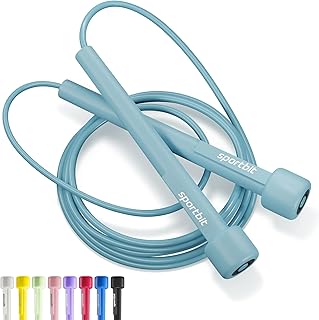
| BOOMIBOO Adjustable Rope | Two similar-height users | Adjustment that stays where set | Slimmer handles |
| Elite Jumps 6mm PVC Rope | Teenagers and outdoor use | Tough cord, forgiving feel | Slower than a thin cable |
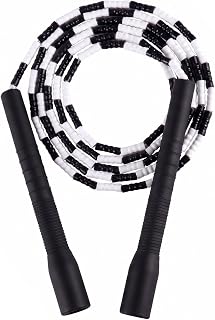
| YUEDONG Beaded Rope for Kids | Younger children | Soft beads, audible rhythm | Handles too small for adults |
| Redify Weighted Rope | Adult conditioning | 1 lb added resistance | Unsuitable for children |
| YUEDONG Beaded Rope for Adults | Teens and grown-ups learning | Adult handles, beaded feedback | Loud on hard indoor floors |
How to Choose
- Buy per person, not per household: Individual ropes at individual lengths cost very little and remove the single biggest reason shared ropes go unused. Label each handle so they stay assigned.
- Size each rope properly: Stand on the cord’s midpoint; handles at armpit height while learning, chest height once proficient. Do this separately for each person rather than approximating.
- Match handle size to hand size: Children’s ropes have proportionally smaller handles, which matters for grip and for learning wrist-driven turning. Adults using a child’s rope will find it cramped and awkward.
- Give beginners a rope they can hear: Beaded ropes click on each pass, and that audible rhythm is how most children learn timing. It also hurts far less than a cable when a rep goes wrong.
- Keep weighted ropes for adults: A pound of added mass is a meaningful load on adult shoulders and an excessive one for a child. Weighted ropes should not be part of the shared pool.
Top Picks Reviewed
Best Adult Rope: Tangle-Free Rapid Speed Rope
For the person in the house doing conditioning work, this is the right tool — fast, consistent, and ready the moment it comes off the hook thanks to the tangle-free cable. The ball-bearing handles hold up as cadence rises.
Handed to a child it is counterproductive. It moves too quickly to learn on and stings sharply on a missed rep, which is enough to put a young beginner off entirely.
Best Shared Rope: BOOMIBOO Adjustable Jump Rope
Where two people of similar height genuinely have to share, an adjustment that holds its setting minimises the drift that makes a rope feel wrong for both of them. It is the least frustrating shared option here.
The handles are slimmer than average, which suits smaller hands but may feel insubstantial to a larger adult. Consider who the primary user will be.
Best for Teenagers: Elite Jumps 6mm PVC Jump Rope
Older children and teenagers benefit from a rope with some substance — thick enough to feel through the arc, tough enough to survive being used on a driveway and left outside. The handles tolerate the treatment teenagers give equipment.
It is slower than a thin cable, so a teenager chasing double unders will eventually want something else. For general fitness and skill building it is well matched.
Best for Young Children: YUEDONG Beaded Rope for Kids
Soft TPU beads give an audible click on every pass, which is how most children learn cadence, and they sting far less than a cable on a mistimed rep. The thumb-groove grip also encourages proper wrist-driven turning from the start.
The handles are genuinely child-sized, so an adult will find them cramped. This is a dedicated children’s rope rather than a shared one.
Best for Adult Conditioning: Redify Weighted Jump Rope
A pound of added weight raises heart rate faster and recruits the shoulders and forearms, which makes short sessions genuinely demanding. For an adult with limited time it does more work per minute than a light cable.
It should stay out of the shared pool. The load is inappropriate for children and the arms fatigue quickly even for adults, so it suits shorter blocks rather than long sessions.
Best for Learning at Any Age: YUEDONG Beaded Rope for Teens and Adults
This takes the beaded rope’s learning advantages and puts them on adult-sized handles, which makes it the right choice for a teenager or an adult who is genuinely starting from zero. The adjustable length also lets it move between similar-height users.
Beads are loud on hard flooring and can mark a soft finish, so it works best outdoors or on a mat. It is also never going to be a fast rope.
Frequently Asked Questions
Can children and adults share a jump rope?
Technically yes, but readjusting the length before every use is the friction that stops households using ropes at all. Given how inexpensive ropes are, individual ropes at individual lengths is the better answer.
What length jump rope does a child need?
The same test applies: stand on the cord and pull the handles up to armpit height. Children need considerably shorter ropes than adults, which is exactly why a shared setting fails for both.
At what age can children start jumping rope?
Most children can manage basic skipping from around six or seven, once coordination has developed enough for the timing. A beaded rope that they can hear makes the learning process substantially faster.
Should children use weighted ropes?
No. Weighted ropes place meaningful load on the shoulders and are designed for adult conditioning. Children should use light beaded or PVC ropes sized correctly for their height.
Final Thoughts
For a household with mixed ages, the practical setup is a rope per person rather than a rope per family. Younger children learn fastest with the YUEDONG Beaded Rope for Kids and its audible rhythm, teenagers get on well with the durable Elite Jumps 6mm PVC Jump Rope, and the adult doing conditioning will get the most from the Tangle-Free Rapid Speed Rope. Set each one to its owner’s height once and the whole thing stops being a negotiation.



Write Your Review
No reviews yet. Be the first to share your experience!