Our Top Picks
 Cesun Small Bathroom Trash Can with Lid11.2 x 5.9 x 11.2 inch9.05 x 5.91 x 12.2 inches2.47 poundsCheck on Amazon
The best bathroom trash can is a small, lidded bin sized to your room: a step-pedal can from simplehuman or Rubbermaid suits shared family bathrooms, a slim lidded bin from makers such as Joseph Joseph or Umbra suits tight spaces beside the toilet, and a touchless sensor bin such as those from iTouchless suits buyers who want to avoid touching the lid. This guide explains sizing, lid types, materials and trade-offs so you can match a bin to your bathroom.
At a Glance: Bin Types
| Type | Example makers | Best for | Limits |
|---|---|---|---|
| Step-pedal can | simplehuman, Rubbermaid | Hands-free use without batteries | Pedal and hinge can wear; needs floor clearance |
| Touchless sensor can | iTouchless, simplehuman | Hands-free, hygiene-focused homes | Needs batteries or power; sensors may misfire |
| Slim open-top or swing-lid bin | Umbra, Joseph Joseph | Tight corners, low-use bathrooms | Odors less contained |
| Wall-mounted or over-cabinet bin | Various makers | Tiny bathrooms with no floor space | Capacity is small; needs a compatible door or wall |
| Wastebasket with removable liner | Various makers | Low-cost basic use | No lid in many models |
Makers are named as examples of brands that sell each type, not as a ranked list. Check the current model pages for dimensions and features, since product lines change.

N. NETDOT 3 Pack 10 Liter Small Trash Can with lid, 2.6 Gallon,Garbage Can Slim Trash Bin Waste Basket for Bathroom,Kitchen,Bedroom,Living Room,Office,Laundry - Black
Chosen because it specifies 2.6 Gallon and Garbage Can Slim Trash Bin Waste Basket for Bathroom.
View on AmazonCesun Small Bathroom Trash Can with Lid, 1.6 Gal, Soft Close, Matte Black | Step pedal soft close, Slim 5.9in fits narrow spaces, Stainless steel, Anti-fingerprint, Removable inner bucket, Odor seal
Chosen because it specifies 1.6 Gal and Soft Close.
View on Amazon
YGJT Small Trash Can, 3 Pack 1.8 Gallons Bathroom Trash Can with Trash Bags | Slim Waste Basket, Round Garbage Can, Plastic Trash Bin for Kitchen, Dorm, Bedroom, Office, Living Room|Compact Spaces(Black)
Chosen because it specifies 3 Pack 1.8 Gallons Bathroom Trash Can with Trash Bags and Slim Waste Basket.
View on Amazon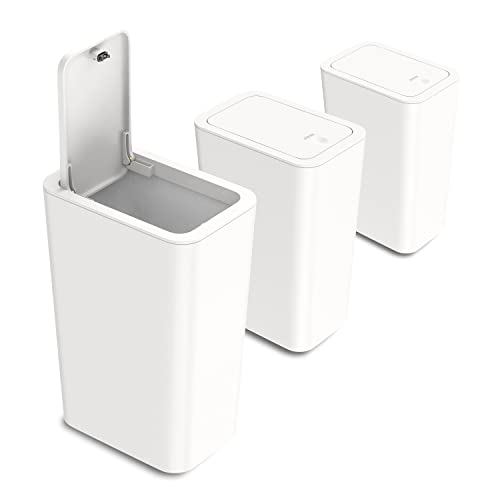
N. NETDOT 3 Pack 10L / 2.6 Gallon Small Trash Can with Lid, Bathroom Garbage Can with Pop-Up Lid, Waste Basket for Bathroom, Kitchen, Bedroom, Powder Room, Craft Room, Office, College (Off White)
Chosen because it specifies Bathroom Garbage Can with Pop-Up Lid and Waste Basket for Bathroom.
View on AmazonSizing a Bathroom Bin
Most bathroom bins hold a small number of litres, and makers often state volume in litres or gallons. For a single-user bathroom, a small capacity is enough, while family bathrooms benefit from larger volume so you are not emptying every day. Measure the space beside the toilet or under the sink and compare it with the bin’s stated footprint, including the pedal. Leave room for the lid to open fully without hitting the wall or tank.
Consider liner compatibility. Many bins specify a liner size or a custom-fit bag. Using the wrong size can cause liners to slip. If you prefer ordinary small bags, choose a bin with a removable inner bucket and an opening that holds the bag edges.
Lid Types
Step pedal
A foot pedal opens the lid without touching it. Good ones close softly, and makers often advertise slow-close dampers. Check that the bin does not slide on tile when you step on it, and look for non-slip bases.
Touchless sensor
Motion sensors open the lid when you wave a hand. They need batteries or a power adapter, and bathroom humidity can affect electronics, so look for makers’ notes on moisture handling. Sensors can also trigger accidentally, which drains batteries faster.
Swing lid or open top
These are the simplest and cheapest. They suit low-use bathrooms but do less to contain odors and are more visible.
Materials and Finish
- Stainless steel: Looks neat and resists odors but shows fingerprints. Look for a fingerprint-proof coating if the maker offers one.
- Plastic: Light, cheap and moisture-proof. Quality varies, and thinner plastic can crack.
- Ceramic or bamboo: Decorative and suited to guest bathrooms. They are heavier or more fragile and may need extra care with moisture.
- Coated metal: Powder-coat finishes can chip over time.
Odor and Hygiene
A lidded bin helps contain smells, and a tight liner reduces mess. Empty the bin regularly, wipe the inside with a mild cleaner, and dry it completely. Do not put flushable-labeled wipes or hazardous materials in the toilet or bin contrary to local guidance. Sanitary products and medical waste may have disposal rules, so follow local guidance. Keep bins out of reach of young children and pets if they contain items that could be harmful.
Budget Tiers
Budget
Plain plastic wastebaskets and basic swing-lid bins from Rubbermaid or similar makers sit here. They are practical and easy to replace. Expect basic hinges and limited odor control.
Mid-range
This tier includes better pedal cans, slim steel bins and decorative options from Umbra and Joseph Joseph. You gain soft-close lids, sturdier pedals and cleaner finishes. This is the sweet spot for most households.
Premium
Premium cans from simplehuman and sensor models add heavier steel, liner pockets, soft-close mechanisms and in some cases rechargeable or battery-powered sensors. Makers often cite longer warranties in this tier. The gain is durability and convenience, but the footprint can be larger.
Pick X If… Decision Table
| Pick this if… | Choose |
|---|---|
| Several people share the bathroom | A step-pedal can with a lid |
| You want hands-free with no foot space | A touchless sensor can |
| Your space is very narrow | A slim bin or wall-mounted unit |
| You have a toddler or pet | A lidded bin with a secure or locking lid |
| You want a decorative bin for guests | Ceramic, bamboo or a design-led steel bin |
| You need the cheapest workable option | A basic plastic wastebasket with a liner |
Alternatives
- Over-door bin: Hangs on a cabinet door, saves floor space, but capacity is small.
- Combined bin and brush set: Reduces clutter in a small room.
- Cabinet pull-out bin: Hidden under the sink, requires suitable cabinet space and installation.
Care and Maintenance
Wipe the lid and outside with a damp cloth. For stainless steel, use a soft cloth and avoid abrasive pads that scratch. Clean pedal hinges of dust and hair. For sensor bins, replace batteries as the maker states and keep the sensor lens clean. Check liners fit snugly so they do not collapse into the bin.
Buying Checklist
Measure the gap beside the toilet or inside the cabinet, and check the space needed for the lid to open and for your foot to reach a pedal. Decide whether you need hands-free operation, what liner size you will buy, and whether children or pets might get into the bin. Write down your must-haves before comparing models, so marketing language does not steer you. Read the maker’s dimensions, weight limits and care instructions, and compare at least two independent reviewers’ comments on durability and ease of use. Brand names in this guide are examples of makers in the category, and specifications can change between production runs, so rely on the maker’s current page for final numbers.
Common Mistakes to Avoid
Common mistakes include choosing a bin that is too tall for the space so the lid hits the cistern or wall, and buying a pedal bin without a non-slip base for a tile floor. Another is overlooking liner fit: a liner that does not match the opening slips down and wastes time. Sensor bins placed in damp bathrooms may suffer if the maker has not designed them for humidity, so read the manual. Lastly, a small bin that fills quickly encourages overflow, so size it to how often you realistically empty it.
Taking a few minutes to measure, read the manual and match the bathroom trash can to your actual routine usually prevents most of these problems, and it keeps you from paying for features that you will not use. If you are torn between two options, choose the one that suits your space and cleaning habits over the one with the longer feature list.
Final Considerations
Think about how the item will be used day to day rather than how it looks in a product photo. Household routines, floor type, the number of people sharing the space and how often you are willing to clean or empty it all affect satisfaction more than a long specification list. Where a maker publishes a warranty or care guide, read it, because it often explains which cleaning methods and load limits the product is designed for. If reviewers from independent outlets disagree about a model, look for the specific complaint, such as flimsy hinges, weak seams or poor fit, and decide whether it would matter in your home. When two options seem equal, the one with simpler parts and clearer instructions is usually easier to live with over time.
Frequently Asked Questions
What size bathroom trash can do I need?
A small capacity is enough for a single-user bathroom, while a family bathroom may need a larger one. Measure the available floor space and confirm the footprint, including the pedal. Check the liner size recommended by the maker.
Are touchless bathroom bins worth it?
They suit people who want to avoid touching the lid, but they need batteries or power. Humidity can affect electronics, so check the maker’s notes. A step-pedal can is a simpler hands-free option.
How do I stop a bathroom bin from smelling?
Choose a lidded bin, empty it regularly and wash it with a mild cleaner. Dry it fully before inserting a new liner. Avoid leaving damp items sitting in it for days.
Can I use any trash bag in a small bin?
Not always. Many makers specify a liner size or custom-fit bag. A badly sized liner can slip or tear, so follow the maker’s guidance.
Is stainless steel better than plastic?
Steel looks premium and is sturdy, but it shows fingerprints and can cost more. Plastic is light and moisture-proof but can crack. The best option depends on your budget and style.
Where should the bin go in a small bathroom?
Beside the toilet or under the sink are common spots. Leave room for the lid to open and for the pedal to work. Wall-mounted or over-door bins can help when floor space is limited.