
Key takeaways
- Pick a starting weight by rep quality: Choose a load you can curl for 12 controlled reps with two or three left in the tank. If the last rep involves swinging your hips, the weight is too heavy and you are training your lower back.
- Give triceps twice the attention you think: Overhead extensions, skull crushers and kickbacks build the bulk of the upper arm. A program with two triceps exercises and two biceps exercises is more balanced than the usual four-to-one split.
- Plan for small jumps: Add roughly 5 percent when you can complete all sets at the top of your rep range. That usually means 2.5-pound steps early on, which fixed pairs cannot provide without buying many sizes.
- Train arms twice a week: Two sessions of three to four sets per muscle beats one long session. Recovery is fast for small muscles, and frequency drives progress more reliably than volume in a single day.
- Log what you lift: A note on your phone recording weight and reps is the cheapest progression tool available. Without it, most people repeat the same session for months without noticing.
What's inside
The most common home arm routine is three sets of curls done whenever someone walks past the weights, at the same load, forever. It produces a pump, a bit of soreness in week one, and no measurable change after that. Arms respond to the same thing every other muscle responds to: enough volume, close enough to failure, with load that increases over time. The equipment only matters insofar as it lets you add weight in sensible steps and hit both the biceps and the triceps properly.
That last point gets missed constantly. The triceps make up roughly two thirds of upper arm mass, and most home routines give them one token exercise while the biceps get three. Fixing that ratio changes arm size faster than any equipment upgrade. The four options below are judged on how well they support a real beginner program: light enough increments to progress weekly, heavy enough for overhead extensions and rows, and practical enough that a full session does not become a plate-changing exercise.
As an Amazon Associate we earn from qualifying purchases at no extra cost to you. Product prices and availability are accurate as of the date shown and are subject to change.
#1 Pick

#2 Pick


#4 Pick

#5 Pick

#6 Pick

#7 Pick

Quick Comparison
| Product | Best For | Standout Feature | Watch Out For |
|---|---|---|---|
| Amazon Basics Neoprene Dumbbells | Weeks one to four of a new routine | Light enough to learn form safely | Outgrown quickly on curls and rows |
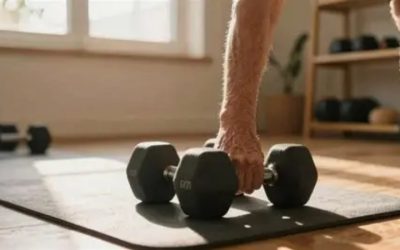
| Amazon Basics Rubber Hex Dumbbell | A fixed working weight you grow into | No setup time between exercises | Progress requires buying the next size |
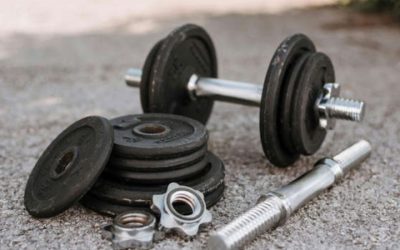
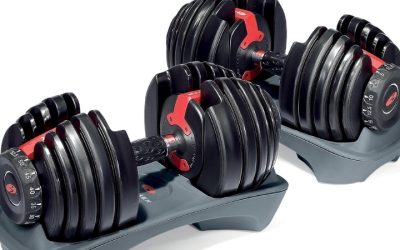
| FITPLAM Adjustable Set | A full program including heavy rows | Range that supports years of progression | Plate swaps slow down circuit training |
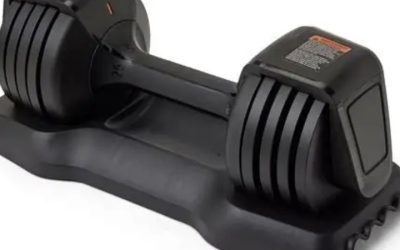
| EQUIPRO Adjustable Set | Steady weekly progression on isolation work | Small increments from a light starting point | Will cap out on compound movements |
How to Choose
- Pick a starting weight by rep quality: Choose a load you can curl for 12 controlled reps with two or three left in the tank. If the last rep involves swinging your hips, the weight is too heavy and you are training your lower back.
- Give triceps twice the attention you think: Overhead extensions, skull crushers and kickbacks build the bulk of the upper arm. A program with two triceps exercises and two biceps exercises is more balanced than the usual four-to-one split.
- Plan for small jumps: Add roughly 5 percent when you can complete all sets at the top of your rep range. That usually means 2.5-pound steps early on, which fixed pairs cannot provide without buying many sizes.
- Train arms twice a week: Two sessions of three to four sets per muscle beats one long session. Recovery is fast for small muscles, and frequency drives progress more reliably than volume in a single day.
- Log what you lift: A note on your phone recording weight and reps is the cheapest progression tool available. Without it, most people repeat the same session for months without noticing.
Top Picks Reviewed
Best Program Support: EQUIPRO Adjustable Set
Small increments from a light base are exactly what a beginner program needs. You can add a couple of pounds each week to curls and extensions, which is the mechanism that actually produces change over three months.
The ceiling is the limitation. Once your rows and presses climb, you will be working at the top of the range and will need something heavier to keep progressing on compounds.
Best Complete Setup: FITPLAM Adjustable Set
A range from roughly 20 to 90 pounds covers a beginner’s entire first few years, including the heavier rows and presses that build the shoulder and back support arms need to grow.
Circuit-style sessions suffer. If your program alternates curls and extensions with short rests, the plate changes break the rhythm and lengthen the workout considerably.
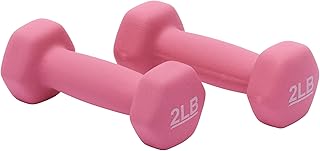
Best Learning Weight: Amazon Basics Neoprene Dumbbells
Light pairs let you learn the movement patterns properly, and clean technique on kickbacks and lateral raises at low weight is worth more than heavy sloppy reps for the first month.
You will move past them faster than you expect. Within four to six weeks most people need meaningfully more load, at which point these become warm-up and finisher weights.
Best Simplicity: Amazon Basics Rubber Hex Dumbbell
Picking up a fixed pair and starting immediately removes all friction. For someone whose barrier is getting started rather than choosing the perfect load, that matters more than adjustability.
Every progression is another purchase. Plan to buy at least two or three pairs over the first year, or accept that you will stall at one weight.
Frequently Asked Questions
How many sets should I do for arms?
Around six to twelve hard sets per muscle group per week is a reasonable target. That might be three sets of two biceps exercises and three sets of two triceps exercises, spread over two sessions.
How long until I see a difference?
Strength usually improves within two to three weeks as your nervous system adapts. Visible size changes typically take two to three months of consistent training and adequate protein intake.
Should I train arms to failure?
Leaving one to three reps in reserve on most sets, and occasionally pushing a final set to failure, works well. Training every set to complete failure adds fatigue faster than it adds progress.
Do I need a bench?
Not to start. Standing curls, overhead extensions, kickbacks with a hand on a chair, and floor presses cover the essentials. A bench expands your options later but is not a barrier to beginning.
Final Thoughts
Buy the equipment that lets you add a little weight every week and give the triceps equal billing. An adjustable set with small increments supports that best; a couple of fixed pairs work if you commit to buying the next size when you outgrow them. Log your sessions, train arms twice a week, and the program will do more for you than any specific dumbbell ever could.
Write Your Review
No reviews yet. Be the first to share your experience!