
Key takeaways
- Diagnose the slip: Are your hands sliding on the mat, or is the whole mat sliding on the floor? The fixes are entirely different.
- Dry grip is texture: Raised patterns and matte finishes work well against dry skin and are the right choice for cool rooms and gentle practice.
- Wet grip is surface chemistry: Polyurethane and moisture-activated coatings improve as they get damp. Texture alone will not do this.
- Weight holds the floor: A heavier mat resists creeping on wood and laminate. Very light mats travel unless the underside is genuinely tacky.
- Consider a towel: A cotton yoga towel over any mat converts a dry-grip surface into a wet-grip one for a fraction of the cost of a new mat.
What's inside
“Non-slip” describes two completely different problems, and a mat that solves one often fails the other. Dry grip comes from texture — a surface with enough pattern and friction that a dry palm cannot slide across it. Wet grip works the opposite way: a smooth, absorbent or slightly tacky surface that gets more secure as moisture arrives, because texture alone just lets sweat pool in the grooves and float your hand.
Which is why so many people buy a highly textured mat, love it for a month, then find themselves sliding in downward dog the first time they work hard. The mat did not fail; it was never designed for damp hands. There is a third variable too, which is whether the mat itself stays put on the floor — a mat that creeps across laminate feels like slipping even when your hands are perfectly secure. The options below are separated by which of these three problems they actually solve.
As an Amazon Associate we earn from qualifying purchases at no extra cost to you. Product prices and availability are accurate as of the date shown and are subject to change.




Quick Comparison
| Product | Best For | Standout Feature | Watch Out For |
|---|---|---|---|
| Premium PU Yoga Mat with Rubber Base | Hands that get damp | Sweat-activated grip over a natural rubber base | Feels less grippy when completely dry |
| Gaiam Dry-Grip Yoga Mat | Heavy sweating in warm rooms | Sweat-resistant surface built for hot practice | Premium surfaces need careful cleaning |
| Gruper Non-Slip Yoga Mat | Reliable dry traction | Textured eco-friendly surface with a strap | Texture traps sweat rather than absorbing it |
| Gaiam Thick NBR Yoga Mat | Grip during floor exercises | Cushioned NBR with an easy-cinch strap | Foam surface slides once genuinely wet |
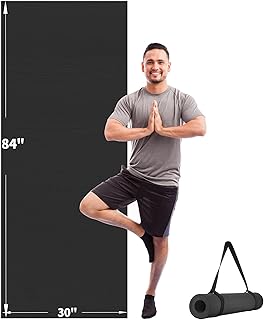
| CAMBIVO Extra Long Wide PVC Mat | Staying put on the floor | Weight and size that resist creeping | PVC face gets slick with moisture |
| LVME Foldable Yoga Mat, 8mm | Grip away from home | Certified POE surface in a foldable format | Fold lines can lift on uneven floors |
How to Choose
- Diagnose the slip: Are your hands sliding on the mat, or is the whole mat sliding on the floor? The fixes are entirely different.
- Dry grip is texture: Raised patterns and matte finishes work well against dry skin and are the right choice for cool rooms and gentle practice.
- Wet grip is surface chemistry: Polyurethane and moisture-activated coatings improve as they get damp. Texture alone will not do this.
- Weight holds the floor: A heavier mat resists creeping on wood and laminate. Very light mats travel unless the underside is genuinely tacky.
- Consider a towel: A cotton yoga towel over any mat converts a dry-grip surface into a wet-grip one for a fraction of the cost of a new mat.
Top Picks Reviewed
Best for Damp Hands: Premium PU Yoga Mat with Rubber Base
Polyurethane over a natural rubber base is the construction that behaves opposite to normal foam: as a light film of sweat arrives, the surface becomes more secure rather than less. For anyone whose palms start sliding twenty minutes into a session, this is the specification that solves it directly.
Straight out of the roll on a cool day it can feel less immediately grippy than a heavily textured mat, because the surface wants a little moisture to do its best work. A light mist across the mat before practice is a common and effective habit.
Best for Hot Rooms: Gaiam Dry-Grip Yoga Mat
Built specifically for hot practice, this surface is designed to stay secure when sweat is not occasional but continuous. In a heated room where a standard mat becomes a slip hazard within ten minutes, that is the difference between practising and constantly resetting your hands.
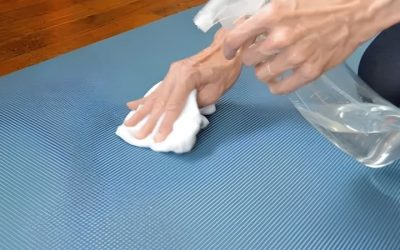
Specialised grip surfaces reward careful maintenance. Harsh cleaners and oily residues degrade the top layer, so mild soap, a thorough rinse and full drying are worth the extra minute after each session.
Best Dry Traction: Gruper Non-Slip Yoga Mat
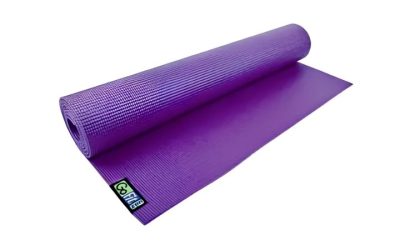
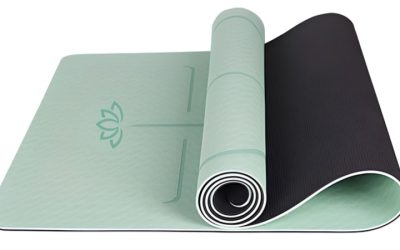
For cool-room practice, stretching and general home exercise, a well-textured eco-friendly surface gives excellent security against dry hands and feet, and the included strap makes it easy to move and store.
Texture works by mechanical friction, which sweat defeats. Once moisture fills the pattern, your hand is effectively sliding on a thin film of water, and no amount of surface texture prevents that. Add a towel if your sessions get intense.
Best Floor Stability: CAMBIVO Extra Long Wide PVC Mat
If the problem is the mat travelling rather than your hands slipping, size and weight are what fix it. A larger, heavier PVC mat resists creeping across wood and laminate far better than a light foam one, and the extra dimensions suit taller and broader practitioners.
The PVC top surface itself becomes slick once genuinely wet, so it addresses floor stability rather than wet-hand grip. Pairing it with a towel covers both problems at once.
Frequently Asked Questions
Why does my mat get slippery mid-session?
Sweat. Most textured mats grip mechanically, and a thin film of moisture eliminates that friction. Mats with moisture-activated surfaces are designed for exactly this and behave the opposite way.
Does a new mat need breaking in?
Many do. A factory residue on the surface can reduce grip at first, and a wipe with mild soap and water followed by a few sessions usually brings the traction up noticeably.
Is a yoga towel worth using?
It is the cheapest fix in the category. A cotton towel over the mat absorbs sweat and grips better when damp, which converts almost any mat into a usable surface for sweaty practice.
How do I stop the mat sliding on my floor?
Clean both the mat underside and the floor to remove polish and dust, choose a heavier mat, or place a thin rug underneath. Floor polish on laminate is the most common hidden culprit.
Final Thoughts
Work out which slip you are actually fighting before you buy. Damp hands call for a moisture-activated surface like the PU rubber-based mat or the Gaiam dry-grip design, dry-room practice is well served by a textured Gruper mat, and a travelling mat is fixed by weight and size rather than by surface. If in doubt, add a cotton towel — it solves the wet-grip problem on any mat for a fraction of the price.
Write Your Review
No reviews yet. Be the first to share your experience!