Key takeaways
- Base and bulb shape: Nearly every chandelier takes an E12 candelabra base, but the glass profile changes the look. B10 and B11 are straight-sided torpedoes that suit clean transitional fixtures; CA10 flame tips lean traditional and hide their filament tails better in exposed-bulb designs.
- Color temperature: Stay at 2700K or warmer for anything you sit under after sunset. A 2500K bulb reads closer to candle glow, flatters cedar and wicker, and draws noticeably fewer flying insects than cooler light on a summer evening.
- Dimming behavior: Confirm the bulb is dimmable and check it against your specific dimmer. Cheap LED drivers pop, buzz, or cut out below 30 percent, which is exactly the range you want on a covered patio at night. Leading-edge dimmers older than a decade often need replacing.
- Color rendering: CRI above 90 is worth the small premium outdoors, where you are looking at natural materials, food, and skin tones rather than painted drywall. Low-CRI bulbs make everything under them look slightly gray.
- Damp-location suitability and count: The fixture, not the bulb, carries the damp rating, so verify the chandelier is listed for covered outdoor use. Then buy in twelve-packs from a single batch so replacements match, and favor UL-listed bulbs over unlisted imports.
What's inside
Anyone who has hung a chandelier over an outdoor dining table knows the fixture is the easy part. The bulbs are where the project usually falls apart: one arrives a hair too blue, another flickers on the dimmer at low output, a third dies after its first humid week under a pergola. Covered patios, screened porches, and three-season rooms are harsher on candelabra bulbs than any dining room, and the temperature swing between a July afternoon and an October night is enough to expose a cheaply built driver.
This guide looks at E12 candelabra bulbs through an outdoor-living lens, judging them on the things that actually matter once a fixture leaves the interior of a house: how the filament reads from below, how the color holds at 20 percent brightness, how the glass and base handle moisture and vibration from a ceiling fan, and whether a twelve-pack will still match itself two years in. Below are the options worth putting in a patio chandelier this year, plus the specs to check before you buy.
As an Amazon Associate we earn from qualifying purchases.



How to Choose a Light Bulb For Chandelier (2026)
- Base and bulb shape: Nearly every chandelier takes an E12 candelabra base, but the glass profile changes the look. B10 and B11 are straight-sided torpedoes that suit clean transitional fixtures; CA10 flame tips lean traditional and hide their filament tails better in exposed-bulb designs.
- Color temperature: Stay at 2700K or warmer for anything you sit under after sunset. A 2500K bulb reads closer to candle glow, flatters cedar and wicker, and draws noticeably fewer flying insects than cooler light on a summer evening.
- Dimming behavior: Confirm the bulb is dimmable and check it against your specific dimmer. Cheap LED drivers pop, buzz, or cut out below 30 percent, which is exactly the range you want on a covered patio at night. Leading-edge dimmers older than a decade often need replacing.
- Color rendering: CRI above 90 is worth the small premium outdoors, where you are looking at natural materials, food, and skin tones rather than painted drywall. Low-CRI bulbs make everything under them look slightly gray.
- Damp-location suitability and count: The fixture, not the bulb, carries the damp rating, so verify the chandelier is listed for covered outdoor use. Then buy in twelve-packs from a single batch so replacements match, and favor UL-listed bulbs over unlisted imports.
The Best Light Bulb For Chandelier (2026)s Reviewed
Hizashi 90+ CRI LED Candelabra Bulb, 4W CA10 Flame Tip (12-Pack)
The 90+ CRI rating is the reason this one leads: teak, terracotta, and plated brass all keep their depth instead of going flat under it, and the 2700K output holds steady as you dim. A UL-listed 4W bulb at 450 lumens is the sensible default for a six- or eight-arm patio chandelier.
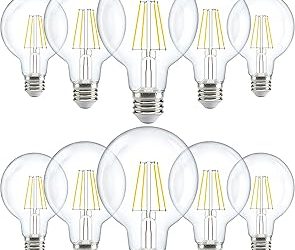
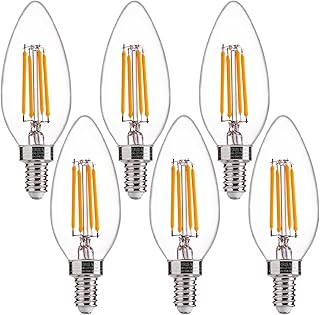
60W Equivalent Clear B11 LED Filament Candelabra Bulbs (6-Pack)
Straight-sided B11 glass with visible filament rods gives you the incandescent look at a fraction of the draw, and the 60W-equivalent output has enough punch for a chandelier hung high under a pergola. The smaller six-pack suits smaller fixtures without leaving you with spares you will never use.
E12 Flame Tip Candle Bulbs, 4W 460 LM (12-Pack)
A frosted flame tip that trades a touch of sparkle for glare control, which matters when the fixture sits low over a table and guests are looking up at it. Dimming was smooth in the low range on modern trailing-edge dimmers.
60W Clear B10 Incandescent Candelabra Bulbs (12-Pack)
Real incandescent filament still wins on dimming quality and warm shift, and there is no driver to fail in humidity. Reach for these on a fixture you use occasionally rather than nightly, since the energy cost and 1,000-hour lifespan add up fast in daily service.
MEQIQTEK E12 60W Incandescent Candle Bulbs, 2500K (12-Pack)
At 2500K, these are the warmest option here and the closest thing to firelight in a chandelier, which is exactly what you want over a late-season outdoor table. Vibration tolerance is decent, but I would still pair them with a ceiling fan on lower speeds.
Frequently Asked Questions
Can I use standard chandelier bulbs outdoors?
Under a roof, yes, provided the fixture itself is rated for damp locations. Direct rain exposure or wet-rated locations call for a sealed fixture with bulbs specified by the manufacturer.
Why do my LED candelabra bulbs flicker on a dimmer?
Almost always a compatibility issue between the dimmer and the LED driver. A modern LED-rated dimmer, and keeping all bulbs on the circuit identical, resolves most cases.
Clear or frosted glass?
Clear glass shows the filament and throws more sparkle through crystal or glass arms. Frosted diffuses the source and is kinder to the eye on a low-hung outdoor fixture.
Do LEDs really last as long as claimed on a porch?
Heat and humidity shorten real-world life, though a quality 4W LED still far outlasts incandescent. Good airflow around the fixture helps more than any spec on the box.
Final Thoughts
For most covered outdoor chandeliers, the Hizashi 90+ CRI flame tips are the pick that gets everything right at once: color accuracy, honest dimming, UL listing, and enough spares to keep the fixture matched. Choose the 60W Equivalent Clear B11 LED Filament bulbs if you want that exposed-filament look with more output, and keep the MEQIQTEK 2500K incandescents in mind for the fixture you light a few nights a month and want to glow like a candle.