Key takeaways
- Base and bulb shape: Most chandeliers use an E12 candelabra base, but shape changes the look. B10 and B11 are slim torpedo bulbs that suit clear-glass and exposed-socket fixtures; CA10 flame-tip bulbs read more traditional and hide their filament tips inside a shade.
- Color temperature and CRI: Stay at 2700K for chandeliers. It flatters wood, brass, and skin tones, and it blends with string lights and lanterns outdoors. A 90+ CRI rating goes further, keeping cushion fabrics and dinnerware from looking washed out.
- Real dimming performance: “Dimmable” is a floor, not a promise. Look for bulbs rated to dim smoothly below 20 percent, and buy all sockets from one batch so the fixture fades evenly instead of dropping out one arm at a time.
- Wattage equivalence and lumens: A 40W equivalent (roughly 450 lumens) is right for multi-arm chandeliers where six to twelve bulbs share the load. Reach for 60W equivalent or true incandescent output when the fixture holds only two or three sockets, or hangs high over a patio table.
- Enclosure and environment: Covered outdoor and semi-enclosed fixtures trap heat and moisture. Confirm the bulb is rated for enclosed use, check for UL listing, and count on LEDs to hold up better than filament incandescents in damp air.
What's inside
A chandelier is usually the piece a room is built around, and yet the bulbs inside it are almost always an afterthought. That gap shows up fast: six candelabra bulbs that don’t match in color, a dimmer that buzzes at half-brightness, or a covered porch fixture where two bulbs have gone amber and the rest still read stark white. If you’ve spent time choosing a fixture for a dining room, a screened patio, or a pergola over an outdoor table, mismatched light undoes that work in a single evening.
This guide is written from an outdoor-living perspective, where fixtures deal with humidity, temperature swings, and long stretches on a dimmer. We look at E12 candelabra bulbs across LED filament, flame-tip, and traditional incandescent designs, then break down the specs that actually matter, review five strong options, and answer the questions that come up most often when replacing a full set at once.
As an Amazon Associate we earn from qualifying purchases.



How to Choose a Bulbs For Chandelier (2026)
- Base and bulb shape: Most chandeliers use an E12 candelabra base, but shape changes the look. B10 and B11 are slim torpedo bulbs that suit clear-glass and exposed-socket fixtures; CA10 flame-tip bulbs read more traditional and hide their filament tips inside a shade.
- Color temperature and CRI: Stay at 2700K for chandeliers. It flatters wood, brass, and skin tones, and it blends with string lights and lanterns outdoors. A 90+ CRI rating goes further, keeping cushion fabrics and dinnerware from looking washed out.
- Real dimming performance: “Dimmable” is a floor, not a promise. Look for bulbs rated to dim smoothly below 20 percent, and buy all sockets from one batch so the fixture fades evenly instead of dropping out one arm at a time.
- Wattage equivalence and lumens: A 40W equivalent (roughly 450 lumens) is right for multi-arm chandeliers where six to twelve bulbs share the load. Reach for 60W equivalent or true incandescent output when the fixture holds only two or three sockets, or hangs high over a patio table.
- Enclosure and environment: Covered outdoor and semi-enclosed fixtures trap heat and moisture. Confirm the bulb is rated for enclosed use, check for UL listing, and count on LEDs to hold up better than filament incandescents in damp air.
The Best Bulbs For Chandelier (2026)s Reviewed
Hizashi 90+ CRI LED Candelabra Bulb, 12-Pack
The 90+ CRI rating is the standout here, rendering warm woods and textiles with a depth most budget candelabra LEDs flatten out. Combined with UL listing, flame-tip CA10 styling, and 450 lumens at 4W, it’s the set to buy when the fixture is the room’s centerpiece.
E12 Flame Tip LED Candle Bulbs, 4W 460 LM, 12-Pack
A dependable full-fixture refresh at 2700K with slightly more output than most 40W equivalents, so a wide chandelier doesn’t read dim. The frosted flame-tip profile diffuses glare nicely under shades or in fixtures you look up into from a seated position.
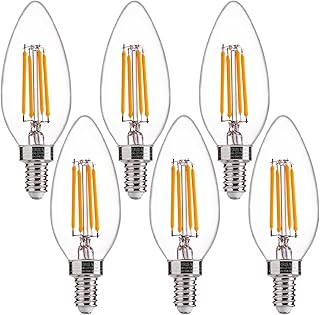
60W Equivalent Clear B11 LED Filament Candelabra Bulbs, 6-Pack
Best pick for fixtures with three or four sockets that need to carry a whole seating area on their own. The clear filament design gives you visible-bulb vintage character with LED efficiency, which matters on a covered patio where you’d rather not swap bulbs every season.
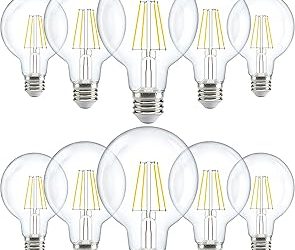
12-Pack Dimmable E12 LED Filament B11 Vintage Bulbs, 40W Equivalent
Strong value for large fixtures and ceiling fan light kits, with clear glass and a warm 450-lumen filament glow at 4W. Dimming is smooth through the usable range, and buying twelve at once keeps every arm color-matched.
60W Candelabra Incandescent Bulbs, E12 B10 Clear, 12-Pack
For purists and for dimmers that fight LEDs, real incandescents still deliver the warmest, most linear fade to candlelight, plus 600 lumens each. Expect shorter life and more heat, which makes these a better fit for sconces and open fixtures than tightly enclosed ones.
Frequently Asked Questions
Can I use these bulbs in an outdoor chandelier?
Yes, in covered or semi-enclosed locations where the fixture itself is rated for damp use. LED candelabra bulbs handle humidity and cold starts better than incandescents, but no standard E12 bulb belongs in direct rain or a fully exposed socket.
Why do my dimmable LEDs flicker at low brightness?
Most often it’s a legacy dimmer designed for incandescent loads. Swapping to an LED-compatible dimmer, or keeping the total LED wattage above the dimmer’s minimum load, resolves the majority of flicker and buzz complaints.
Should I choose flame tip or straight torpedo bulbs?
Go flame tip (CA10) for traditional and candle-style chandeliers where the shape reinforces the fixture’s design. Choose B10 or B11 torpedo bulbs for transitional and modern fixtures, especially clear-glass ones where a visible filament is part of the look.
Do I need to replace every bulb at the same time?
It’s the smarter approach. Bulbs from different batches and brands drift in color temperature and dimming curve, so a single replacement often looks obviously off against the rest of the fixture.
Final Thoughts
For most chandeliers, the Hizashi 90+ CRI 12-pack is the best overall choice, delivering accurate warm light and UL-listed reliability across a full set of sockets. If your fixture has only a few arms and needs to light a whole patio or dining area, step up to the 60W equivalent clear B11 LED filament bulbs, and if you want the unmistakable low-end fade of a true incandescent on an older dimmer, the 60W B10 clear candelabra 12-pack remains a worthwhile pick.